A thesis on the natural order and obedience, noting that while physical elements follow the laws of the universe despite their own tendencies, the human mind often rebels. The author finds it grievous that the rational part of man is the only thing that refuses to keep its appointed place.
Reason's Disobedience
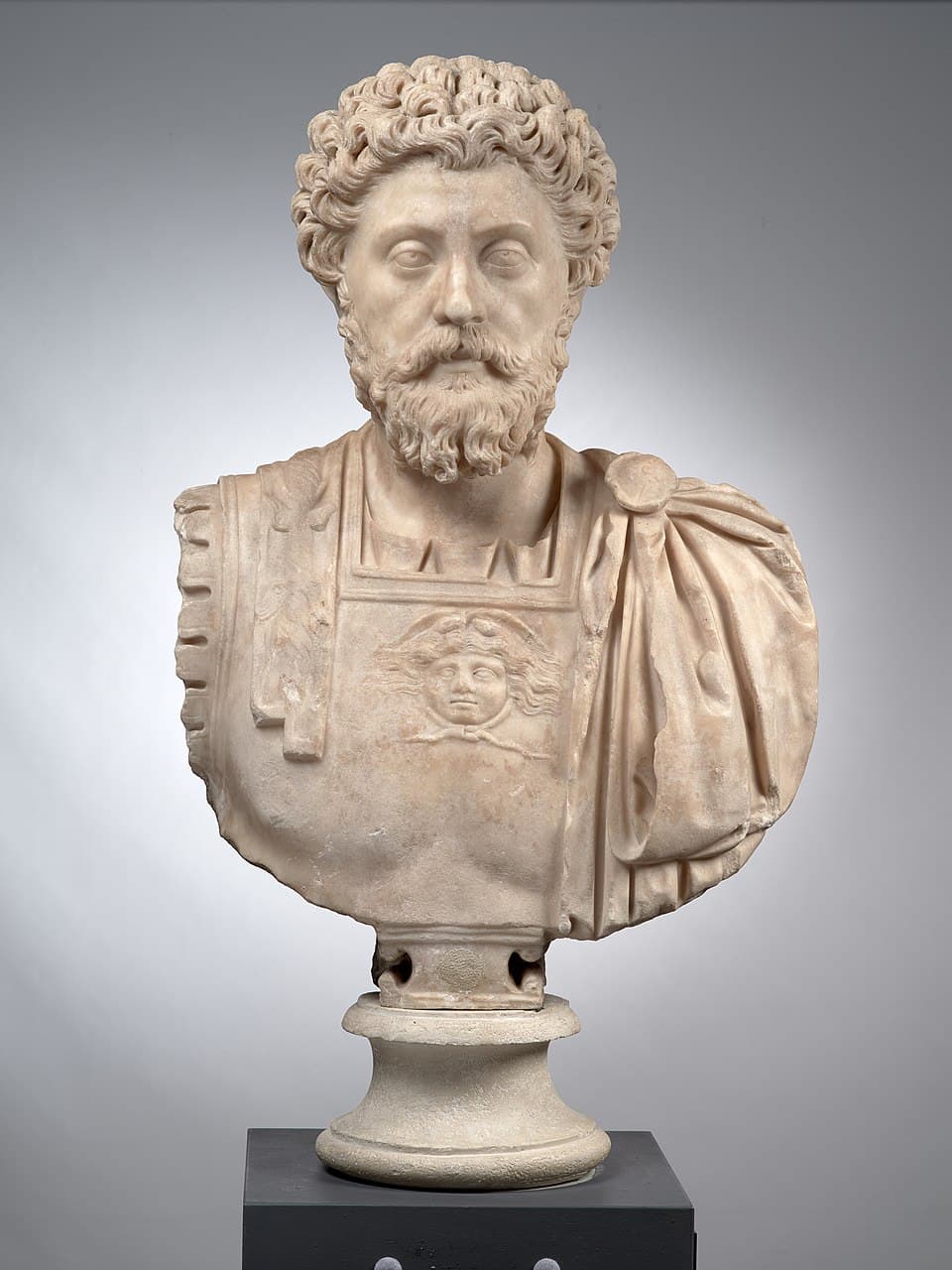
Marcus Aurelius
Meditations...ver them, thou must rectify them, saying to thyself concerning every one of them, This imagination is not necessary; this is uncharitable: this thou shalt speak as another man's slave, or instrument; than which nothing can be more senseless and absurd: for the fourth, thou shalt sharply check and upbraid thyself; for that thou doest suffer that more divine part in thee, to become subject and obnoxious to that more ignoble part of thy body, and the gross lusts and concupiscences thereof. XVIII.
What portion soever, either of air or fire there be in thee, although by nature it tend upwards, submitting nevertheless to the ordinance of the universe, it abides here below in this mixed body. So whatsoever is in thee, either earthy, or humid, although by nature it tend downwards, yet is it against its nature both raised upwards, and standing, or consistent. So obedient are even the elements themselves to the universe, abiding patiently wheresoever (though against their nature) they are placed, until the sound as it were of their retreat, and separation. Is it not a grievous thing then, that thy reasonable part only should be disobedient,…
For we cannot say of it when it is disobedient, as we say of the fire, or air, that it tends upwards towards its proper element, for then goes it the quite contrary way. For the motion of the mind to any injustice, or incontinency, or to sorrow, or to fear, is nothing else but a separation from nature. Also when the mind is grieved for anything that is happened by the divine providence, then doth it likewise forsake its own place. For it was ordained unto holiness and godliness, which specially...
Continue reading →
4
⚖Awakening from Dream

Marcus Aurelius
MeditationsA visionary reflection on death as a necessary and potentially transformative change, likening the process to a seed that must die to bring forth new life.
...d intellectually that his soul was destined to be absorbed, and to lose consciousness of itself, there were times when he felt, as all who hold it must sometimes feel, how unsatisfying is such a creed. Then he gropes blindly after something less empty and vain. 'Thou hast taken ship,' he says, 'thou hast sailed, thou art come to land, go out, if to another life, there also shalt thou find gods, who are everywhere.' There is more in this than the assumption of a rival theory for argument's sake.
If worldly things 'be but as a dream, the thought is not far off that there may be an awakening to what is real. When he speaks of death as a necessary change, and points out that nothing useful and profitable can be brought about without change, did he perhaps think of the change in a corn of wheat, which is not quickened except it die? Nature's marvellous power of recreating out of Corruption is surely not confined to bodily things.
Many of his thoughts sound like far-off echoes of St. Paul; and it is strange indeed that this most Christian of emperors has nothing good to say of the Christians. To him they are only sectaries 'violently and passionately set upon opposition. Profound as philosophy these Meditations certainly are not; but Marcus Aurelius was too sincere not to see the essence of such things as came within his experience. Ancient religions were for the most part concerned with outward things. Do the necessa...
2
⚖The Soul's Blank Slate

Marcus Aurelius
MeditationsA summary of Stoic ethics and logic, defining the highest good as working for the common welfare and explaining how the soul develops general notions from sensory impressions.
...; but immanent in the material universe was a spiritual force which acted through them, manifesting itself under many forms, as fire, æther, spirit, soul, reason, the ruling principle. The universe, then, is God, of whom the popular gods are manifestations; while legends and myths are allegorical. The soul of man is thus an emanation from the godhead, into whom it will eventually be re-absorbed. The divine ruling principle makes all things work together for good, but for the good of the whole.
The highest good of man is consciously to work with God for the common good, and this is the sense in which the Stoic tried to live in accord with nature. In the individual it is virtue alone which enables him to do this; as Providence rules the universe, so virtue in the soul must rule man. In Logic, the Stoic system is noteworthy for their theory as to the test of truth, the Criterion. They compared the new-born soul to a sheet of paper ready for writing. Upon this the senses write their impressions (φαντασίαι), and by experience of a number of these the soul unconsciously conceives general notions (κοιναὶ ἔννοιαι) or anticipations (προλήψεις).
When the impression was such as to be irresistible it was called (καταληπτικὴ φαντασία) one that holds fast, or as they explained it, one proceeding from truth. Ideas and inferences artificially produced by deduction or the like were tested by this 'holding perception.' Of the Ethical application I have already spoken. The highest good was the virtuous life. Virtue alone is happiness, and vice is unhappiness. Carrying this theory to its extreme, the Stoic said that there could be no gradations...
6
⚖Death as Natural Work

Marcus Aurelius
MeditationsThe author argues that death should be viewed as a necessary work of nature rather than something to be feared, as fearing a natural process is a sign of immaturity.
...gs are dissolved and resolved: the bodies and substances themselves, into the matter and substance of the world: and their memories into the general age and time of the world. Consider the nature of all worldly sensible things; of those especially, which either ensnare by pleasure, or for their irksomeness are dreadful, or for their outward lustre and show are in great esteem and request, how vile and contemptible, how base and corruptible, how destitute of all true life and being they are. X.
It is the part of a man endowed with a good understanding faculty, to consider what they themselves are in very deed, from whose bare conceits and voices, honour and credit do proceed: as also what it is to die, and how if a man shall consider this by itself alone, to die, and separate from it in his mind all those things which with it usually represent themselves unto us, he can conceive of it no otherwise, than as of a work of nature, and he that fears any work of nature, is a very child. Now death, it is not only a work of nature, but also conducing to nature.
XI. Consider with thyself how man, and by what part of his, is joined unto God, and how that part of man is affected, when it is said to be diffused. There is nothing more wretched than that soul, which in a kind of circuit compasseth all things, searching (as he saith) even the very depths of the earth; and by all signs and conjectures prying into the very thoughts of other men's souls; and yet of this, is not sensible, that it is sufficient for a man to apply himself wholly, and to confine a...
3
⚖Nature's True Desires

Marcus Aurelius
MeditationsThe author argues that true philosophy and virtue are more natural and pleasing than the pursuit of pleasure, which often leads to harm and loss of liberty.
...t that only which thou dust return unto: a philosopher's life, and proper occupation after the most exact manner. And when thou dust return to thy philosophy, return not unto it as the manner of some is, after play and liberty as it were, to their schoolmasters and pedagogues; but as they that have sore eyes to their sponge and egg: or as another to his cataplasm; or as others to their fomentations: so shalt not thou make it a matter of ostentation at all to obey reason but of ease and comfort.
And remember that philosophy requireth nothing of thee, but what thy nature requireth, and wouldest thou thyself desire anything that is not according to nature? for which of these sayest thou; that which is according to nature or against it, is of itself more kind and pleasing? Is it not for that respect especially, that pleasure itself is to so many men's hurt and overthrow, most prevalent, because esteemed commonly most kind, and natural? But consider well whether magnanimity rather, and true liberty, and true simplicity, and equanimity, and holiness; whether these be not most kind and natural?
And prudency itself, what more kind and amiable than it, when thou shalt truly consider with thyself, what it is through all the proper objects of thy rational intellectual faculty currently to go on without any fall or stumble? As for the things of the world, their true nature is in a manner so involved with obscurity, that unto many philosophers, and those no mean ones, they seemed altogether incomprehensible, and the Stoics themselves, though they judge them not altogether incomprehensible,...
4