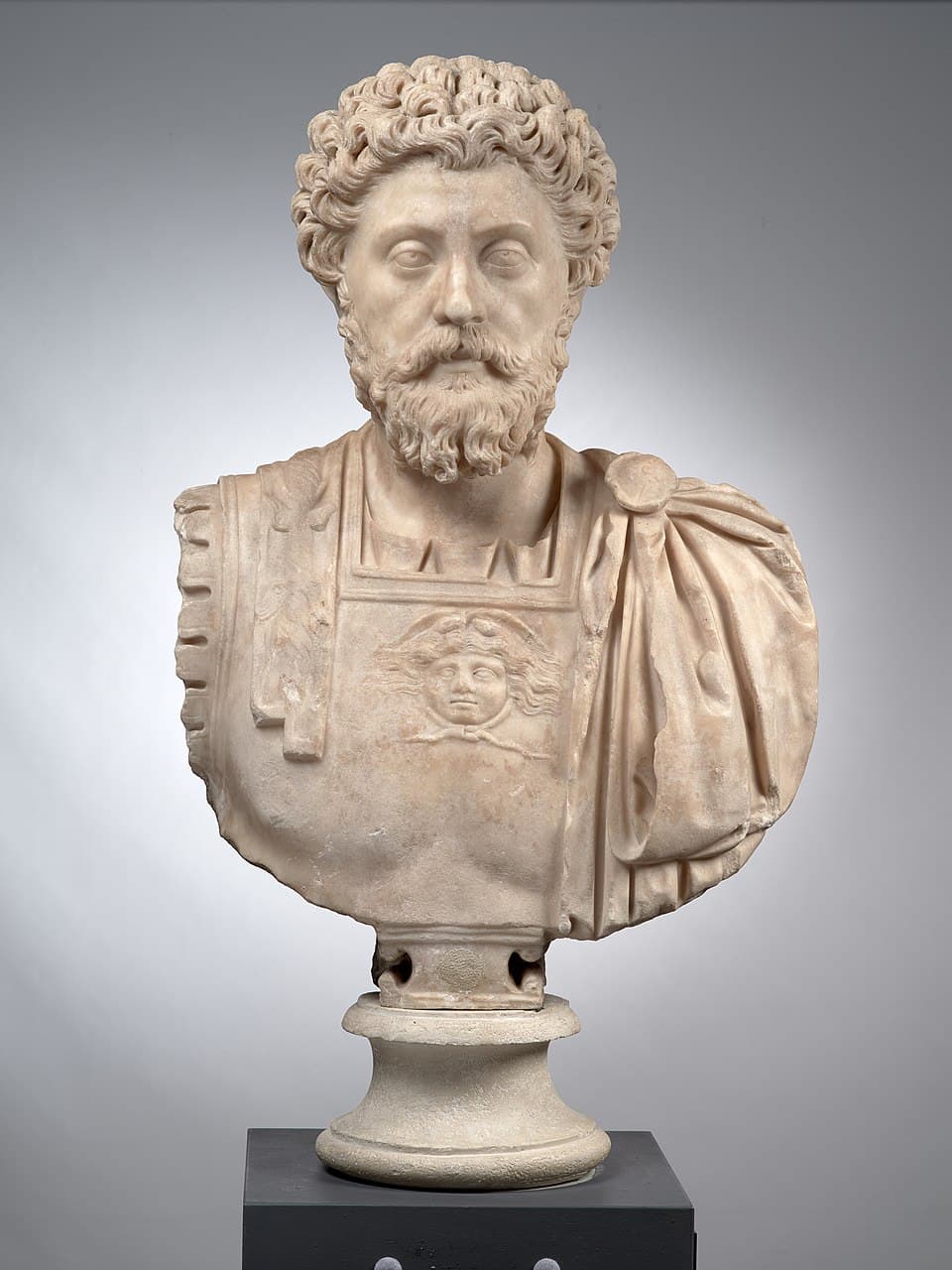
The author encourages the reader to recognize their tiny place in the vastness of eternity and the earth, concluding that the only thing of value is to live according to one's nature.
Our Tiny Portion
Marcus Aurelius
Meditations...ive soul; or of the appetitive faculty? or wouldst thou grow, and then decrease again? Wouldst thou long be able to talk, to think and reason with thyself? Which of all these seems unto thee a worthy object of thy desire? Now if of all these thou doest find that they be but little worth in themselves, proceed on unto the last, which is, in all things to follow God and reason. But for a man to grieve that by death he shall be deprived of any of these things, is both against God and reason. XXV.
What a small portion of vast and infinite eternity it is, that is allowed unto every one of us, and how soon it vanisheth into the general age of the world: of the common substance, and of the common soul also what a small portion is allotted unto us: and in what a little clod of the whole earth (as it were) it is that thou doest crawl. After thou shalt rightly have considered these things with thyself; fancy not anything else in the world any more to be of any weight and moment but this, to do that only which thine own nature doth require; and to conform thyself to that which the common nature doth afford.
XXVI. What is the present estate of my understanding? For herein lieth all indeed. As for all other things, they are without the compass of mine own will: and if without the compass of my will, then are they as dead things unto me, and as it were mere smoke. XXVII. To stir up a man to the contempt of death this among other things, is of good power and efficacy, that even they who esteemed pleasure to be happiness, and pain misery, did nevertheless many of them contemn death as much as any. An...
1
⚖Death as Liberation

Marcus Aurelius
MeditationsDeath is characterized as a liberation from sensory input, emotional turmoil, intellectual fallibility, and the physical demands of the body.
...forbid men to affect those things, which they conceive to agree best with their own natures, and to tend most to their own proper good and behoof? But thou after a sort deniest them this liberty, as often as thou art angry with them for their sins. For surely they are led unto those sins whatsoever they be, as to their proper good and commodity. But it is not so (thou wilt object perchance). Thou therefore teach them better, and make it appear unto them: but be not thou angry with them. XXVI.
Death is a cessation from the impression of the senses, the tyranny of the passions, the errors of the mind, and the servitude of the body.
XXVII. If in this kind of life thy body be able to hold out, it is a shame that thy soul should faint first, and give over, take heed, lest of a philosopher thou become a mere Cæsar in time, and receive a new tincture from the court. For it may happen if thou dost not take heed. Keep thyself therefore, truly simple, good, sincere, grave, free from all ostentation, a lover of that which is just, religious, kind, tender-hearted, strong and vigorous to undergo anything that becomes thee. Endeavou...
6
⚖The Threefold Self

Marcus Aurelius
MeditationsA prescription to prioritize the ruling faculty of reason over the distractions of the flesh and the fleeting nature of life, urging the soul to remain independent of lusts and fears.
...and of the same divine particle; How can I either be hurt by any of those, since it is not in their power to make me incur anything that is truly reproachful? or angry, and ill affected towards him, who by nature is so near unto me? for we are all born to be fellow-workers, as the feet, the hands, and the eyelids; as the rows of the upper and under teeth: for such therefore to be in opposition, is against nature; and what is it to chafe at, and to be averse from, but to be in opposition? XVI.
Whatsoever I am, is either flesh, or life, or that which we commonly call the mistress and overruling part of man; reason. Away with thy books, suffer not thy mind any more to be distracted, and carried to and fro; for it will not be; but as even now ready to die, think little of thy flesh: blood, bones, and a skin; a pretty piece of knit and twisted work, consisting of nerves, veins and arteries; think no more of it, than so. And as for thy life, consider what it is; a wind; not one constant wind neither, but every moment of an hour let out, and sucked in again. The third, is thy ruling part; and here consider; Thou art an old man; suffer…
XVII. Whatsoever proceeds from the gods immediately, that any man will grant totally depends from their divine providence. As for those things that are commonly said to happen by fortune, even those must be conceived to have dependence from nature, or from that first and general connection, and concatenation of all those things, which more apparently by the divine providence are administered and brought to pass. All things flow from thence: and whatsoever it is that is, is both necessary, and...
Continue reading →
2
⚖Death's Equalizing Force

Marcus Aurelius
MeditationsA reflection on the inevitability of death, suggesting that since even the longest-lived and most powerful eventually perish, one should not fear the end of a brief and troubled life.
...r wise? or circumspect? or true? or modest? or free? or from anything else of all those things in the present enjoying and possession whereof the nature of man, (as then enjoying all that is proper unto her,) is fully satisfied? Now to conclude; upon all occasion of sorrow remember henceforth to make use of this dogma, that whatsoever it is that hath happened unto thee, is in very deed no such thing of itself, as a misfortune; but that to bear it generously, is certainly great happiness. XLII.
It is but an ordinary coarse one, yet it is a good effectual remedy against the fear of death, for a man to consider in his mind the examples of such, who greedily and covetously (as it were) did for a long time enjoy their lives. What have they got more, than they whose deaths have been untimely? Are not they themselves dead at the last? as Cadiciant's, Fabius, Julianus Lepidus, or any other who in their lifetime having buried many, were at the last buried themselves. The whole space of any man's life, is but little; and as little as it is, with what troubles, with what manner of dispositions, and in the society of how wretched a body must…
Let it be therefore unto thee altogether as a matter of indifferency. For if thou shalt look backward; behold, what an infinite chaos of time doth present itself unto thee; and as infinite a chaos, if thou shalt look forward. In that which is so infinite, what difference can there be between that which liveth but three days, and that which liveth three ages? XLIII. Let thy course ever be the most compendious way. The most compendious, is that which is according to nature: that is, in all both...
Continue reading →
4
⚖Fame's Fleeting Corner

Marcus Aurelius
MeditationsA prescription to diminish the allure of fame and the fear of death by contemplating the physical decay of the body and the geographical insignificance of human reputation.
...thyself? See how even common sense and reason cannot brook it. XVIII. Nature hath its end as well in the end and final consummation of anything that is, as in the begin-nine and continuation of it. XIX. As one that tosseth up a ball. And what is a ball the better, if the motion of it be upwards; or the worse if it be downwards; or if it chance to fall upon the ground? So for the bubble; if it continue, what it the better? and if it dissolve, what is it the worse And so is it of a candle too.
And so must thou reason with thyself, both in matter of fame, and in matter of death. For as for the body itself, (the subject of death) wouldest thou know the vileness of it? Turn it about that thou mayest behold it the worst sides upwards as well, as in its more ordinary pleasant shape; how doth it look, when it is old and withered? when sick and pained? when in the act of lust, and fornication? And as for fame. This life is short. Both he that praiseth, and he that is praised; he that remembers, and he that is remembered, will soon be dust and ashes. Besides, it is but in one corner of this part of the world that thou art praised; and yet…
XX. That which must be the subject of thy consideration, is either the matter itself, or the dogma, or the operation, or the true sense and signification. XXI. Most justly have these things happened unto thee: why dost not thou amend? O but thou hadst rather become good to-morrow, than to be so to-day. XXII. Shall I do it? I will; so the end of my action be to do good unto men. Doth anything by way of cross or adversity happen unto me? I accept it, with reference unto the Gods, and their pro...
Continue reading →
2