Opinion's Stormy Harbor
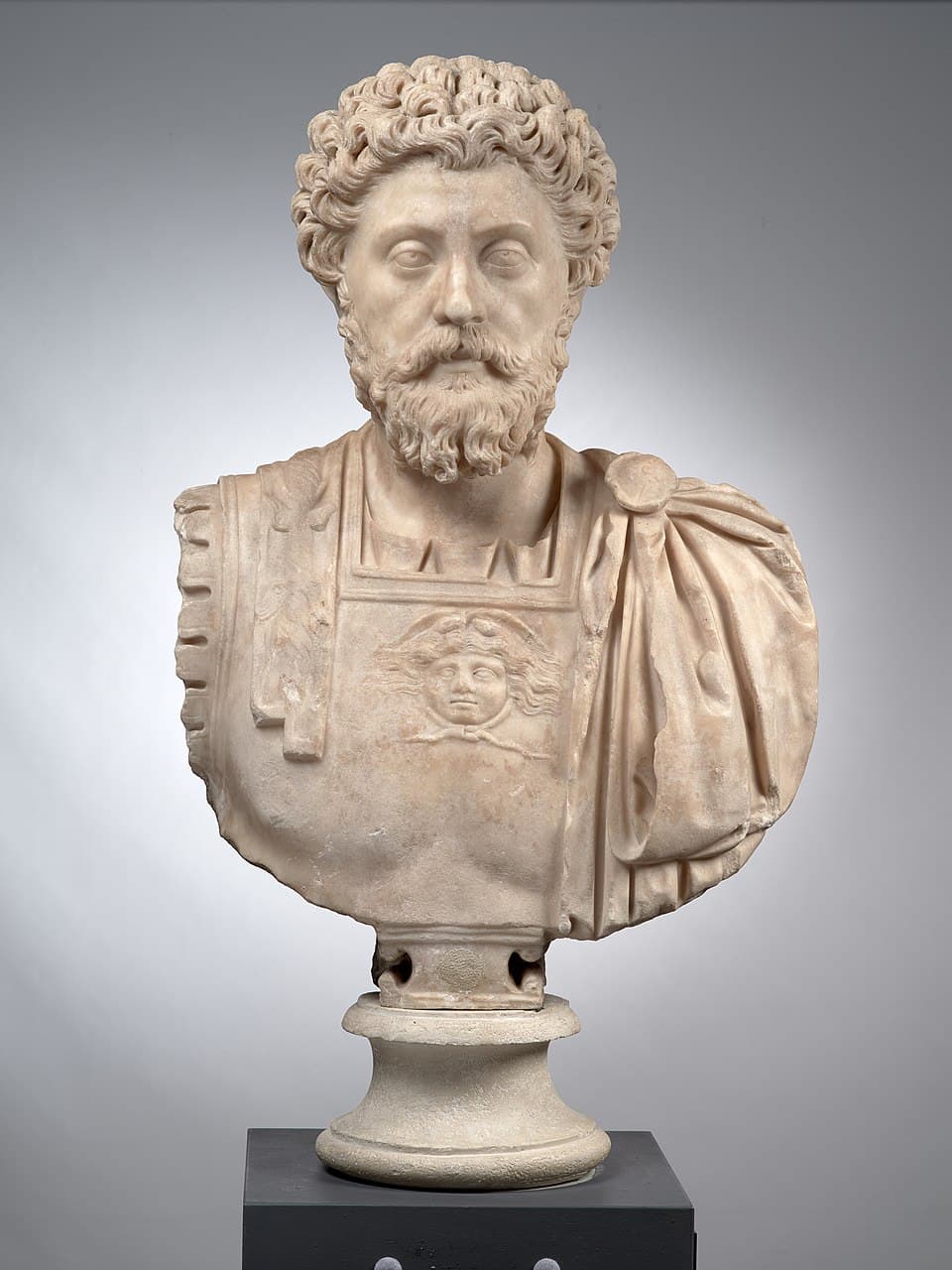
Marcus Aurelius
Meditations

The author describes a state of mental calm achieved by stripping away subjective opinions, comparing the resulting peace to a ship finding safety in a storm-less harbor.

...bject of my mind, is it fear, or suspicion, or lust, or any such thing? To do nothing rashly without some certain end; let that be thy first care. The next, to have no other end than the common good. For, alas! yet a little while, and thou art no more: no more will any, either of those things that now thou seest, or of those men that now are living, be any more. For all things are by nature appointed soon to be changed, turned, and corrupted, that other things might succeed in their room. XVI.
Remember that all is but opinion, and all opinion depends of the mind. Take thine opinion away, and then as a ship that hath stricken in within the arms and mouth of the harbour, a present calm; all things safe and steady: a bay, not capable of any storms and tempests: as the poet hath it.
XVII. No operation whatsoever it he, ceasing for a while, can be truly said to suffer any evil, because it is at an end. Neither can he that is the author of that operation; for this very respect, because his operation is at an end, be said to suffer any evil. Likewise then, neither can the whole body of all our actions (which is our life) if in time it cease, be said to suffer any evil for this very reason, because it is at an end; nor he truly be said to have been ill affected, that did put...
2
Content with Lot
Marcus Aurelius
Meditations

The author invites the reader to try a life of simplicity and contentment, arguing that the offenses of others only harm the offender and should not disturb one's own peace.

...e unnecessary; if a man shall cut them off, it must needs follow that he shall thereby gain much leisure, and save much trouble, and therefore at every action a man must privately by way of admonition suggest unto himself, What? may not this that now I go about, be of the number of unnecessary actions? Neither must he use himself to cut off actions only, but thoughts and imaginations also, that are unnecessary for so will unnecessary consequent actions the better be prevented and cut off. XXI.
Try also how a good man's life; (of one, who is well pleased with those things whatsoever, which among the common changes and chances of this world fall to his own lot and share; and can live well contented and fully satisfied in the justice of his own proper present action, and in the goodness of his disposition for the future:) will agree with thee. Thou hast had experience of that other kind of life: make now trial of this also. Trouble not thyself any more henceforth, reduce thyself unto perfect simplicity. Doth any man offend? It is against himself that he doth offend: why should it trouble thee?
Hath anything happened unto thee? It is well, whatsoever it be, it is that which of all the common chances of the world from the very beginning in the series of all other things that have, or shall happen, was destinated and appointed unto thee. To comprehend all in a few words, our life is short; we must endeavour to gain the present time with best discretion and justice. Use recreation with sobriety. XXII. Either this world is a κόσμος or comely piece, because all disposed and governed by ce...
2
Mind's Unhindered Motion
Marcus Aurelius
Meditations

The author describes the mind's capacity for absolute freedom and resilience, asserting that external obstacles cannot truly hurt the soul unless the individual's reason allows it.

...indrus_, or roller, it is not granted to move everywhere according to its own proper motion, as neither unto the water, nor unto the fire, nor unto any other thing, that either is merely natural, or natural and sensitive; but not rational for many things there be that can hinder their operations. But of the mind and understanding this is the proper privilege, that according to its own nature, and as it will itself, it can pass through every obstacle that it finds, and keep straight on forwards.
Setting therefore before thine eyes this happiness and felicity of thy mind, whereby it is able to pass through all things, and is capable of all motions, whether as the fire, upwards; or as the stone downwards, or as the cylindrus through that which is sloping: content thyself with it, and seek not after any other thing. For all other kind of hindrances that are not hindrances of thy mind either they are proper to the body, or merely proceed from the opinion, reason not making that resistance that it should, but basely, and cowardly suffering itself to be foiled; and of themselves can neither wound, nor do any hurt at all.
Else must he of necessity, whosoever he be that meets with any of them, become worse than he was before. For so is it in all other subjects, that that is thought hurtful unto them, whereby they are made worse. But here contrariwise, man (if he make that good use of them that he should) is rather the better and the more praiseworthy for any of those kind of hindrances, than otherwise. But generally remember that nothing can hurt a natural citizen, that is not hurtful unto the city itself, nor an...
1
The Focused Life
Marcus Aurelius
Meditations

The author warns against aimless wandering and idle labor, prescribing a life directed by a clear, certain scope and the pursuit of meaningful knowledge.

...s course, and to live a divine life, are requisite and necessary, are not many, for the gods will require no more of any man, that shall but keep and observe these things. III. Do, soul, do; abuse and contemn thyself; yet a while and the time for thee to respect thyself, will be at an end. Every man's happiness depends from himself, but behold thy life is almost at an end, whiles affording thyself no respect, thou dost make thy happiness to consist in the souls, and conceits of other men. IV.
Why should any of these things that happen externally, so much distract thee? Give thyself leisure to learn some good thing, and cease roving and wandering to and fro. Thou must also take heed of another kind of wandering, for they are idle in their actions, who toil and labour in this life, and have no certain scope to which to direct all their motions, and desires.
V. For not observing the state of another man's soul, scarce was ever any man known to be unhappy. Tell whosoever they be that intend not, and guide not by reason and discretion the motions of their own souls, they must of necessity be unhappy. VI. These things thou must always have in mind: What is the nature of the universe, and what is mine--in particular: This unto that what relation it hath: what kind of part, of what kind of universe it is: And that there is nobody that can hinder thee,...
2
The Soul's Self-Movement
Marcus Aurelius
Meditations

The author argues that external events cannot truly touch or move the soul; rather, the soul is affected only by its own internal judgments and opinions.

...been demonstrated. Or can any man make any question of this, that whatsoever is naturally worse and inferior, is ordinarily subordinated to that which is better? and that those things that are best, are made one for another? And those things that have souls, are better than those that have none? and of those that have, those best that have rational souls? XVI. To desire things impossible is the part of a mad man. But it is a thing impossible, that wicked man should not commit some such things.
Neither doth anything happen to any man, which in the ordinary course of nature as natural unto him doth not happen. Again, the same things happen unto others also. And truly, if either he that is ignorant that such a thing hath happened unto him, or he that is ambitious to be commended for his magnanimity, can be patient, and is not grieved: is it not a grievous thing, that either ignorance, or a vain desire to please and to be commended, should be more powerful and effectual than true prudence? As for the things themselves, they touch not the soul, neither can they have any access unto it: neither can they of themselves any ways either…
XVII. After one consideration, man is nearest unto us; as we are bound to do them good, and to bear with them. But as he may oppose any of our true proper actions, so man is unto me but as a thing indifferent: even as the sun, or the wind, or some wild beast. By some of these it may be, that some operation or other of mine, may be hindered; however, of my mind and resolution itself, there can be no let or impediment, by reason of that ordinary constant both exception (or reservation wherewith...
Continue reading →
4