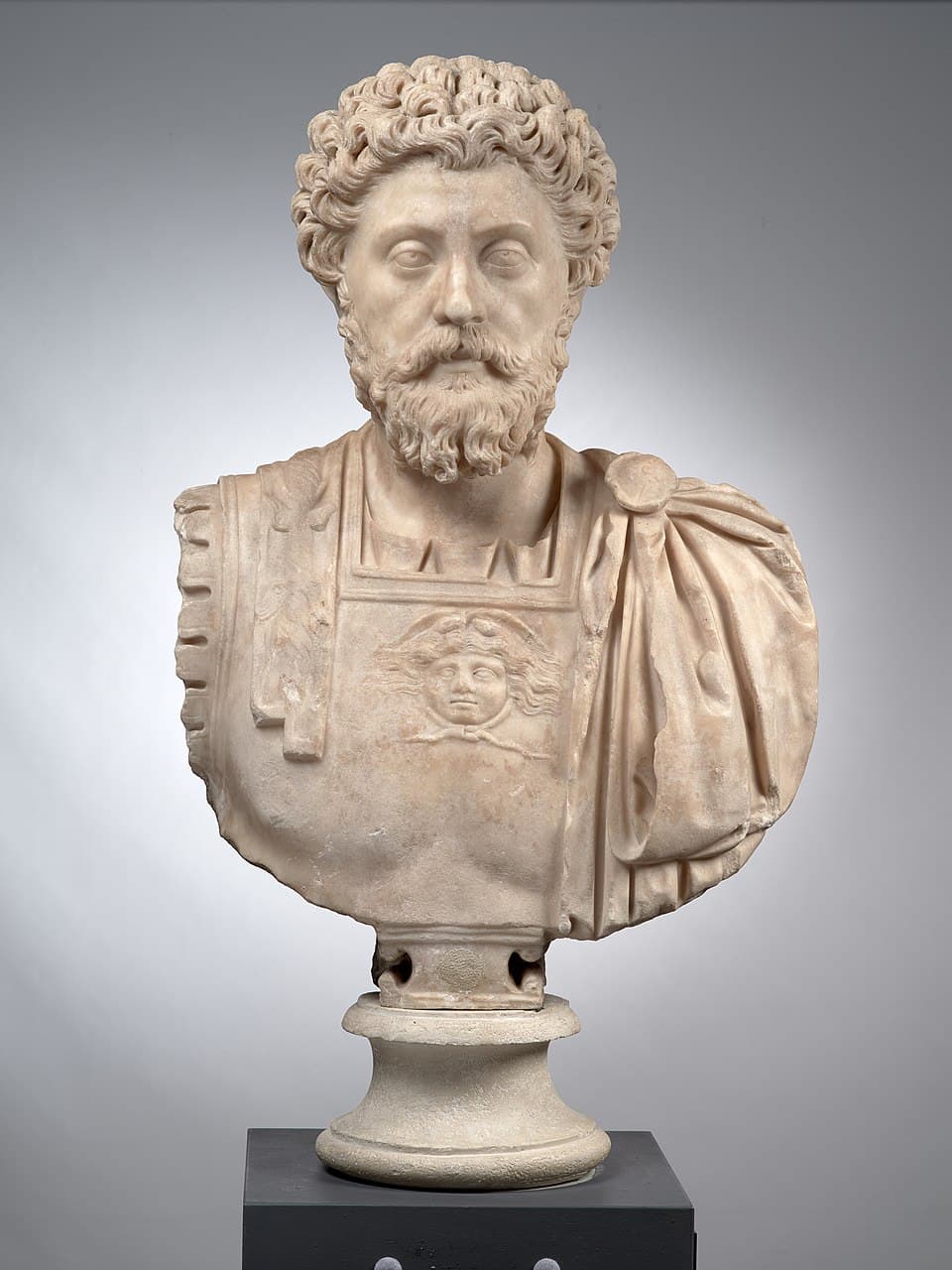
The author suggests that wickedness and trouble are nothing new or unique, and should be met with the realization that all things are repetitive and transitory.
Nothing Is New
Marcus Aurelius
Meditations...pinion is less powerful to make men transgress, than either choler, being immoderate and excessive, to cause the jaundice; or poison, to cause rage? LIII. No man can hinder thee to live as thy nature doth require. Nothing can happen unto thee, but what the common good of nature doth require. LIV. What manner of men they be whom they seek to please, and what to get, and by what actions: how soon time will cover and bury all things, and how many it hath already buried! THE SEVENTH BOOK I.
What is wickedness? It is that which many time and often thou hast already seen and known in the world. And so oft as anything doth happen that might otherwise trouble thee, let this memento presently come to thy mind, that it is that which thou hast already often Seen and known. Generally, above and below, thou shalt find but the same things. The very same things whereof ancient stories, middle age stories, and fresh stories are full whereof towns are full, and houses full. There is nothing that is new. All things that are, are both usual and of little continuance.
II. What fear is there that thy dogmata, or philosophical resolutions and conclusions, should become dead in thee, and lose their proper power and efficacy to make thee live happy, as long as those proper and correlative fancies, and representations of things on which they mutually depend (which continually to stir up and revive is in thy power,) are still kept fresh and alive? It is in my power concerning this thing that is happened, what soever it be, to conceit that which is right and true....
2
⚖Humanity as Leaves

Marcus Aurelius
MeditationsA vision of the transience of human life, comparing children, admirers, and even historical figures to leaves that flourish briefly before being replaced by nature.
...ocieties are maintained: neither therefore do they hurt either city or citizen. XXXIV. As he that is bitten by a mad dog, is afraid of everything almost that he seeth: so unto him, whom the dogmata have once bitten, or in whom true knowledge hath made an impression, everything almost that he sees or reads be it never so short or ordinary, doth afford a good memento; to put him out of all grief and fear, as that of the poet, 'The winds blow upon the trees, and their leaves fall upon the ground.
Then do the trees begin to bud again, and by the spring-time they put forth new branches. So is the generation of men; some come into the world, and others go out of it.' Of these leaves then thy children are. And they also that applaud thee so gravely, or, that applaud thy speeches, with that their usual acclamation, ἀξιοπίστως, O wisely spoken I and speak well of thee, as on the other side, they that stick not to curse thee, they that privately and secretly dispraise and deride thee, they also are but leaves. And they also that shall follow, in whose memories the names of men famous after death, is preserved, they are but leaves neither.…
Their spring comes, and they are put forth. Then blows the wind, and they go down. And then in lieu of them grow others out of the wood or common matter of all things, like unto them. But, to endure but for a while, is common unto all. Why then shouldest thou so earnestly either seek after these things, or fly from them, as though they should endure for ever? Yet a little while, and thine eyes will be closed up, and for him that carries thee to thy grave shall another mourn within a while after...
Continue reading →
2
⚖Elements' Eternal Cycle

Marcus Aurelius
MeditationsThe author posits that death is merely a dissolution into the world's natural elements, suggesting that since we are part of the universe, we should accept change without complaint.
...help. For of thee nothing is required, ti, is beyond the extent of thine own deliberation and jun. merit, and of thine own understanding. XV. If it were thine act and in thine own power, wouldest thou do it? If it were not, whom dost tin accuse? the atoms, or the Gods? For to do either, the part of a mad man. Thou must therefore blame nobody, but if it be in thy power, redress what is amiss; if it be not, to what end is it to complain? For nothing should be done but to some certain end. XVI.
Whatsoever dieth and falleth, however and wheresoever it die and fall, it cannot fall out of the world, here it have its abode and change, here also shall it have its dissolution into its proper elements. The same are the world's elements, and the elements of which thou dost consist. And they when they are changed, they murmur not; why shouldest thou?
XVII. Whatsoever is, was made for something: as a horse, a vine. Why wonderest thou? The sun itself will say of itself, I was made for something; and so hath every god its proper function. What then were then made for? to disport and delight thyself? See how even common sense and reason cannot brook it. XVIII. Nature hath its end as well in the end and final consummation of anything that is, as in the begin-nine and continuation of it. XIX. As one that tosseth up a ball. And what is a ball t...
4
⚖Time's Fleeting Objects

Marcus Aurelius
MeditationsA reflection on the transience of life and the vastness of time, emphasizing that all things and people, regardless of their lifespan, are quickly consumed by the infinite void.
...od is the cause, to accept it contentedly: whatsoever thou doest, whereof thou thyself art the cause, to do it justly: which will be, if both in thy resolution and in thy action thou have no further end, than to do good unto others, as being that, which by thy natural constitution, as a man, thou art bound unto. XXX. Many of those things that trouble and straiten thee, it is in thy power to cut off, as wholly depending from mere conceit and opinion; and then thou shalt have room enough. XXXI.
To comprehend the whole world together in thy mind, and the whole course of this present age to represent it unto thyself, and to fix thy thoughts upon the sudden change of every particular object. How short the time is from the generation of anything, unto the dissolution of the same; but how immense and infinite both that which was before the generation, and that which after the generation of it shall be. All things that thou seest, will soon be perished, and they that see their corruptions, will soon vanish away themselves. He that dieth a hundred years old, and he that dieth young, shall come all to one.
XXXII. What are their minds and understandings; and what the things that they apply themselves unto: what do they love, and what do they hate for? Fancy to thyself the estate of their souls openly to be seen. When they think they hurt them shrewdly, whom they speak ill of; and when they think they do them a very good turn, whom they commend and extol: O how full are they then of conceit, and opinion! XXXIII. Loss and corruption, is in very deed nothing else but change and alteration; and that...
1
⚖Death's Equalizing Force

Marcus Aurelius
MeditationsA reflection on the inevitability of death, suggesting that since even the longest-lived and most powerful eventually perish, one should not fear the end of a brief and troubled life.
...r wise? or circumspect? or true? or modest? or free? or from anything else of all those things in the present enjoying and possession whereof the nature of man, (as then enjoying all that is proper unto her,) is fully satisfied? Now to conclude; upon all occasion of sorrow remember henceforth to make use of this dogma, that whatsoever it is that hath happened unto thee, is in very deed no such thing of itself, as a misfortune; but that to bear it generously, is certainly great happiness. XLII.
It is but an ordinary coarse one, yet it is a good effectual remedy against the fear of death, for a man to consider in his mind the examples of such, who greedily and covetously (as it were) did for a long time enjoy their lives. What have they got more, than they whose deaths have been untimely? Are not they themselves dead at the last? as Cadiciant's, Fabius, Julianus Lepidus, or any other who in their lifetime having buried many, were at the last buried themselves. The whole space of any man's life, is but little; and as little as it is, with what troubles, with what manner of dispositions, and in the society of how wretched a body must…
Let it be therefore unto thee altogether as a matter of indifferency. For if thou shalt look backward; behold, what an infinite chaos of time doth present itself unto thee; and as infinite a chaos, if thou shalt look forward. In that which is so infinite, what difference can there be between that which liveth but three days, and that which liveth three ages? XLIII. Let thy course ever be the most compendious way. The most compendious, is that which is according to nature: that is, in all both...
Continue reading →
4