The Cosmic Perspective
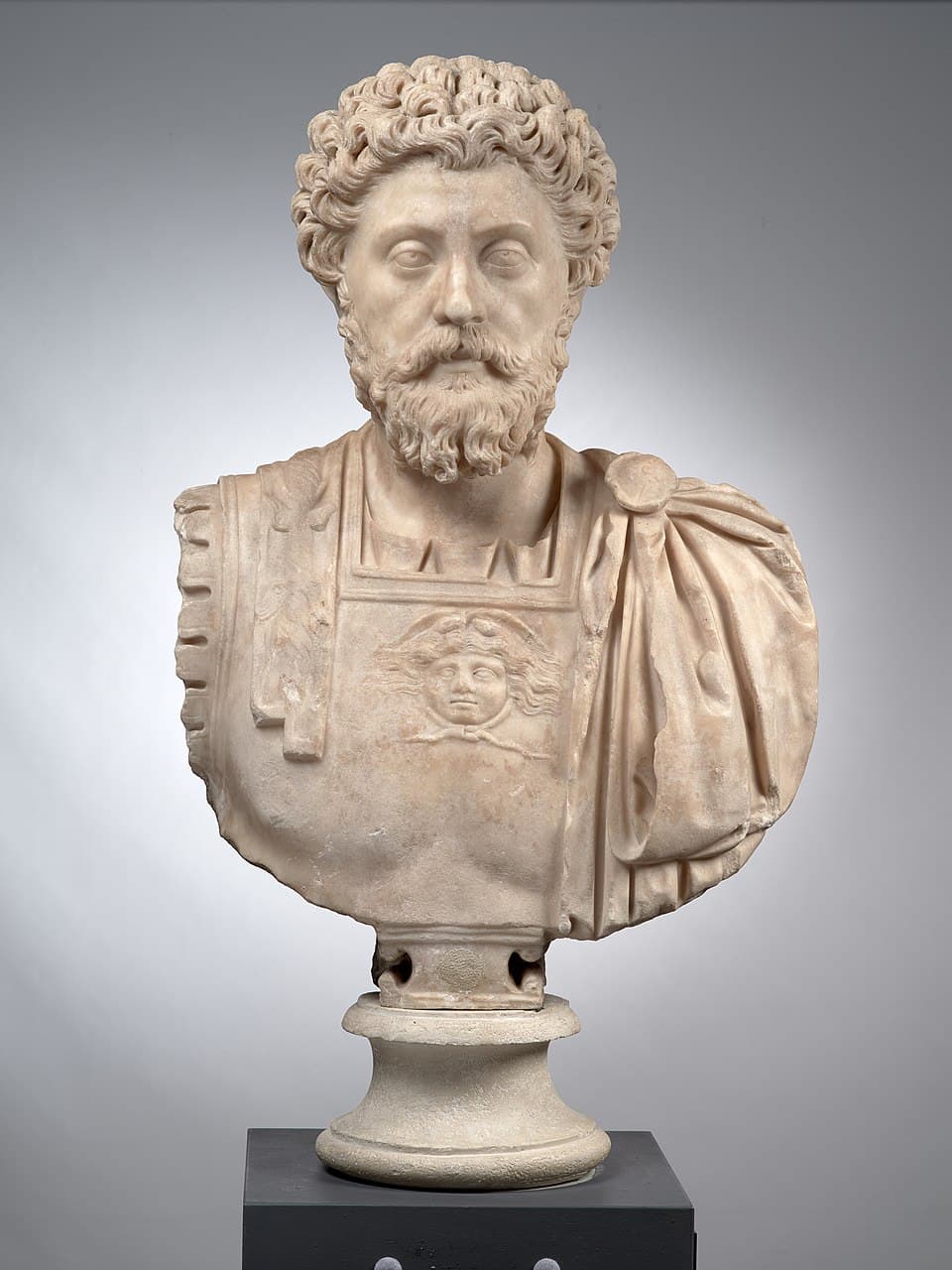
Marcus Aurelius
Meditations

A reflection on the vastness of the universe and time, urging the individual to recognize their own smallness and the brevity of their allotted portion of existence.

...ere anything almost, that may ever be said to be now settled and constant. Next unto this, and which follows upon it, consider both the infiniteness of the time already past, and the immense vastness of that which is to come, wherein all things are to be resolved and annihilated. Art not thou then a very fool, who for these things, art either puffed up with pride, or distracted with cares, or canst find in thy heart to make such moans as for a thing that would trouble thee for a very long time?
Consider the whole universe whereof thou art but a very little part, and the whole age of the world together, whereof but a short and very momentary portion is allotted unto thee, and all the fates and destinies together, of which how much is it that comes to thy part and share!
Again: another doth trespass against me. Let him look to that. He is master of his own disposition, and of his own operation. I for my part am in the meantime in possession of as much, as the common nature would have me to possess: and that which mine own nature would have me do, I do. XX. Let not that chief commanding part of thy soul be ever subject to any variation through any corporal either pain or pleasure, neither suffer it to be mixed with these, but let it both circumscribe itself, an...
3
Reason's Humble Use
Marcus Aurelius
Meditations

A personal reflection on the use of reason, where the author commits to performing his duty for the common good either through his own capacity or by seeking the help of others.

...rth more or less. IV. Word after word, every one by itself, must the things that are spoken be conceived and understood; and so the things that are done, purpose after purpose, every one by itself likewise. And as in matter of purposes and actions, we must presently see what is the proper use and relation of every one; so of words must we be as ready, to consider of every one what is the true meaning, and signification of it according to truth and nature, however it be taken in common use. V.
Is my reason, and understanding sufficient for this, or no? If it be sufficient, without any private applause, or public ostentation as of an instrument, which by nature I am provided of, I will make use of it for the work in hand, as of an instrument, which by nature I am provided of. if it be not, and that otherwise it belong not unto me particularly as a private duty, I will either give it over, and leave it to some other that can better effect it: or I will endeavour it; but with the help of some other, who with the joint help of my reason, is able to bring somewhat to pass, that will now be seasonable and useful for the common good.
For whatsoever I do either by myself, or with some other, the only thing that I must intend, is, that it be good and expedient for the public. For as for praise, consider how many who once were much commended, are now already quite forgotten, yea they that commended them, how even they themselves are long since dead and gone. Be not therefore ashamed, whensoever thou must use the help of others. For whatsoever it be that lieth upon thee to effect, thou must propose it unto thyself, as the scali...
2
Roman vs Christian Self-Scrutiny
Marcus Aurelius
Meditations

A comparison between Roman Stoic and Christian ethics, noting that while both seek detachment from worldly things, the Roman appeals to his own soul rather than divine censure.

...eaceable mind.' To this end there must be continual self-examination. 'If thou may not continually gather thyself together, namely sometimes do it, at least once a day, the morning or the evening. In the morning purpose, in the evening discuss the manner, what thou hast been this day, in word, work, and thought.' But while the Roman's temper is a modest self-reliance, the Christian aims at a more passive mood, humbleness and meekness, and reliance on the presence and personal friendship of God.
The Roman scrutinises his faults with severity, but without the self-contempt which makes the Christian 'vile in his own sight.' The Christian, like the Roman, bids 'study to withdraw thine heart from the love of things visible'; but it is not the busy life of duty he has in mind so much as the contempt of all worldly things, and the 'cutting away of all lower delectations.' Both rate men's praise or blame at their real worthlessness; 'Let not thy peace,' says the Christian, 'be in the mouths of men.' But it is to God's censure the Christian appeals, the Roman to his own soul.
The petty annoyances of injustice or unkindness are looked on by each with the same magnanimity. 'Why doth a little thing said or done against thee make thee sorry? It is no new thing; it is not the first, nor shall it be the last, if thou live long. At best suffer patiently, if thou canst not suffer joyously.' The Christian should sorrow more for other men's malice than for our own wrongs; but the Roman is inclined to wash his hands of the offender. 'Study to be patient in suffering and bearin...
6
Father's Meek Constancy
Marcus Aurelius
Meditations

The author honors his father's character, specifically noting his unwavering constancy, lack of vanity, and impartial dedication to the common good through both labor and moderation.

...be perplexed, or dejected, or at any time unseemly, or excessively to laugh: nor to be angry, or suspicious, but ever ready to do good, and to forgive, and to speak truth; and all this, as one that seemed rather of himself to have been straight and right, than ever to have been rectified or redressed; neither was there any man that ever thought himself undervalued by him, or that could find in his heart, to think himself a better man than he. He would also be very pleasant and gracious. XIII.
In my father, I observed his meekness; his constancy without wavering in those things, which after a due examination and deliberation, he had determined. How free from all vanity he carried himself in matter of honour and dignity, (as they are esteemed:) his laboriousness and assiduity, his readiness to hear any man, that had aught to say tending to any common good: how generally and impartially he would give every man his due; his skill and knowledge, when rigour or extremity, or when remissness or moderation was in season;
how he did abstain from all unchaste love of youths; his moderate condescending to other men's occasions as an ordinary man, neither absolutely requiring of his friends, that they should wait upon him at his ordinary meals, nor that they should of necessity accompany him in his journeys; and that whensoever any business upon some necessary occasions was to be put off and omitted before it could be ended, he was ever found when he went about it again, the same man that he was before. His accurat...
2
The Vanishing World
Marcus Aurelius
Meditations

A vision of the fleeting nature of power and existence, reminding the reader that even the greatest Caesars have vanished into nothingness. The author urges the reader to be satisfied with living virtuously during the brief portion of time they are allotted.

...rget thine anger; especially when at the same time this also shall concur in thy thoughts, that he was constrained by his error and ignorance so to do: for how can he choose as long as he is of that opinion? Do thou therefore if thou canst, take away that from him, that forceth him to do as he doth. XXXI. When thou seest Satyro, think of Socraticus and Eutyches, or Hymen, and when Euphrates, think of Eutychio, and Sylvanus, when Alciphron, of Tropaeophorus, when Xenophon, of Crito, or Severus.
And when thou doest look upon thyself, fancy unto thyself some one or other of the Cæsars; and so for every one, some one or other that hath been for estate and profession answerable unto him. Then let this come to thy mind at the same time; and where now are they all? Nowhere or anywhere? For so shalt thou at all time be able to perceive how all worldly things are but as the smoke, that vanisheth away: or, indeed, mere nothing. Especially when thou shalt call to mind this also, that whatsoever is once changed, shall never be again as long as the world endureth. And thou then, how long shalt thou endure? And why doth it not suffice thee, if…
XXXII. What a subject, and what a course of life is it, that thou doest so much desire to be rid of. For all these things, what are they, but fit objects for an understanding, that beholdeth everything according to its true nature, to exercise itself upon? Be patient, therefore, until that (as a strong stomach that turns all things into his own nature; and as a great fire that turneth in flame and light, whatsoever thou doest cast into it) thou have made these things also familiar, and as it w...
Continue reading →
1