An exhortation to perform one's duty regardless of external circumstances or personal comfort, viewing even death as a final act of duty.
Duty Beyond Conditions
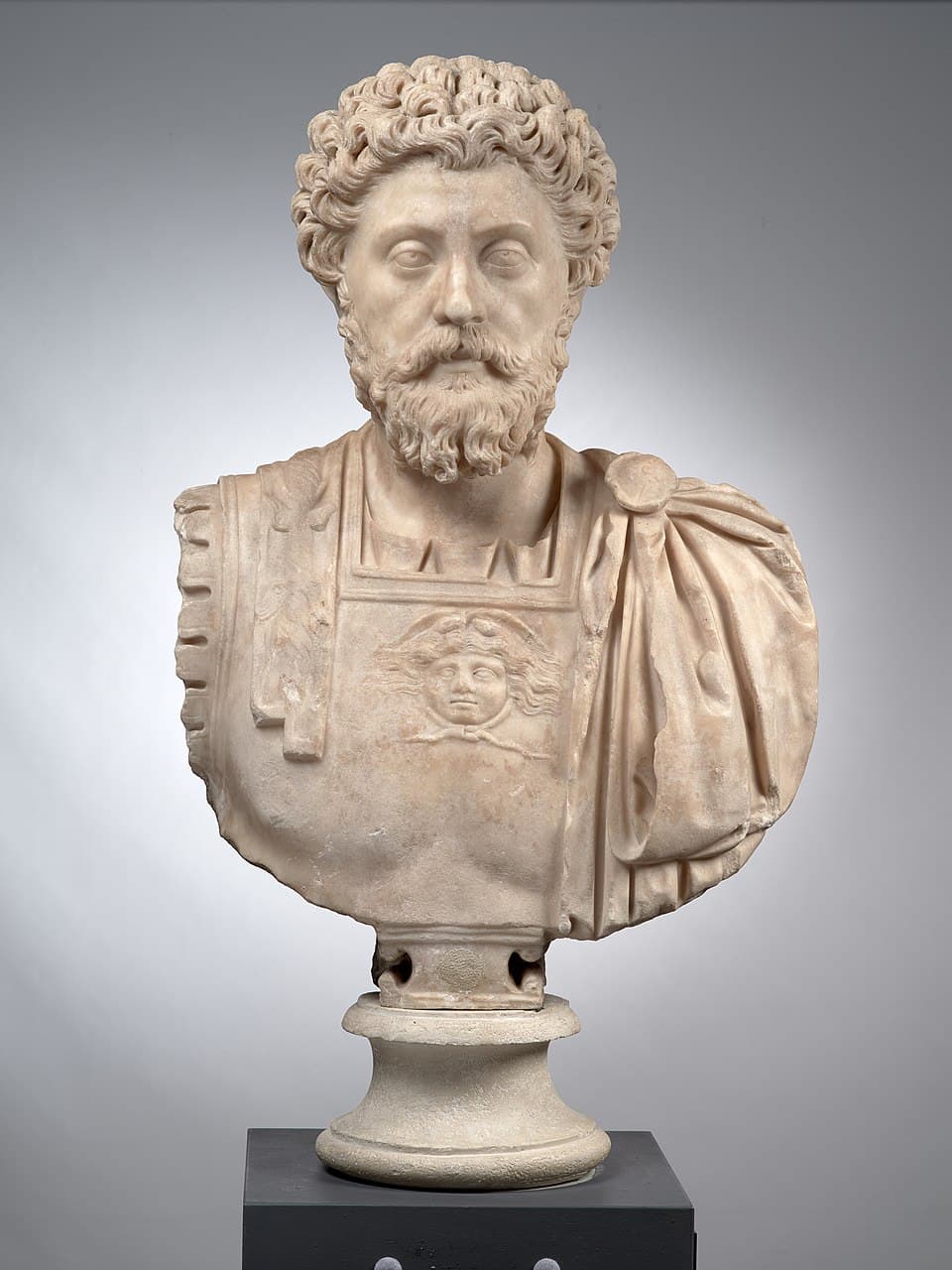
Marcus Aurelius
Meditations...elf a happy lot and portion. A happy lot and portion is, good inclinations of the soul, good desires, good actions. THE SIXTH BOOK I. The matter itself, of which the universe doth consist, is of itself very tractable and pliable. That rational essence that doth govern it, hath in itself no cause to do evil. It hath no evil in itself; neither can it do anything that is evil: neither can anything be hurt by it. And all things are done and determined according to its will and prescript. II.
Be it all one unto thee, whether half frozen or well warm; whether only slumbering, or after a full sleep; whether discommended or commended thou do thy duty: or whether dying or doing somewhat else; for that also 'to die,' must among the rest be reckoned as one of the duties and actions of our lives.
III. Look in, let not either the proper quality, or the true worth of anything pass thee, before thou hast fully apprehended it. IV. All substances come soon to their change, and either they shall be resolved by way of exhalation (if so be that all things shall be reunited into one substance), or as others maintain, they shall be scattered and dispersed. As for that Rational Essence by which all things are governed, as it best understandeth itself, both its own disposition, and what it doth,...
2
⚖Community's Two Faces

Marcus Aurelius
MeditationsA comparison between Christian and Roman Stoic ethics, highlighting a shared sense of community but differing in their emphasis on emotion versus duty.
...canst not suffer joyously.' The Christian should sorrow more for other men's malice than for our own wrongs; but the Roman is inclined to wash his hands of the offender. 'Study to be patient in suffering and bearing other men's defaults and all manner infirmities,' says the Christian; but the Roman would never have thought to add, 'If all men were perfect, what had we then to suffer of other men for God?' The virtue of suffering in itself is an idea which does not meet us in the Meditations.
Both alike realise that man is one of a great community. 'No man is sufficient to himself,' says the Christian; 'we must bear together, help together, comfort together.' But while he sees a chief importance in zeal, in exalted emotion that is, and avoidance of lukewarmness, the Roman thought mainly of the duty to be done as well as might be, and less of the feeling which should go with the doing of it.
To the saint as to the emperor, the world is a poor thing at best. 'Verily it is a misery to live upon the earth,' says the Christian; few and evil are the days of man's life, which passeth away suddenly as a shadow. But there is one great difference between the two books we are considering. The Imitation is addressed to others, the Meditations by the writer to himself. We learn nothing from the Imitation of the author's own life, except in so far as he may be assumed to have practised h...
6
⚖The Universe's Happy Part

Marcus Aurelius
MeditationsA prescription to live happily by recognizing one's role as a part of the universe and dedicating all actions to the common good of the human community.
...e world. For nothing that is behoveful unto the whole, can be truly hurtful to that which is part of it. For this being the common privilege of all natures, that they contain nothing in themselves that is hurtful unto them; it cannot be that the nature of the universe (whose privilege beyond other particular natures, is, that she cannot against her will by any higher external cause be constrained,) should beget anything and cherish it in her bosom that should tend to her own hurt and prejudice.
As then I bear in mind that I am a part of such an universe, I shall not be displeased with anything that happens. And as I have relation of kindred to those parts that are of the same kind and nature that I am, so I shall be careful to do nothing that is prejudicial to the community, but in all my deliberations shall they that are of my kind ever be; and the common good, that, which all my intentions and resolutions shall drive unto, as that which is contrary unto it, I shall by all means endeavour to prevent and avoid. These things once so fixed and concluded, as thou wouldst think him a happy citizen, whose constant study and practice were…
VII. All parts of the world, (all things I mean that are contained within the whole world), must of necessity at some time or other come to corruption. Alteration I should say, to speak truly and properly; but that I may be the better understood, I am content at this time to use that more common word. Now say I, if so be that this be both hurtful unto them, and yet unavoidable, would not, thinkest thou, the whole itself be in a sweet case, all the parts of it being subject to alteration, yea a...
Continue reading →
2
⚖Speak Justly, Kindly

Marcus Aurelius
MeditationsThe author prescribes a two-fold approach to life: accepting the natural end of all things in the universe and focusing one's remaining energy on performing one's duty with kindness and justice.
...o in all things is ruled and governed by the same law of right and reason, by which God Himself is. III. Alexander, Caius, Pompeius; what are these to Diogenes, Heraclitus, and Socrates? These penetrated into the true nature of things; into all causes, and all subjects: and upon these did they exercise their power and authority. But as for those, as the extent of their error was, so far did their slavery extend. IV. What they have done, they will still do, although thou shouldst hang thyself.
First; let it not trouble thee. For all things both good and evil: come to pass according to the nature and general condition of the universe, and within a very little while, all things will be at an end; no man will be remembered: as now of Africanus (for example) and Augustus it is already come to pass. Then secondly; fix thy mind upon the thing itself; look into it, and remembering thyself, that thou art bound nevertheless to be a good man, and what it is that thy nature requireth of thee as thou art a man, be not diverted from what thou art about, and speak that which seemeth unto thee most just: only speak it kindly, modestly, and…
V. That which the nature of the universe doth busy herself about, is; that which is here, to transfer it thither, to change it, and thence again to take it away, and to carry it to another place. So that thou needest not fear any new thing. For all things are usual and ordinary; and all things are disposed by equality. VI. Every particular nature hath content, when in its own proper course it speeds. A reasonable nature doth then speed, when first in matter of fancies and imaginations, it giv...
Continue reading →
2
⚖Awakening to Common Good

Marcus Aurelius
MeditationsA reminder that performing actions for the common good is the unique and proper duty of human nature, distinguishing man from irrational creatures.
...e reckoning of it accordingly. But never did any honest virtuous man repent of the neglect or omission of any carnal pleasure: no carnal pleasure then is either good or profitable. X. This, what is it in itself, and by itself, according to its proper constitution? What is the substance of it? What is the matter, or proper use? What is the form or efficient cause? What is it for in this world, and how long will it abide? Thus must thou examine all things, that present themselves unto thee. XI.
When thou art hard to be stirred up and awaked out of thy sleep, admonish thyself and call to mind, that, to perform actions tending to the common good is that which thine own proper constitution, and that which the nature of man do require. But to sleep, is common to unreasonable creatures also. And what more proper and natural, yea what more kind and pleasing, than that which is according to nature?
XII. As every fancy and imagination presents itself unto thee, consider (if it be possible) the true nature, and the proper qualities of it, and reason with thyself about it. XIII. At thy first encounter with any one, say presently to thyself: This man, what are his opinions concerning that which is good or evil? as concerning pain, pleasure, and the causes of both; concerning honour, and dishonour, concerning life and death? thus and thus. Now if it be no wonder that a man should have such a...
4