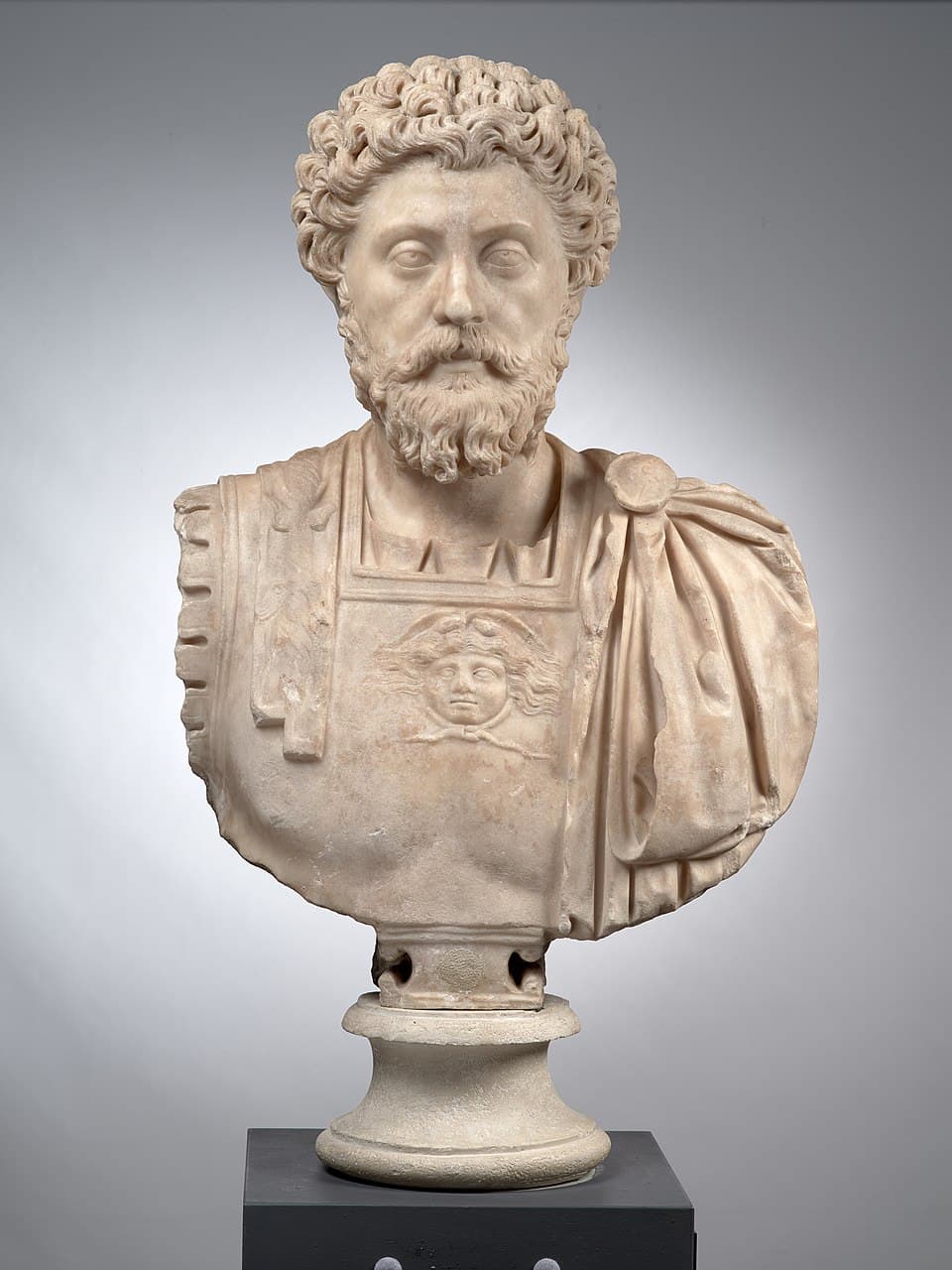
Mindful Acceptance
Marcus Aurelius
Meditations

A prescription for living mindfully by embracing fate, acting justly toward others, and rigorously examining one's thoughts to ensure they align with reality.

...dverse chances with more equanimity: or with his neighbour's offences with more meekness and gentleness than I? XXIX. Where the matter may be effected agreeably to that reason, which both unto the Gods and men is common, there can be no just cause of grief or sorrow. For where the fruit and benefit of an action well begun and prosecuted according to the proper constitution of man may be reaped and obtained, or is sure and certain, it is against reason that any damage should there be suspected.
In all places, and at all times, it is in thy power religiously to embrace whatsoever by God's appointment is happened unto thee, and justly to converse with those men, whom thou hast to do with, and accurately to examine every fancy that presents itself, that nothing may slip and steal in, before thou hast rightly apprehended the true nature of it.
XXX. Look not about upon other men's minds and understandings; but look right on forwards whither nature, both that of the universe, in those things that happen unto thee; and thine in particular, in those things that are done by thee: doth lead, and direct thee. Now every one is bound to do that, which is consequent and agreeable to that end which by his true natural constitution he was ordained unto. As for all other things, they are ordained for the use of reasonable creatures: as in all th...
2
Spirit's Invulnerable Core
Marcus Aurelius
Meditations

The author defines philosophy as the preservation of the inner spirit from passion and hypocrisy, embracing all events as natural and meeting death with calm cheerfulness.

...of a man's life is as a point; the substance of it ever flowing, the sense obscure; and the whole composition of the body tending to corruption. His soul is restless, fortune uncertain, and fame doubtful; to be brief, as a stream so are all things belonging to the body; as a dream, or as a smoke, so are all that belong unto the soul. Our life is a warfare, and a mere pilgrimage. Fame after life is no better than oblivion. What is it then that will adhere and follow? Only one thing, philosophy.
And philosophy doth consist in this, for a man to preserve that spirit which is within him, from all manner of contumelies and injuries, and above all pains or pleasures; never to do anything either rashly, or feignedly, or hypocritically: wholly to depend from himself and his own proper actions: all things that happen unto him to embrace contentedly, as coming from Him from whom he himself also came; and above all things, with all meekness and a calm cheerfulness, to expect death, as being nothing else but the resolution of those elements, of which every creature is composed.
And if the elements themselves suffer nothing by this their perpetual conversion of one into another, that dissolution, and alteration, which is so common unto all, why should it be feared by any? Is not this according to nature? But nothing that is according to nature can be evil. Whilst I was at Carnuntum. THE THIRD BOOK I. A man must not only consider how daily his life wasteth and decreaseth, but this also, that if he live long, he cannot be certain, whether his understanding shall...
2
The Grieving Pig
Marcus Aurelius
Meditations

The author compares those who struggle against fate to a struggling animal, arguing that while all must submit to providence, only rational beings can do so willingly.

..., whole dramata, and uniform scenes, or scenes that comprehend the lives and actions of men of one calling and profession, as many as either in thine own experience thou hast known, or by reading of ancient histories; (as the whole court of Adrianus, the whole court of Antoninus Pius, the whole court of Philippus, that of Alexander, that of Crœsus): to set them all before thine eyes. For thou shalt find that they are all but after one sort and fashion: only that the actors were others. XXVIII.
As a pig that cries and flings when his throat is cut, fancy to thyself every one to be, that grieves for any worldly thing and takes on. Such a one is he also, who upon his bed alone, doth bewail the miseries of this our mortal life. And remember this, that Unto reasonable creatures only it is granted that they may willingly and freely submit unto Providence: but absolutely to submit, is a necessity imposed upon all creatures equally.
XXIX. Whatsoever it is that thou goest about, consider of it by thyself, and ask thyself, What? because I shall do this no more when I am dead, should therefore death seem grievous unto me? XXX. When thou art offended with any man's transgression, presently reflect upon thyself; and consider what thou thyself art guilty of in the same kind. As that thou also perchance dost think it a happiness either to be rich, or to live in pleasure, or to be praised and commended, and so of the rest in par...
2
Part vs Whole
Marcus Aurelius
Meditations

The author reasons that whether the world is governed by rational providence or Epicurean atoms, there is no logical basis for a person to complain or be troubled by the nature of existence.

...hing happen unto thee? What doest thou so wonder at? At the cause, or the matter? Behold either by itself, is either of that weight and moment indeed? And besides these, there is not anything. But thy duty towards the Gods also, it is time thou shouldst acquit thyself of it with more goodness and simplicity. XXXVI. It is all one to see these things for a hundred of years together or but for three years. XXXVII. If he have sinned, his is the harm, not mine. But perchance he hath not. XXXVIII.
Either all things by the providence of reason happen unto every particular, as a part of one general body; and then it is against reason that a part should complain of anything that happens for the good of the whole; or if, according to Epicurus, atoms be the cause of all things and that life be nothing else but an accidentary confusion of things, and death nothing else, but a mere dispersion and so of all other things: what doest thou trouble thyself for?
XXXIX. Sayest thou unto that rational part, Thou art dead; corruption hath taken hold on thee? Doth it then also void excrements? Doth it like either oxen, or sheep, graze or feed; that it also should be mortal, as well as the body? XL. Either the Gods can do nothing for us at all, or they can still and allay all the distractions and distempers of thy mind. If they can do nothing, why doest thou pray? If they can, why wouldst not thou rather pray, that they will grant unto thee, that thou may...
2
Love Your Fate
Marcus Aurelius
Meditations

An exhortation to accept one's destiny and love those with whom one is paired, trusting that the power that framed nature remains present and purposeful within it.

...ver, or ever shall be, for all things are of one kind; and all like one unto another. Meditate often upon the connection of all things in the world; and upon the mutual relation that they have one unto another. For all things are after a sort folded and involved one within another, and by these means all agree well together. For one thing is consequent unto another, by local motion, by natural conspiration and agreement, and by substantial union, or, reduction of all substances into one. XXXV.
Fit and accommodate thyself to that estate and to those occurrences, which by the destinies have been annexed unto thee; and love those men whom thy fate it is to live with; but love them truly. An instrument, a tool, an utensil, whatsoever it be, if it be fit for the purpose it was made for, it is as it should be though he perchance that made and fitted it, be out of sight and gone. But in things natural, that power which hath framed and fitted them, is and abideth within them still: for which reason she ought also the more to be respected, and we are the more obliged (if we may live and pass our time according to her purpose and intention)…
After this manner also, and in this respect it is, that he that is all in all doth enjoy his happiness. XXXVI. What things soever are not within the proper power and jurisdiction of thine own will either to compass or avoid, if thou shalt propose unto thyself any of those things as either good, or evil; it must needs be that according as thou shalt either fall into that which thou dost think evil, or miss of that which thou dost think good, so wilt thou be ready both to complain of the Gods, a...
Continue reading →
2