A prescriptive interpretation of holy war in Islam and Christianity, suggesting that the sacrifice of physical life is the means to find a higher, transcendent reality.
Battle as Spiritual Sport
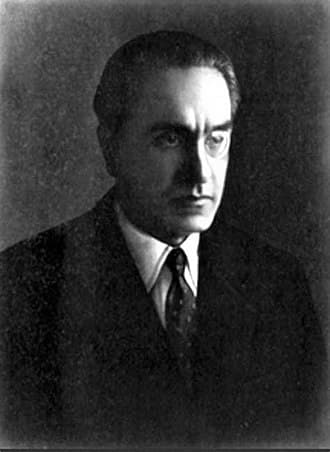
Julius Evola
Revolt Against the Modern World...cendence are "heaven," ''paradise," "Allah's gardens" and so on), are presupposed as the foundations of jihad , lest war lose its sacred character and degenerate into a wild affair in which true heroism is replaced with reckless abandonment and what counts are the unleashed impulses of the animalistic nature. It is written in the Koran: "Let those who would exchange the life of this world for the hereafter fight for the cause of Allah; whether they die or conquer, We shall richly reward them."
The presupposition according to which it is prescribed, "When you meet the unbelievers in the battlefield strike off their heads, and when you have laid them low, bind your captives firmly"; or, "Do not falter or sue for peace when you have gained the upper hand," is that "the life of this world is but a sport and a pastime" and that "whoever is ungenerous to this cause is ungenerous to himself." These statements should be interpreted along the lines of the evangelical saying: "Whoever wishes to save his life shall lose it; but whoever loses his life for my sake shall find it" (Matt. 16:25). This is confirmed by yet another Koranic passage:…
"Say: 'Are you waiting for anything to befall us except victory or martyrdom?"' Another passage is relevant as well: "Fighting is obligatory for you, as much as you dislike it. But you may hate a thing although it is good for you, and love a thing although it is bad for you. Allah knows but you do not." This passage should also be connected with the following one: They were content to be with those who stayed behind: a seal was set upon their hearts, leaving them bereft of understanding. But...
Continue reading →
4
⚖Frenzy's Transfiguration

Julius Evola
Revolt Against the Modern WorldA reflection on Dionysian frenzy as a means of breaking material bonds, while ultimately positing a 'heroic reintegration' as a superior state that transcends both feminine and telluric principles.
...wing period of Aphrodistic degeneration in that civilization that is parallel to the Titanic upheaval itself; this is true especially if we consider the frequent associations between Aphrodistic goddesses and violent and brutally warlike divine figures. It is well known that Plato established a hierarchy of the forms of eros, rising from the sensual and the profane up to the peaks of the sacred and culminating in the eros through which "the mortal seeks to live forever and to become immortal."
In Dionysism, eros becomes "sacred frenzy," mystic orgiasm: it is the highest possibility inherent in this direction and it is aimed at undoing the bonds of matter and at producing a transfiguration through frenzy, excess, and ecstasis. But if the symbol of Dionysus, who fights against the Amazons himself, reveals the highest ideal of this spiritual world, nevertheless it remains something inferior compared to what the third possibility of the new era will be: the heroic reintegration that alone is really detached from both the feminine and the telluric principle.
In fact, Dionysus was also represented as a demon of the infernal regions ("Hades is the same as Dionysus" said Heraclitus ), and was often associated with the principle of the waters (Poseidon) or with the underground fire (Hephaestus). Often he is found together with feminine figures of mothers, virgins, or goddesses of nature turned into lovers: Demeter and Core, Ariadne and Aridela, Semelis and Libera. The masculinity of the Corybantes, who often dressed as women, like the priests in the Ph...
2
⚖Two Paths After Death

Julius Evola
Revolt Against the Modern WorldA reflection on the two divergent destinies of the soul: the 'solar path' of immortality for heroes and nobles, and the 'chthonic path' of dissolution into collective, ancestral stocks.
...s, legislators, victorious generals, and founders of those institutions or traditions that were believed to involve an action and a conquest beyond nature were worshiped as heroes, demigods, gods, and avatars of different deities. The sacred foundation of the authority the elders enjoyed in several ancient civilizations lies in similar ideas. People saw in the eiders, who were closer to death, the manifestation of the divine force that was thought to achieve its full liberation at death. Thus,
As far as the destiny of the soul after death is concerned, there are two opposite paths. The first is the "path of the gods," also known as the "solar path" or Zeus's path, which leads to the bright dwelling of the immortals. This dwelling was variously represented as a height, heaven, or an island, from the Nordic Valhalla and Asgard to the Aztec-Inca "House of the Sun" that was reserved for kings, heroes, and nobles. The other path is that trodden by those who do not survive in a real way, and who slowly yet inexorably dissolve back into their original stocks, into the "totems" that unlike single individuals, never die; this is the life of…
This teaching is found in the Hindu tradition where the expressions deva-yāna and pitṛ-yāna signify "path of the gods," and "path of the ancestors" (in the sense of manes ), respectively. It is also said: ''These two paths, one bright and the other dark, are considered eternal in the universe. In the former, man goes out and then comes back; in the latter he keeps on returning." The first path "leading to Brahman," namely, to the unconditioned state, is analogically associated with fire, light,...
Continue reading →
2
⚖Civilization's Inescapable Cycle

Julius Evola
Revolt Against the Modern WorldA vision of civilizations as cyclical entities that inevitably end, suggesting that those rooted in the eternal need not fear the extinction of the modern world.
...create its own spirit. Therefore it seems unavoidable that fate will run its course. I have said it before: it is likely that having reached the penultimate step, and being on the edge of the universal advent of the truth and the power of the fourth and last of the ancient castes, mankind is ready to enter the last stage and touch the bottom of the Dark Age or Iron Age (foretold in traditional teachings), the general features of which largely correspond to those of contemporary civilization.
Just like people, civilizations also undergo their own cycle, consisting of a beginning, a development, and an end; the more they are immersed in what is contingent, the more this law is inescapable. This obviously is not enough to frighten those who are rooted in what cannot be altered and what remains as a perennial presence by virtue of its being above time. Even though it may be destined to disappear, modern civilization is certainly not the first to become extinct, nor is it the one after which none will follow.
In the life of what is conditioned by space and time, lights are continually being put out and kindled again, cycles end and new ones begin. As I have said, the doctrine of the cycles was known to traditional man and only the ignorance of modern man has induced him to believe that his civilization, which is characterized by the deepest roots in the temporal and contingent element, will enjoy a different and privileged fate. To those who have a vision in conformity with reality, the problem is...
2
⚖The State's Transcendent Purpose

Julius Evola
Revolt Against the Modern WorldThe author asserts that traditional states possessed a transcendent purpose, unlike the modern world which organizes society solely for temporal and economic ends.
...recent times the electoral system was introduced, tradition retained a partial formal existence when the people's decision was not considered to be sufficient; in that case, in order for new laws to be finally ratified, it was necessary to obtain the approval of the pontifexes and to make sure that the diviners ascertained whether these laws enjoyed the gods' approval. Moreover, laws and institutions, as in the case of all traditional civilizations, were both "from above" and oriented upwards.
A political, economic, and social order created merely for the sake of temporal life is exclusively characteristic of the modern world, that is, of the antitraditional world. Traditionally the state had a transcendent meaning and purpose that were not inferior to the ones the Catholic Church claimed for itself in the West as a manifestation of , and a path to, the "world above."
The very term "state," in Latin status, from the Greek ἲσταναι , "to stay," empirically may have derived from the form of social life taken up by nomadic populations once they permanently settled down; however, it may also point to a higher meaning, namely, to an order concerned with hierarchical participation in a spiritual "stability" as opposed to the contingent, unstable, changeable, chaotic, and particularistic character of a naturalistic existence. This order constituted the accurate ref...
2