A discussion on the symbolic role of the feminine in heroic traditions, where the 'Woman' represents a transcendent wisdom or power to be conquered and integrated by the virile hero.
The Hero's Feminine Conquest
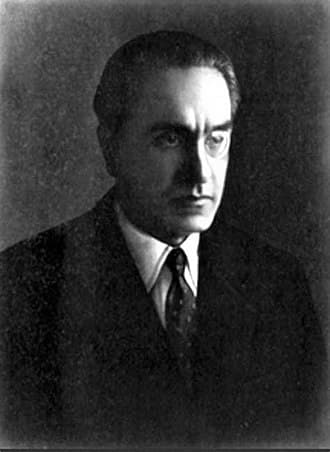
Julius Evola
Revolt Against the Modern World...reach the Garden of the Hesperides, where he would find the fruit that renders one immortal. Such a fruit, once obtained by Heracles, is taken back by Athena, who represents in this context the Olympian intellect, and put back "so that it may not be partaken of by anybody"; this probably means that the attainment of that fruit should be reserved for the stock to which it belongs and that it should not be desecrated by putting it at the disposal of the human race, as Prometheus intended to do.
Even in the heroic cycle we sometimes find the theme of the dyad, that is, of the pair, and of the Woman, but with a different meaning from that of the cases I discussed in the first part concerning the saga of the Rex Nemorensis, the "women" who appoint divine kings, the "women" of the chivalrous cycle, and so on. Concerning this different aspect, in which the same symbolism will appear to function differently, here it will suffice to say that the woman who embodies a vivifying principle (such as Eve, the "Living Woman," Hebe, and what derives from the relation of the divine women with the Tree of Life, etc.); or a principle of transcendent…
A relevant motif in the cycles of the heroic type is that of the opposition to any gynaecocratic claim and to any Amazonian attempt to usurp power. This motif, together with the previous one, which is equally essential for a definition of the notion of "hero" and refers to an alliance with the Olympian principle and a struggle against the Titanic principle, had a very clear expression in the Hellenic cycle, especially in the figure of the Doric Heracles. We have already seen that Heracles, lik...
Continue reading →
2
⚖The Unfindable Island

Julius Evola
Revolt Against the Modern WorldA vision of the legendary Thule and the 'Islands of the Immortals' as metahistorical symbols of a hidden, primordial Hyperborean homeland located in the Far North.
...lateau. This Tula was also conceived as the "Land of the Sun" and was sometimes located east of North America, in the Atlantic; but this is probably due to the interference of the memory of a later location that was destined to perpetuate for some time the function of the primordial Tula (to which Aztlan probably corresponds) when the glacial weather descended upon it and when the sun disappeared; the name Tula, which visibly corresponds to the Greeks' Thule, was also applied to other regions.
According to Greco-Roman traditions, Thule lay in the sea that derives its name from the god of the Golden Age, namely, the Cronium Sea, which corresponds to the northern region of the Atlantic; a similar location was ascribed in later traditions to what became symbol and metahistory in the form of the Happy Islands, or the Islands of the Immortals, or the Lost Island. This island, as Honorius Augustadumensis wrote, "is hidden from people's sight; sometimes it is discovered by chance, but when it is actively sought after, it cannot be found." Thule is confused with both the legendary Hyperborean homeland, situated in the Far North and from…
Plutarch situated this island north of Great Britain and claimed that it was in proximity of the Arctic region where Kronos, the god of the golden region, is still asleep; in this location the sun sets only for one hour each day, and even then the darkness is not all-enveloping but looks more like a twilight, just like in the Arctic regions. The confused notion of the bright northern night became the foundation of the notion of the land of the Hyperboreans as a place of perennial light, free of...
Continue reading →
1
⚖Wheel's Motionless Center

Julius Evola
Revolt Against the Modern WorldThe author explains the archetype of the 'universal king' as a motionless center who remains spiritually stable amidst the stream of becoming, organizing society according to higher principles.
...ent tranquillity, not easy to express. Legitimate usurpation would seem to me to be the most appropriate expression (if not too bold), to characterize these kinds of origins, which time hastens to consecrate. Polar Symbolism; the Lord of Peace and Justice It is possible to connect the integral and original understanding of the regal function with a further cycle of symbols and myths that point back in the same one direction through their various representations and analogical transpositions.
As a starting point, we may consider the Hindu notion of the cakravartin, or "universal king." The cakravartin may be considered the archetype of the regal function of which various kings represent more or less complete images or even particular expressions whenever they conform to the traditional principle. Cakravartin literally means "lord" or "spinner of the wheel." This notion brings us back again to the idea of a center that corresponds also to an inner state, to a way of being, or better yet, to the way of Being. Actually the wheel also symbolizes sarhsara or the stream of becoming (the Hellenes called it κύκλος τής γενὲσεως , the…
Then the cakravartin appears as the dharmarāja, the "Lord of the Law," or the "Lord of the Wheel of the Law." According to Confucius: "The practice of government by means of virtue may be compared to the polestar, which the multitudinous stars pay homage to while it stays in its place." Hence the meaning of the concept of "revolution," which is the motion occurring around an "unmoved mover," though in our modern day and age it has become synonymous with subversion. In this sense royalty assume...
Continue reading →
2
⚖The Sunken Continent

Julius Evola
Revolt Against the Modern WorldA reflection on how historical memories of lost civilizations, like Atlantis, were transposed into initiatic symbols of the 'Island of the Dead' and the quest for reintegration with a divine state.
...ry tradition was lost and the various forms of civilization were dissociated from their common origin and could no longer understand each other after the catastrophe of the Flood ended the cycle of Atlantic mankind. The historical memory was often preserved in myth, that is, in metahistory. The West, in which Atlantis was located during its original cycle (when it reproduced and perpetuated the much older "polar" function), very often represented a nostalgic reference point for the fallen ones.
By virtue of a transposition onto a different plane, the waters that submerged the Atlantic land were called "waters of death," which the following postdiluvian generations, consisting entirely of mortal beings, must cross through initiation in order to be reintegrated with the divine state of the "dead," namely, with the lost race. On this basis, the well-known figurations of the "Island of the Dead" could be understood in a similar sense as transformations of the memory of the sunken insular continent. The mystery of paradise and of places of immortality in general was reconnected with the mystery of the West (and in some instances, of the…
Generally speaking, the symbols proper to that primordial race surface again in enigmatic ways until relatively recent times, wherever traditional conquering kings and dynasties made their appearance. Moreover, the Greeks often discussed the exact spot of the divine garden ( θεŵν κήπος ), which was the original dwelling of the Olympian god Zeus, and of the Garden of the Hesperides, "beyond the river Ocean"; according to some, the Hesperides were the daughters of Atlas, the king of the Western...
Continue reading →
1
⚖Heroes as Initiates

Julius Evola
Revolt Against the Modern WorldA reflection on how Hellenic myths and monuments used heroic figures and military terminology to symbolize the spiritual path and triumph of the initiate.
...d the medallion of the deceased or crown him with the evergreen that usually crowns the heads of the initiates. In the context of the Pindaric celebration of the divinity of victorious wrestlers, the Enagogues and the Promachi were portrayed as mystical deities leading the souls to immortality. And vice versa: in Orphism, every victory (Nike) became the symbol of the victory of the soul over the body, and those who achieved initiation were called the "heroes" of a dramatic and endless struggle.
What in the myth is the expression of a heroic life, constitutes the model of an Orphic life; therefore in the sepulchral images, Heracles, Theseus, the Dioscuri, Achilles, and others are designated as Orphic initiates: στρατός (militia in Latin) is the term designating the host of initiates, and µνασἱστρατoς the term designating the Mystery's hierophant. Light, victory, and initiation were eventually represented next to each other in several Hellenic monuments.
Helios, as the rising sun (alias Aurora) is a Nike and is endowed with a triumphal chariot; other Nikai were Teletes, Mystis, and other deities or personifications of the transcendent rebirth. When we go from the symbolic and esoteric to the magical aspect, it should be noted that the competitions and the warrior dances celebrated on the occasion of a hero's death (the Roman equivalent were the ludi celebrated at the funerals of major figures) had the purpose of awakening a mystical, saving for...
2