Spiritual Authority's Power
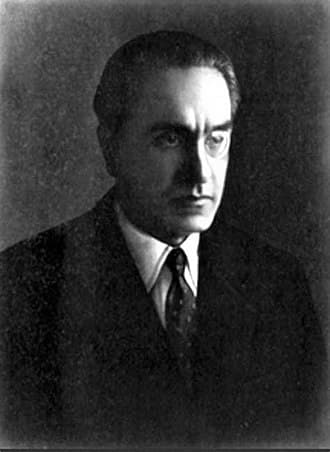
Julius Evola
Revolt Against the Modern World

The author argues that the prestige of the Brahmin caste was based on their unique ability to navigate and mediate dangerous invisible spiritual forces through ritual.

...beneficial psychic power, the rite and the sacrifice allowed the brāhmaṇa to partake of the same nature as the evoked powers; not only would this quality abide in that person forever, making him directly superior to and revered and feared by others, but it would also be transmitted to his descendants. Having entered into the bloodstream as. some sort of transcendent legacy, this quality would become the characteristic feature of a race that is activated in individuals by the rite of initiation.
The dignity of a caste was determined both by the difficulty and by the usefulness of the functions it exercised. Because of the abovementioned presuppositions, in the world of Tradition nothing was cherished more than the spiritual influences that the rite could activate through its necessitating action; nothing appeared as difficult as entering into a real and active relationship with the invisible forces that were ready to overcome the imprudent person who dared to confront them without possessing the necessary qualifications and knowledge. For this reason the brāhmaṇa caste, despite the fact that it was scattered throughout India, could evince the respect of the masses and enjoy a prestige that no tyrant ever enjoyed, no matter how well armed.
In China as well as in Greece and ancient Rome, the patriciate was essentially characterized by the possession and by the practice of those rites that were connected to the divine power emanating from the founder of a family. In China, only the patricians practiced the rites (yi-li), while the plebeians merely had customs (su). There is a Chinese saying: "The rites are not the legacy of ordinary people," which corresponds to the famous saying of Appius Claudius: "Auspicia sunt patrum. "A Latin...
2
Conquest's Hierarchical Traces
Julius Evola
Revolt Against the Modern World

A vision of the origins of caste systems, interpreted as the result of ancient struggles between 'bright' Northern-Aryan races and 'dark' chthonic peoples.

...e so-called battle-axe people, which remains as enigmatic as that of Cro-Magnon, is very similar. This migration occurred in separate waves, through fluxes and refluxes, interbreeding, and conflicts with aboriginal or already mixed races. Thus, from north to south and from west to east, through diffusion, adaptation, or domination there arose civilizations that originally shared, to a certain degree, the same matrix, and often strains of the same spiritual legacy found in the conquering elites.
Encounters with inferior races, which were enslaved to the chthonic cult of demons and mixed with the animal nature, generated memories of struggles that were eventually expressed in mythologized forms that always underline the contrast between a bright, divine type (an element of Northern origins) and a dark, demonic type. Through the institution of traditional societies by the conquering races a hierarchy was established that carried a spiritual, ethnic, and racial value; in India, in Iran, in Egypt, and even in Peru we find rather evident traces of this in the institution of the caste system.
Ihave said that originally the Atlantic center was supposed to reproduce the "polar" function of the Hyperborean seat and that this second center occasioned frequent confusion in traditions and in memories. This confusion should not prevent us from detecting in a later period, yet still falling within remote prehistory, a transformation of civilization and spirituality and a differentiation leading from the first to the second era (from the Golden Age to the Silver Age) that eventually prepare...
1
Caste as Victorious Form
Julius Evola
Revolt Against the Modern World

The author defends the caste system as a victorious 'form' over chaos, arguing that social hierarchy should organically reflect the metaphysical reality of a spiritual organism.

...had to "close an eye" to expressions such as John of Salisbury's: "The military profession, both worthy and necessary, has been instituted by God himself"; and it even had to come to see war as a possible ascetical and immortalizing path. Moreover, it was thanks to this very deviation of the Church from the main themes of primitive Christianity that during the Middle Ages Europe came to know the last image of a world that in many aspects was of a traditional type. The Doctrine of the Castes
The caste system is one of the main expressions of the traditional sociopolitical order, a "form" victorious over chaos and the embodiment of the metaphysical ideas of stability and justice. The division of individuals into castes or into equivalent groups according to their nature and to the different rank of activities they exercise with regard to pure spirituality is found with the same traits in all higher forms of traditional civilizations, and it constitutes the essence of the primordial legislation and of the social order according to "justice." Conformity to one's caste was considered by traditional humanity as the first and main duty…
At the lower level of such an organism there are the undifferentiated and impersonal energies of matter and of mere vitality; the regulating action of the functions of the metabolism and of the organism is exercised upon these forces. These functions, in turn, are regulated by the will, which moves and directs the body as an organic whole in space and time. Finally, we assume the soul to be the center, the sovereign power and the "light" of the entire organism. The same is true for the castes;...
Continue reading →
2
Society's Emasculated Archetypes
Julius Evola
Revolt Against the Modern World

A critique of modern society suggesting that the 'emancipation' of women is a symptom of a broader civilizational decay where traditional archetypes of the ascetic and warrior have been replaced by hollow, materialistic figures.

...those who are free. But for those who follow neither the spirit nor the form of the traditional riverbed, there is nothing but chaos; they are the lost, the "fallen" ones. This is the case of our contemporaries as far as the woman is concerned. And yet it was not possible that a world that has "overcome" (to employ a Jacobin term) the caste system by returning to every human being his or her own "dignity" and "rights" could preserve some sense of the correct relationship between the two sexes.
The emancipation of women was destined to follow that of the slaves and the glorification of people without a caste and without traditions, namely, the pariah. In a society that no longer understands the figure of the ascetic and of the warrior; in which the hands of the latest aristocrats seem better fit to hold tennis rackets or shakers for cocktail mixes than swords or scepters; in which the archetype of the virile man is represented by a boxer or by a movie star if not by the dull wimp represented by the intellectual, the college professor, the narcissistic puppet of the artist, or the busy and dirty money-making banker and the…
And while traditional ethics asked men and women to be themselves to the utmost of their capabilities and express with radical traits their own gender-related characteristics—the new "civilization" aims at leveling everything since it is oriented to the formless and to a stage that is truly not beyond but on this side of the individuation and differentiation of the sexes. What truly amounts to an abdication was thus claimed as a "step forward." After centuries of "slavery" women wanted to be t...
Continue reading →
2
Faithfulness in Peace
Julius Evola
Revolt Against the Modern World

The author explains how the feudal system emerged from the extension of the warrior principle of faithfulness, where free men found a higher realization in serving a king as the embodiment of group unity.

...action—in any event, there was neither "duty" nor impersonal "service," since everywhere there were free and highly personalized relationships of command and obedience, mutual understanding and faithfulness. Thus, the idea of free personality was the foundation of any unity and hierarchy. This was the "Nordic" seed from which the feudal system arose as the background to the new imperial idea. The development that led to such a regime began with the convergence of the ideas of king and leader.
The king became the embodiment of the unity of the group even in time of peace; this was possible through the strengthening and the extension of the warrior principle of faithfulness to times of peace. A group of faithful retainers (e.g., the Nordic huskarlar, the Longobard gasindii, the Gothic palatines, the Frank antrustiones or convivae regis), consisting of free men, gathered around the king; these people regarded being in the service of their lord and the defense of his honor and right as both a privilege and a realization of a way of being more elevated than if they were merely answerable to no one but themselves. The feudal…
During the period of conquests a second aspect of the abovementioned development took place: the bestowal of conquered lands as fiefs in return for the commitment to faithfulness. The Frank nobility spread into areas that did not coincide with those of any given nation and became a bonding and unifying element. From a formal point of view, this development appeared to involve an alteration of the previous constitution; to rule over a fief was regarded as a regal benefit contingent upon loyalty...
Continue reading →
3