Ritual Land Creation
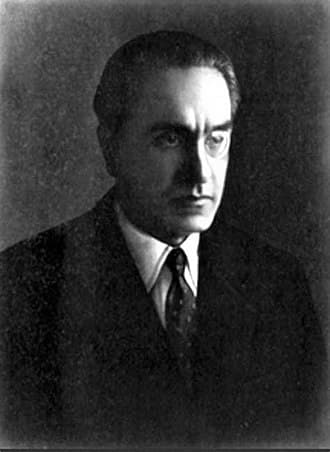
Julius Evola
Revolt Against the Modern World

The author describes the traditional act of settling or conquering land as a ritual 'creation' that transforms chaos into cosmos by establishing a sacred link between the territory and divine ancestors.

...ected by gods of order such as Zeus and Jupiter; these are almost the equivalent, on another plane, of the same inner limits of the noble caste and of the noble family. We can say that at this level the limits of the land, just like the spiritual limits of the castes, were not limits that enslaved but that preserved and freed. Thus, we can understand why exile was often regarded as a punishment of a seriousness hardly understood today; it was almost like dying to the gens to whom one belonged.
The same order of ideas is confirmed in the fact that in several traditional civilizations, to settle in a new, unknown, or wild land and to take possession of it was regarded as an act of creation and as an image of the primordial act whereby chaos was transformed into cosmos; in other words, it was not regarded as a mere human deed, but rather as an almost magical and ritual action believed to bestow on a land and on a physical location a "form" by bathing such land in the sacred and by making it living and real in a higher sense. Thus, there are examples of the ritual of taking possession of lands and of territorial conquests, as in the…
Moreover, if in the ancient Aryan law the firstborn was entitled to inherit the father's property and lands—often with the bond of inalienability—the property belonged to him essentially because he was regarded as the one who perpetuated the ritual of the family as the pontifex and the βασιλεύς of his own people, and as the one whose responsibility it was to tend the sacred fire and not let it be put out, since the fire was considered the body or life of the divine ancestor. We must also consid...
Continue reading →
2
The Winner's Divine Incarnation
Julius Evola
Revolt Against the Modern World

The author describes how victors in ancient games were viewed as temporary incarnations of the divine, with their triumphs serving to renew and nourish the presence of transcendent power within the community.

..., it was considered an omen of bad luck and a curse, and the games had to be started all over again in order to "placate" the divine powers. Conversely, according to a famous legend, when the people, following a surprise attack by the enemy, left the games (which in the meantime were not interrupted) in order to take up arms, they found the enemy miraculously routed by a supernatural power that was later on identified with the power evoked by the rite of the game dedicated to the savior Apollo.
If the games were often consecrated to "Victories" that personified the triumphant power, their purpose was to renew the life and presence of such a power, to nourish it with the new energies that were awakened and that imparted the same direction. This explains why, in specific reference to the certamina and to the munera , the winner appeared to be endowed with a divine character and at times to be a temporary incarnation of a deity. In Olympia, in the moment of triumph, the winner was thought to be an incarnation of the local Zeus, and the public acclamation to the victorious gladiator was incorporated into the ancient Christian liturgy: εις αι νας ἀπò αἰ νoς [forever and ever].
What should really be considered in this context is what kind of inner (besides ritual and magical) meaning the event may have had for the individual. What has been said about the notion of "holy war'' applies in this context as well: the heroic exaltation found in competition and in victory, once it was given a ritual meaning, became the imitation of, or the introduction to, that higher and purer impetus the initiate used to defeat death. This explains the frequent references to the certamina...
1
The Invisible Dimension
Julius Evola
Revolt Against the Modern World

The author contrasts the modern focus on physical causes with the traditional view that all events originate in an invisible dimension accessible through ritual action.

...s: Through the impulse from below there is a stirring above, and through the impulse from above there is a stirring higher up still. Thus by the impulse of the smoke [of sacrifice] from below the lamp is kindled above and when this is kindled all the other lamps are kindled and all the worlds are blessed from it. Thus by the impulse of the sacrifice is the mainstay of the world and the blessing of all worlds. This may be considered the general profession of faith of traditional civilizations.
According to modern man, both causes and effects are relegated to the physical plane, framed within time and space. According to traditional man the physical plane merely contains effects; nothing takes place in this world that did not originate first in the next world or in the invisible dimension. In this sense too, it is possible to see how the rite takes hold and affects the development of all actions, destinies, and ways of traditional life. In traditional societies the action par excellence consisted in shaping events, relations, victories, and defense mechanisms through the rite, that is, in preparing causes in the invisible dimension.
Any material action not connected to this supreme action was impaired by a radical contingency; the very soul of an individual was inadequately protected from the dark and elusive forces acting within human passions, thoughts, and inclinations and behind the scenes of nature and of history. All things considered, it is difficult to label as "fanciful" the fact that traditionally the performance of the rite was considered one of the fundamental principles in the hierarchical differentiation of...
2
Games as Sacred Duty
Julius Evola
Revolt Against the Modern World

The author highlights the sacred and ritualistic origin of classical games, noting that their performance was considered a vital religious obligation for the state.

...uld once have been devised only to exterminate germs and insects. In contrast to "medieval superstitions" that refer to a "holy war," what our contemporaries consider sacred and worthy of the actual "progress of civilization" is the fact that millions of human beings, taken away en masse from their occupations and vocations (which are totally alien to the military vocation), and literally turned into what military jargon refers to as "cannon fodder," will die in such events. Games and Victory
In classical antiquity games ( ludi ) had a sacred character and they therefore became typical expressions of the traditional path of action. " Ludorum primum initium procurandis religionibus datum , "wrote Livy. It was considered dangerous to neglect the sacred games ( negligere sacra certamina ); thus, if the state's funds were depleted, the games were simplified but never suppressed. An ancient Roman law required the duoviri and the aediles to have the games celebrated in honor of the gods.
Vitruvius wanted every city to be endowed with its own theater, deorum immortalium diebus festis ludorum spectationibus , and originally the person presiding over the games in the Circus Maximus was also the priest of Ceres, Liber, and Libera. In any event, the person in charge of the games in Rome was always a representative of the official patrician religion; in the case of some games (such as the Salii's), special priestly colleges were formed for the occasion. The games were so closely rela...
6
Fluid Self-Borders
Julius Evola
Revolt Against the Modern World

The author discusses the fluid boundaries of the self in antiquity, where the 'I' faced the constant peril of possession by elemental forces. He argues that traditional rituals and institutions were designed to defend the sovereignty of the individual against these incursions from the 'not-I.'

...individuals and events. Therefore, the eventual lack of correspondence of the historical element with a myth demonstrates the untruth of history rather than that of the myth; this thought occurred to Hegel too, when he spoke about the "impotence [Ohnmacht] of nature." What has been said so far relates to the presence of some kind of existential situation concerning the basic relationship between the I and the not-I. This relationship has lately been characterized by a set and rigid separation.
It so appears that in the origins, the borders between I and not-I were potentially fluid and unstable, and in certain cases they could partially be removed. When that happened, either one of two possibilities could occur: the possibility of incursions of the not-I (of "nature" in the sense of its elemental forces and its psychism) into the I, or an incursion of the I into the not-I. The first possibility explains what have been called the perils of the soul . It is the idea that the unity and the autonomy of the person may be threatened and affected by processes of possession and of obession; hence the existence of rituals and various…
The general presupposition for the efficacy of a body of magical procedures was that the second possibility, which consists of the removal of the boundaries and of the ensuing incursions in the opposite direction (of the I into the not-I), could take place. Since the two possibilities shared the same basis, the advantages of the latter had as a counterpart the existential risks derived from the former. We should remember that during the last times, following the progressive materialization of...
Continue reading →
4