Initiation's Ontological Change
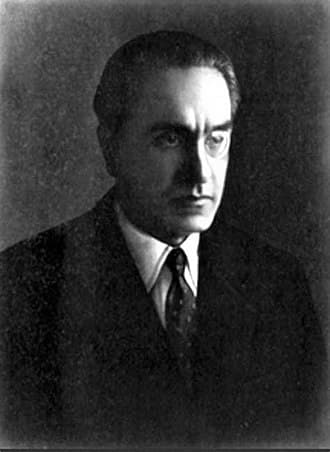
Julius Evola
Revolt Against the Modern World

A thesis arguing that initiation was originally a real ontological transformation that qualified a leader for kingship, a dignity that eventually became separated from political power during periods of decadence.

...finitive consecration that sanctified this new immortalizing birth and his divine nature and by virtue of which the Egyptian king appeared as the "son" of the same god. The Eleusinian rite is one of the most complete rites of "regal" initiation; allegedly each of the symbols employed therein corresponded to a particular inner experience. Though at this time I do not intend to describe the means through which similar experiences were induced or what they were all about, I wish to emphasize that
In the world of Tradition, initiation in its highest forms was conceived as an intensely real operation that was capable of changing the ontological status of the individual and of grafting onto him certain forces of the world of Being, or of the overworld. The title of rex (in Greek, βαστλέυς ) at Eleusis testified to the acquired supernatural dimension that potentially qualified the function of the leader. The fact that at the time of the Eleusinian Mysteries this title certainly did not go together with effective political authority was due to the decadence of ancient Hellas. Because of this decadence, the ancient regal dignity was…
This did not prevent temporal sovereigns in ancient times, however, from aspiring to achieve the dignity of an initiatory king, which was very different from the dignity that they actually enjoyed. Thus, for instance, when Hadrian and Antoninus were already Roman emperors, they received the title of "king" only after being initiated at Eleusis. According to concordant testimonies, the quality bestowed by initiation is distinct from and unrelated to any human merit: all of the human virtues comb...
Continue reading →
2
The Two Natures Doctrine
Julius Evola
Revolt Against the Modern World

The author asserts that the foundation of all Tradition is the 'doctrine of the two natures,' which recognizes a superior, invisible realm of 'being' as the true source and support of the visible world of 'becoming.'

...The Beginning
In order to understand both the spirit of Tradition and its antithesis, modern civilization, it is necessary to begin with the fundamental doctrine of the two natures. According to this doctrine there is a physical order of things and a metaphysical one; there is a mortal nature and an immortal one; there is the superior realm of "being" and the inferior realm of "becoming." Generally speaking, there is a visible and tangible dimension and, prior to and beyond it, an invisible and intangible dimension that is the support, the source, and true life of the former. Anywhere in the world of Tradition, both East and West and in one form or…
Let me emphasize the fact that it was knowledge and not "theory." As difficult as it may be for our contemporaries to understand this, we must start from the idea that the man of Tradition was aware of the existence of a dimension of being much wider than what our contemporaries experience and call "reality." Nowadays, after all, reality is understood only as something strictly encompassed within the world of physical bodies located in space and time. Certainly, there are those who believe in s...
Continue reading →
2
Action Degraded to Work
Julius Evola
Revolt Against the Modern World

A critique of the modern shift from 'action' to 'work,' arguing that the ancient aristocratic contempt for labor was based on a spiritual purity that has been lost in today's plebeian morality.

...fits in a "consumer society." Finally, the advent of the serfs corresponds to the elevation of the slave's principle— work —to the status of a religion. It is the hatred harbored by the slave that sadistically proclaims: "If anyone will not work, neither let him eat" (2 Thess. 3:10). The slave's self-congratulating stupidity creates sacred incenses with the exhalations of human sweat, hence expressions such as "Work ennobles man"; "The religion of work"; and "Work as a social and ethical duty."
We have previously learned that the ancient world despised work only because it knew action; the opposition of action to work as an opposition between the spiritual, pure, and free pole, and the material, impure pole impregnated only with human possibilities, was at the basis of that contempt. The loss of the sense of this opposition, and the animal-like subordination of the former to the latter, characterizes the last ages. And where in ancient times every work, through an inner transfiguration owing to its purity and its meaning as an "offering" oriented upwards could redeem itself until it became a symbol of action, now, following an…
Superior men who lived in a not so distant past, either acted or directed actions. Modern man works . The only real difference today is that which exists between the various kinds of work; there are "intellectual" workers and those who use their limbs and machines. In any event, the notion of "action" is dying out in the modern world, together with that of "absolute personality." Moreover, among all the commissioned arts, antiquity regarded as most disgraceful those devoted to the pursuit of pl...
Continue reading →
5
Initiatory Ontological Change
Julius Evola
Revolt Against the Modern World

The author distinguishes high-level initiation as an ontological transformation that preserves a subterranean spiritual influence superior to the exoteric religious forms of any given historical period.

...when considered in material terms. I have also mentioned instances in which the initiatory dignity separated itself from that function, or better, instances in which that function separated itself from the initiatory dignity by becoming secularized and by taking on a merely warrior or political character. Initiation must also be considered, however, as an independent category of the world of Tradition without a necessary relation to the exercise of a visible function at the center of a society.
Initiation (high-level initiation, not to be confused with initiation that is related to the regimen of the castes or to the traditional professions and the various artisan guilds) has defined, in and of itself, the action that determines an ontological transformation of man. High-level initiation has generated initiatory chains that were often invisible and subterranean and that preserved an identical spiritual influence and an "inner doctrine" superior to the exoteric and religious forms of a historical tradition. There are even instances in which the initiate has enjoyed this distinct character in a normal civilization and not only during the ensuing period of degeneration and inner fracture of the traditional unity.
This character has become necessary and all-pervasive, especially in Europe in these latter times because of the involutive processes that have led both to the organization of the modern world and to the advent of Christianity (hence the merely initiatory character of the hermetic rex, of the Rosicrucian emperor, and so on). On the Hierarchical Relationship Between Royalty and Priesthood If on the one hand the original synthesis of the two powers is reestablished in the person of the consecra...
3
Knowledge as Fire
Julius Evola
Revolt Against the Modern World

A prescription for a path of 'knowledge' that uses the realization of non-identity with the conditioned world to achieve superrational enlightenment. The author emphasizes that this 'waking up' is an act of liberation and power rather than a passive dissolution of the self.

...kened One" is acknowledged to be superior to both men and gods. In the Buddhist canon it is written that an ascetic not only becomes free from human bonds, but from divine bonds as well. Secondly, moral norms, in the original forms of Buddhism, are purported to be mere instruments to be employed in the quest for the objective realization of superindividual states. Anything that belongs to the world of "believing," of "faith," or that is remotely associated with emotional experiences is shunned.
The fundamental principle of the method is "knowledge": to turn the knowledge of the ultimate nonidentity of the Self with anything "else" (whether it be the monistic All or the world of Brahma, theistically conceived) into a fire that progressively devours any irrational self-identification with anything that is conditioned. In conformity to the path, the final outcome, besides the negative designation ( nirvāṇa = "cessation of restlessness"), is expressed in terms of "knowledge," bodhi , which is knowledge in the eminent sense of superrational enlightenment or liberating knowledge, as in "waking up" from sleep, slumber, or a hallucination.…
The image of the one who, once freed from all yokes, whether human or divine, is supremely autonomous and thus may go wherever he pleases, is found very frequently in the Buddhist canon together with all kinds of symbols of a virile and warrior type, and also with constant and explicit reference not so much to nonbeing but rather to something superior to both being and nonbeing. Buddha, as it is well known, belonged to an ancient stock of Aryan warrior nobility and his doctrine (purported to be...
Continue reading →
4