Mandala's Royal Ascent
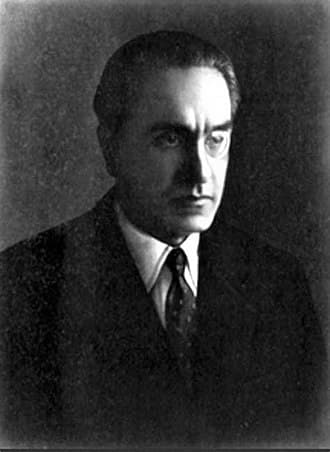
Julius Evola
Revolt Against the Modern World

The author describes initiation rituals, such as the mandala and crowning, as symbolic journeys where the initiate ascends from the profane to a sacred center, achieving a king-like mastery over inferior nature.

...g one with the god. The same symbolism is embodied in the ziggurat, the Assyrian-Babylonian terraced pyramid, as well as in the master plan of the capital of the Persian kings (as in Ecbatana) and in the ideal image of the cakravartin's royal palace. In these places we find the architectural expression of the cosmic order complete in its hierarchy and in its dependence upon an unmoved center. From a spatial perspective this center corresponded, within the building itself, to the king's throne.
Similar to Hellas, in India we find forms of initiation that employ the ritual of the so-called maṇḍala . These forms dramatize the gradual ascent of the initiate from the profane and demonic space to a sacred space, until he reaches a center. A fundamental ritual symbolizing this journey is called mūkatābhiṣaka and it consists in being crowned or in being given a tiara; he who reaches the "center" of the maṇḍala is crowned as king because he is now believed to be above the interplay of the forces at work in the inferior nature.
It is interesting that the ziggurat, the sacred building towering above the city-state of which it was the center, was called "cornerstone" in Babylon and "link between heaven and earth" in Lhasa; the theme of the "rock" and of the "bridge" is pretty much summed up in the Far Eastern expression: "third power between Heaven and Earth." The importance of these traces and correlations should not be overlooked. Moreover, "stability" has the same double dimension; it is at the center of the Indo-Ar...
2
The Occult Center
Julius Evola
Revolt Against the Modern World

The author explains how memories of a primordial center survive as metahistorical symbols, representing a state of being that remains occult and reachable only through spiritual initiation or a change in nature.

...al body. Plutarch relates that the inhabitants of Northern regions could commune with Kronos (the king of the Golden Age) and with the inhabitants of the Far Northern region only in their sleep. According to Lieh-tzu (2), those marvelous regions he mentions that are connected to the Arctic and the Atlantic seat, "you cannot reach by boat or carriage or on foot, only by a journey of the spirit." According to the Tibetan lamas' teachings, Shambhala, the mystical Northern seat, is within everyone.
This is how the testimonies concerning what once was a real location inhabited by nonhuman beings survived and assumed a metahistorical value, providing at the same time symbols of states beyond ordinary life, that can only be reached through initiation. Besides the symbol, we find the idea that the original center still exists in an occult and usually unreachable location (similar to what Catholic theology said about the Garden of Eden): only a change of state or of nature can open its doors to the generations living in the last ages. This is how the second great transposition of metaphysics and history was established. In reality, the…
In the West, where the physical light that is subject to birth and to decline becomes extinguished, the unchanging spiritual light is kindled; there the journey of the "Sun's ship" toward the Land of the Immortals commences. And since this region lies where the sun disappears beyond the horizon, it was also conceived as subterranean or as underwater. This is straightforward symbolism directly inspired by natural observations and thus used by various populations, even by those that have no relat...
Continue reading →
1
Heroes as Initiates
Julius Evola
Revolt Against the Modern World

A reflection on how Hellenic myths and monuments used heroic figures and military terminology to symbolize the spiritual path and triumph of the initiate.

...d the medallion of the deceased or crown him with the evergreen that usually crowns the heads of the initiates. In the context of the Pindaric celebration of the divinity of victorious wrestlers, the Enagogues and the Promachi were portrayed as mystical deities leading the souls to immortality. And vice versa: in Orphism, every victory (Nike) became the symbol of the victory of the soul over the body, and those who achieved initiation were called the "heroes" of a dramatic and endless struggle.
What in the myth is the expression of a heroic life, constitutes the model of an Orphic life; therefore in the sepulchral images, Heracles, Theseus, the Dioscuri, Achilles, and others are designated as Orphic initiates: στρατός (militia in Latin) is the term designating the host of initiates, and µνασἱστρατoς the term designating the Mystery's hierophant. Light, victory, and initiation were eventually represented next to each other in several Hellenic monuments.
Helios, as the rising sun (alias Aurora) is a Nike and is endowed with a triumphal chariot; other Nikai were Teletes, Mystis, and other deities or personifications of the transcendent rebirth. When we go from the symbolic and esoteric to the magical aspect, it should be noted that the competitions and the warrior dances celebrated on the occasion of a hero's death (the Roman equivalent were the ludi celebrated at the funerals of major figures) had the purpose of awakening a mystical, saving for...
2
The Knight's New Life
Julius Evola
Revolt Against the Modern World

The text details the symbolic rituals of knighthood, where purification and consecration transform the warrior into a member of a universal spiritual order dedicated to a 'new life' beyond mortal nature.

...ea of a resurrection or of a "descent of the Spirit." First came a period of fasting and penance, followed by a symbolic purification through a bath, so that, according to Redi, "these knights may lead a new life and follow new habits." Secondly (at times, this came first) came the "wake in arms": the person to be initiated spent the night in the church and prayed standing up or on his knees (sitting was strictly prohibited), so that God may help him achieve what was lacking in his preparation.
Following the example of the neophytes of the ancient Mysteries, after the ritual bathing, the knight took on a white robe as a symbol of his renewed and purified nature; sometimes he even wore a black vest, reminding him of the dissolution of mortal nature, and a red garment, which alluded to the deeds he was supposed to undertake at the cost of shedding his blood. Third came the priestly consecration of the arms that were laid on the altar and that concluded the rite by inducing a special spiritual influence that was supposed to sustain the "new life" of the warrior, who was now elevated to knightly dignity and turned into a member of the…
In the Middle Ages we witness a blossoming of treatises in which every weapon of the knight was portrayed as a symbol of spiritual or ethical virtues; symbols that were almost intended to remind him of these virtues in a visible way and to connect any chivalrous deed with an inner action. It would be easy to indicate the counterpart of this in the mysticism of weapons found in other traditional civilizations. I will limit myself to the example of the Japanese warrior aristocracy, which conside...
Continue reading →
2
Work as Sacred Calling
Julius Evola
Revolt Against the Modern World

A reflection on how traditional vocations and guilds functioned as sacred initiations, where physical labor was ritually transformed into symbolic action through a preserved inner tradition.

...s, and farmers. Concerning the latter, just as Egypt knew the ritual of regal constructions, likewise the Far East knew the ritual of regal plowing and, in a symbolic transposition of the farming art, generally speaking, man himself was considered as a field to be cultivated, and the initiate as the cultivator of the field in an eminent sense. (The echo of this has been preserved in the very origins of the modern term "culture" in its reductive, intellectualistic, and petit bourgeois meaning.)
The ancient arts, after all, were traditionally "sacred" to specific deities and heroes, always by virtue of analogical reasons, and thus they presented themselves as potentially endowed with the possibility of "ritually" transforming physical activities into symbolic actions endowed with a transcendent meaning. In reality, in the caste system not only did every profession or trade correspond to a vocation (hence the double meaning preserved in the English term "calling"); not only was there something to be found in every product as a "crystallized tradition" that could be activated by a free and personal activity and by an incomparable…
Being introduced to the secrets of an art did not correspond to the mere empirical or rational teachings of modern man: in this domain certain cognitions were credited with a nonhuman origin, an idea expressed in a symbolic form by the traditions concerning the gods, the demons, or the heroes (Balder, Hermes, Vulcan, Prometheus) who originally initiated men into these arts. It is significant that Janus, who was also the god of initiation, was the god of the Collegia Fabrorum in Rome; in relatio...
Continue reading →
2