Action Without Center
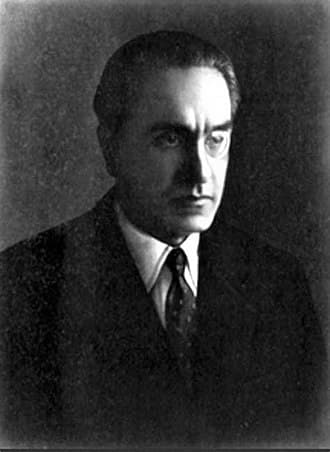
Julius Evola
Revolt Against the Modern World

The author critiques the modern cult of action as a superficial 'device' that lacks a transcendent center, reducing heroism to mere sensation or mechanical reflex.

...f the modern "free spirits," Nietzsche included, could easily dismiss the values and the imperatives of the morality improperly designated as "traditional" ("improperly," because in a traditional civilization no morality enjoyed an autonomous dimension). Our contemporaries, however, have fallen to an even lower level in the shift that occurred from the "autonomous" and categorically imperative morality to a utilitarian and "social" morality affected by a fundamental relativity and contingency.
As is the case with asceticism in general, when heroism and action are not aimed at leading back one's personality to its true center, they are nothing but an artificial "device" that begins and ends with man; as such they do not acquire a meaning or a value beyond that of sensation, exaltation, and frantic impulsiveness. Such is, almost without exception, the case of the modern cult of action. Even when everything is not reduced to a cultivation of "reflexes" and to a control of elementary reactions, as in the case of war on the frontline (considering the advanced degree of mechanization of the modern varieties of action), it is almost…
Moreover, the plane is often shifted to collective and subpersonal forces, the incarnation of which is furthered by the "ecstasy" associated with heroism, sport, and action. The heroic myth based on individualism, voluntarism, and a superman attitude constitutes a dangerous deviation in our modern era; on its basis the individual, Precluding to himself all possibilities of extraindividual and extrahuman development, assumes—by virtue of a diabolical construction—the principle of his insignifi...
Continue reading →
4
The Wildes Heer's Ascent
Julius Evola
Revolt Against the Modern World

The author describes the traditional belief that heroic death transforms earthly warfare into a transcendent struggle, where fallen warriors join a divine army to fight in the cosmic 'twilight of the gods.'

...his sacrifice showed to the heroes the path that leads to the divine dwellings where they will live forever and be transformed into his "sons." Thus, according to the Nordic races, no sacrifice or cult was more cherished by the supreme god and thought to bear more supernatural fruits than the one celebrated by the hero who falls on the battlefield; from a declaration of war to its bloody conclusion, the religious element permeated the Germanic hosts and inspired the individual warrior as well.
Moreover, in these traditions we find the idea that by means of a heroic death the warrior shifted from the plane of the material, earthly war to the plane of struggle of a transcendent and universal character. The hosts of heroes were believed to constitute the so-called Wildes Heer, the mounted stormtroopers Jed by Odin who take off from the peak of Mount Valhalla and then return to rest on it. In the higher forms of this tradition, the host of the dead heroes selected by the Valkyrie for Odin, with whom the Wildes Heer eventually became identified, was the army the god needed in order to fight against the ragna-rokkr, the "twilight of the…
It is written: "There is a very large number of dead heroes in Valhalla, and many more have yet to come, and yet they will seem too few when the wolf comes." What has been said so far concerns the transformation of the war into a "holy war." Now I wish to add some specific references found in other traditions. In the Islamic tradition a distinction is made between two holy wars, the "greater holy war" ( el-jihadul-akbar ) and the "lesser holy war" ( el-jihadul-ashgar ). This distinction origi...
Continue reading →
1
Passive Heroism's Luminosity
Julius Evola
Revolt Against the Modern World

This thesis argues that women achieve spiritual liberation through the 'passive heroism' of absolute dedication as lovers or mothers, mirroring the 'active heroism' of the male warrior or ascetic.

...llow, which cannot be altered without them turning into contradictory and inorganic ways of being. Ihave already considered the way of being that corresponds eminently to man; I have also discussed the two main paths of approach to the value of "being a principle to oneself," namely, action and contemplation. Thus, the warrior (the hero) and the ascetic represent the two fundamental types of pure virility. In symmetry with these types, there are also two types available to the feminine nature.
A woman realizes herself as such and even rises to the same level reached by a man as warrior and ascetic only as lover and mother. These are bipartitions of the same ideal strain; just as there is an active heroism, there is also a passive heroism; there is a heroism of absolute affirmation and a heroism of absolute dedication. They can both be luminous and produce plenty of fruits, as far as overcoming human limitations and achieving liberation are concerned, when they are lived with purity and in the sense of an offering.
This differentiation of the heroic strain determines the distinctive character of the paths of fulfillment available to men and women. In the case of women the actions of the warrior and of the ascetic who affirm themselves in a life that is beyond life, the former through pure action and the latter through pure detachment, correspond to the act of the woman totally giving of herself and being entirely for another being, whether he is the loved one (the type of the lover—the Aphrodistic woman)...
4
The Polarity of Sexes
Julius Evola
Revolt Against the Modern World

The author critiques modern womanhood for seeking an independent personality that destroys her true nature, arguing instead that spiritual fulfillment for both sexes requires a radical polarization of masculine and feminine traits.

...what they will be able to offer to satisfy her pleasure or her vanity. In the end she will even incur forms of corruption that usually accompany superficiality, namely, a practical and superficial lifestyle of a masculine type that has perverted her nature and thrown her into the same male pit of work, profits, frantic activity, and politics. The same holds true for the results of the Western "emancipation" of women, which is on its way to infecting the rest of the world faster than a plague.
Traditional woman or the absolute woman, in giving herself, in her living for another, in wanting to be only for another being with simplicity and purity fulfilled herself, belonged to herself, displayed her own heroism, and even became superior to ordinary men. Modern woman in wanting to be for herself has destroyed herself. The "personality" she so much yearned for is killing all semblance of female personality in her. It is easy to foresee what will become of the relationship between the sexes, even from a material point of view. Here too, like in magnetism, the higher and stronger the creative spark, the more radical the polarity; the…
What could possibly go on between these mixed beings lacking all contact with the forces of their deepest nature? between these beings for whom sex is reduced to the physiological plane? between these beings who, in the deepest recesses of their souls, are neither men nor women, or who are masculine women or feminine men, and who claim to have reached full sexual emancipation while truly having only regressed? All relationships are destined to have an ambiguous and crumbling character: the comr...
Continue reading →
3
The Hero's Masculine Ideal
Julius Evola
Revolt Against the Modern World

An interpretation of chivalric symbolism where the hero's relationship with feminine figures represents an active, virile spiritual attitude toward the power of enlightenment.

.... . . Kṣatrahood has deserted him who knows kṣatrahood in anything else but the Soul. The same idea may constitute the background of the particular aspect of chivalry that I have considered in this context. It is important to note that in some cases the symbolism of the "woman" may assume a negative, "gynaecocratic" character (see chapter 27) that is different from the character related to the core of chivalry that leads to the ideal of "spiritual virility" mentioned in the previous chapter.
The persistent, repeated use of feminine characters, which is typical of cycles of a heroic type, in reality means nothing else but this: even when confronting the power that may enlighten him and lead him to something more than human, the only ideal of the hero and of the knight is that active and affirmative attitude that in every normal civilization characterizes a true man as opposed to a woman. This is the "mystery" that in a more or less hidden form has shaped a part of the chivalrous medieval literature and that was familiar to the so-called Courts of Love, since it was able to confer a deeper meaning to the often debated question…
Even the odd declarations of some chivalrous codes, according to which a knight (who is believed to have a semi-priestly dignity or to be a "heavenly knight") has the right to make other people's women his own, including the women of his own sovereign, as long as he proves to be the strongest, and according to which the possession of a "woman" automatically derives from his victory—must be related to the meanings that I have discussed in the context of expounding the saga of the King of the W...
Continue reading →
6