The author argues that the medieval ethos of chivalry and 'holy war' was actually a pagan, heroic survival that stood in direct contradiction to the original pacifist and escapist tenets of Christianity.
Christianity's Chivalry Betrayal
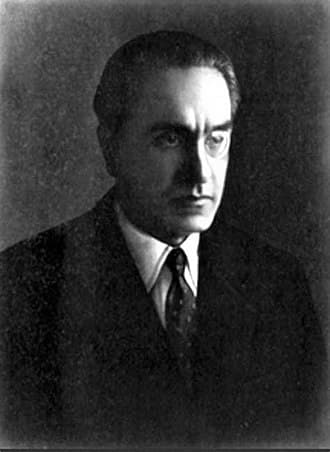
Julius Evola
Revolt Against the Modern World...ominant religion, and although it occasionally adopted some elements from Christianity, maybe it did so the better to express, or conversely, to hide itself. The Grail is truly a myth of the "regal religion" that confirms what has been said about the secret soul of chivalry. When looking at the outer domain relative to a general view of life and of ethics, the overall scope of the formative and correcting action that Christianity underwent because of the world of chivalry must be acknowledged.
Christianity could not reconcile itself with the ethos of chivalry and espouse the idea of a "holy war" other than by betraying the principles of that dualistic and escapist spirituality that characterized it over and against the traditional and classical world. Christianity had to forget Augustine's words: "Those who can think of war and endure it without experiencing great sufferings have truly lost their sense of humanity"; the more radical expressions of Tertullian and his warning: "The Lord, by ordering Peter to put the sword back into the scabbard, has thereby disarmed soldiers"; the martyrdom of saints Maximilian and Theogon, who…
It also had to "close an eye" to expressions such as John of Salisbury's: "The military profession, both worthy and necessary, has been instituted by God himself"; and it even had to come to see war as a possible ascetical and immortalizing path. Moreover, it was thanks to this very deviation of the Church from the main themes of primitive Christianity that during the Middle Ages Europe came to know the last image of a world that in many aspects was of a traditional type. The Doctrine of the...
Continue reading →
4
⚖Leveling as Abdication

Julius Evola
Revolt Against the Modern WorldA critique of modern civilization's attempt to level gender differences, which the author views as an abdication of the traditional duty to express one's gender-related characteristics to the utmost.
...rds or scepters; in which the archetype of the virile man is represented by a boxer or by a movie star if not by the dull wimp represented by the intellectual, the college professor, the narcissistic puppet of the artist, or the busy and dirty money-making banker and the politician—in such a society it was only a matter of time before women rose up and claimed for themselves a "personality" and a "freedom" according to the anarchist and individualist meaning usually associated with these words.
And while traditional ethics asked men and women to be themselves to the utmost of their capabilities and express with radical traits their own gender-related characteristics—the new "civilization" aims at leveling everything since it is oriented to the formless and to a stage that is truly not beyond but on this side of the individuation and differentiation of the sexes. What truly amounts to an abdication was thus claimed as a "step forward."
After centuries of "slavery" women wanted to be themselves and to do whatever they pleased. But so-called feminism has not been able to devise a personality for women other than by imitating the male personality, so that the woman's "claims" conceal a fundamental lack of trust in herself as well as her inability to be and to function as a real woman and not as a man. Due to such a misunderstanding, the modern woman has considered her traditional role to be demeaning and has taken offense at be...
4
⚖The Two Aristocracies

Julius Evola
Revolt Against the Modern WorldA distinction is drawn between the territorial feudal aristocracy and the supernational knighthood, which functioned as a military priesthood bound to universal spiritual authority.
...ightly ordination and to what in other areas was the ritual initiation typical of the warrior caste; initiation (a realization of a more direct, individual, and inner nature) corresponds to heroic action in a traditional, sacral sense, which is connected to doctrines such as that of the "holy war" and of the mars triumphalis. Iwill discuss the second possibility later. In this context I will only discuss the spirit and the mystery of medieval knighthood as an example of the first possibility.
To begin with, we must be aware of the difference that existed during the European Middle Ages between the feudal and knightly aristocracy. The former was connected to a land and to faithfulness (fides) to a given prince. Knighthood, instead, appeared as a superterritorial and supernational community in which its members, who were consecrated to military priesthood, no longer had a homeland and thus were bound by faithfulness not to people but, on the one hand, to an ethics that had as its fundamental values honor, truth, courage, and loyalty and, on the other hand, to a spiritual authority of a universal type, which was essentially that of the Empire.
Knighthood and the great knightly orders of the Christian ecumene were an essential part of the Empire, since they represented the political and military counterpart of what the clergy and the monastic orders represented in the ecclesiastical order. Knighthood did not necessarily have a hereditary character: it was possible to become a knight as long as the person wishing to become one performed feats that could demonstrate both his heroic contempt for attachment to life as well as the abovemen...
4
⚖Warrior and Ascetic Types

Julius Evola
Revolt Against the Modern WorldThe author prescribes distinct paths for spiritual realization: the warrior and ascetic for men, and the lover and mother for women, as active and passive forms of heroism.
...themselves as women, overcoming any mixture and promiscuity of vocations. Even in regard to the supernatural vocation, man and woman must both have their own distinctive paths to follow, which cannot be altered without them turning into contradictory and inorganic ways of being. Ihave already considered the way of being that corresponds eminently to man; I have also discussed the two main paths of approach to the value of "being a principle to oneself," namely, action and contemplation. Thus,
The warrior (the hero) and the ascetic represent the two fundamental types of pure virility. In symmetry with these types, there are also two types available to the feminine nature. A woman realizes herself as such and even rises to the same level reached by a man as warrior and ascetic only as lover and mother. These are bipartitions of the same ideal strain; just as there is an active heroism, there is also a passive heroism; there is a heroism of absolute affirmation and a heroism of absolute dedication.
They can both be luminous and produce plenty of fruits, as far as overcoming human limitations and achieving liberation are concerned, when they are lived with purity and in the sense of an offering. This differentiation of the heroic strain determines the distinctive character of the paths of fulfillment available to men and women. In the case of women the actions of the warrior and of the ascetic who affirm themselves in a life that is beyond life, the former through pure action and the latte...
2
⚖Roman Heroic Imperturbability

Julius Evola
Revolt Against the Modern WorldThe author characterizes Roman religion as a tradition of dignity and duty that rejected mystical abandonment in favor of an imperturbable, heroic stance toward life and death.
...ower) rather than as deus; this represents the counterpart of a peculiar spiritual attitude. Other characteristics of the Roman world included the absence of pathos, lyricism and mysticism toward the divine, the presence of precise law for the necessary and necessitating rite, and clear and sober views. In their reflection of a virile and "magical" attitude, these themes corresponded to the themes found in the early Vedic, Chinese, and Iranian periods and to the Achaean-Olympian ritual as well.
The typical Roman religion had always been diffident toward the abandonment of the soul in God and toward the outbursts of devotion; it restrained, by force if necessary, anything that diminished that serious dignity proper to the relations between a civis Romanus and a god. Although the Etruscan component attempted to influence the plebeian strata of society by introducing the pathos of terrifying representations of the netherworld, Rome, at its best, remained faithful to the heroic view proper to early Hellas. Rome had personified heroes, but it also knew the imperturbability of mortal men who had no fear and no hopes concerning the…
A proof of this consisted in the good reception accorded to Lucretius' Epicureanism, in which the explanation of reality in terms of natural causes aimed at eliminating the fear of death and the gods and at freeing human life by bestowing upon it calmness and a sense of security. Even in doctrines like Epicureanism we find a view of the gods reflecting the Olympian ideal of impassive and detached essences that the wise regarded as models of perfection. While next to other peoples such as the G...
Continue reading →
4