Gods' Twilight in Consciousness
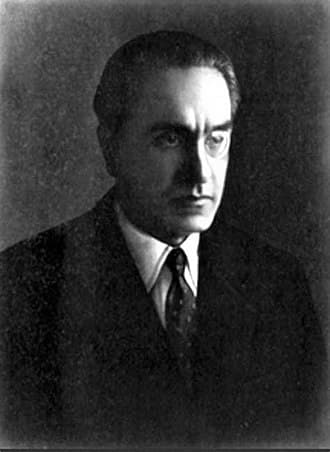
Julius Evola
Revolt Against the Modern World

A reflection on the 'twilight of the gods' as an esoteric metaphor for humanity's loss of spiritual contact and the onset of a dualistic, involutive process.

...d current of Huergehmir. Just as in the Zend-Avesta the freezing and dark winter that depopulated Ariyana Vaego was conceived as the work of an evil god opposed to the luminous creation, likewise this Eddie myth may allude to the alteration that precipitated the new cycle; this is true especially if we consider that the myth mentions a generation of giants and elemental telluric beings, creatures that were defrosted by the warm current, and against whom the race of the Aesir is going to fight.
In the Edda, the theme of ragna-rok or ragna-rokkr (the "destiny" or the "twilight of the gods") is the equivalent of the traditional teaching concerning the four-stage involutive process; it threatens the struggling world, which is already dominated by dualistic thinking. From an esoteric point of view this "twilight" affects the gods only metaphorically; it also signifies the "dimming" of the gods in human consciousness because mankind loses the gods, that is, the possibility of establishing a contact with them.
Such a destiny may be avoided, however, by preserving the purity of the deposit of that primordial and symbolic element—gold—with which the "palace of the heroes," the hall of Odin's twelve thrones, was built in the mythical Asgard. This gold, which could act as a source of good health so long as it was not touched by an elemental or by a human being, eventually fell into the hands of Albericus, the king of the subterranean beings that in the later editing of the myth are called the Nibelungs....
3
The Occult Center
Julius Evola
Revolt Against the Modern World

The author explains how memories of a primordial center survive as metahistorical symbols, representing a state of being that remains occult and reachable only through spiritual initiation or a change in nature.

...al body. Plutarch relates that the inhabitants of Northern regions could commune with Kronos (the king of the Golden Age) and with the inhabitants of the Far Northern region only in their sleep. According to Lieh-tzu (2), those marvelous regions he mentions that are connected to the Arctic and the Atlantic seat, "you cannot reach by boat or carriage or on foot, only by a journey of the spirit." According to the Tibetan lamas' teachings, Shambhala, the mystical Northern seat, is within everyone.
This is how the testimonies concerning what once was a real location inhabited by nonhuman beings survived and assumed a metahistorical value, providing at the same time symbols of states beyond ordinary life, that can only be reached through initiation. Besides the symbol, we find the idea that the original center still exists in an occult and usually unreachable location (similar to what Catholic theology said about the Garden of Eden): only a change of state or of nature can open its doors to the generations living in the last ages. This is how the second great transposition of metaphysics and history was established. In reality, the…
In the West, where the physical light that is subject to birth and to decline becomes extinguished, the unchanging spiritual light is kindled; there the journey of the "Sun's ship" toward the Land of the Immortals commences. And since this region lies where the sun disappears beyond the horizon, it was also conceived as subterranean or as underwater. This is straightforward symbolism directly inspired by natural observations and thus used by various populations, even by those that have no relat...
Continue reading →
1
Initiatory Ontological Change
Julius Evola
Revolt Against the Modern World

The author posits that high-level initiation is an independent ontological transformation that preserves a subterranean spiritual influence superior to external religious and historical forms.

...concerning the transcendence of the supernatural quality vis-à-vis any human virtue or sin. In this chapter I have discussed initiation in relation to the positive function of regality, even when considered in material terms. I have also mentioned instances in which the initiatory dignity separated itself from that function, or better, instances in which that function separated itself from the initiatory dignity by becoming secularized and by taking on a merely warrior or political character.
Initiation must also be considered, however, as an independent category of the world of Tradition without a necessary relation to the exercise of a visible function at the center of a society. Initiation (high-level initiation, not to be confused with initiation that is related to the regimen of the castes or to the traditional professions and the various artisan guilds) has defined, in and of itself, the action that determines an ontological transformation of man. High-level initiation has generated initiatory chains that were often invisible and subterranean and that preserved an identical spiritual influence and an "inner doctrine" superior to the exoteric and religious forms of a historical tradition.
There are even instances in which the initiate has enjoyed this distinct character in a normal civilization and not only during the ensuing period of degeneration and inner fracture of the traditional unity. This character has become necessary and all-pervasive, especially in Europe in these latter times because of the involutive processes that have led both to the organization of the modern world and to the advent of Christianity (hence the merely initiatory character of the hermetic rex, of t...
2
World as Symbol
Julius Evola
Revolt Against the Modern World

A vision of the world as a vast system of symbols and correspondences where actions in the sensible realm trigger reactions in higher, invisible spiritual dimensions.

...ed and restrained in the "god" himself; in other words, it opens the doors to chaos. Conversely, a correctly performed and diligent sacrificial action was reputed to be the support that men and gods provide for each other in their mutual interest. The fate awaiting those who no longer have any rite is the "infernal regions"; they fall from the supernatural order they had partaken of into the states of the lower nature. It has been said that only the sacrificial action does not create a "bond."
Olympiodorus wrote that the whole world is one great symbol, since it reflects invisible realities through sensible forms. Plutarch wrote: "Among the things that belong to a higher order there are secret connections and correspondences, just like in the order of natural phenomena: these connections cannot be recognized other than through experience, traditions and universal consensus.'' A characteristic expression of Jewish esotericism is: Through the impulse from below there is a stirring above, and through the impulse from above there is a stirring higher up still.
Thus by the impulse of the smoke [of sacrifice] from below the lamp is kindled above and when this is kindled all the other lamps are kindled and all the worlds are blessed from it. Thus by the impulse of the sacrifice is the mainstay of the world and the blessing of all worlds. This may be considered the general profession of faith of traditional civilizations. According to modern man, both causes and effects are relegated to the physical plane, framed within time and space. According to trad...
1
Initiatory Ontological Change
Julius Evola
Revolt Against the Modern World

The author distinguishes high-level initiation as an ontological transformation that preserves a subterranean spiritual influence superior to the exoteric religious forms of any given historical period.

...when considered in material terms. I have also mentioned instances in which the initiatory dignity separated itself from that function, or better, instances in which that function separated itself from the initiatory dignity by becoming secularized and by taking on a merely warrior or political character. Initiation must also be considered, however, as an independent category of the world of Tradition without a necessary relation to the exercise of a visible function at the center of a society.
Initiation (high-level initiation, not to be confused with initiation that is related to the regimen of the castes or to the traditional professions and the various artisan guilds) has defined, in and of itself, the action that determines an ontological transformation of man. High-level initiation has generated initiatory chains that were often invisible and subterranean and that preserved an identical spiritual influence and an "inner doctrine" superior to the exoteric and religious forms of a historical tradition. There are even instances in which the initiate has enjoyed this distinct character in a normal civilization and not only during the ensuing period of degeneration and inner fracture of the traditional unity.
This character has become necessary and all-pervasive, especially in Europe in these latter times because of the involutive processes that have led both to the organization of the modern world and to the advent of Christianity (hence the merely initiatory character of the hermetic rex, of the Rosicrucian emperor, and so on). On the Hierarchical Relationship Between Royalty and Priesthood If on the one hand the original synthesis of the two powers is reestablished in the person of the consecra...
3