Civilization's Fatal Descent
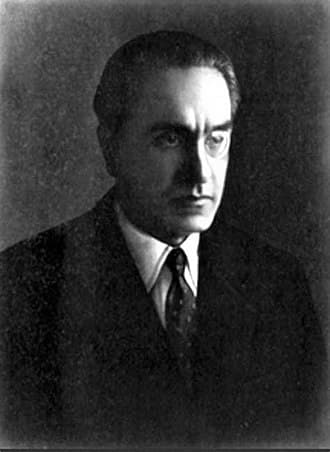
Julius Evola
Revolt Against the Modern World

A vision of the modern world as a terminal civilization in an unstoppable decline, where irrational reactions only mask the reality of a spiritual fall that has already occurred.

...ld be rash to see in these phenomena of protest something positive, they nevertheless have the value of a symptom; these phenomena clearly illustrate that beliefs that were once taken for granted today no longer are, and that the idyllic perspectives of "evolutionism" have come of age. An unconscious defense mechanism, however, prevents people from going beyond a certain limit; this mechanism is similar to the instinct found in sleepwalkers who lack the perception of height as they amble about.
Some pseudointellectual and irrational reactions seem to have no other effect than to distract modern humans and prevent them from becoming fully aware of that global and dreadful perspective according to which the modern world appears as a lifeless body falling down a slope, which nothing can possibly stop. There are diseases that incubate for a long time and become manifest only when their hidden work has almost ended. This is the case of man's fall from the ways of what he once glorified as civilization par excellence.
Though modern men have come to perceive the West's bleak future only recently, there are causes that have been active for centuries that have contributed to spiritual and material degeneration. These causes have not only taken away from most people the possibility of revolt and the return to normalcy and health, but most of all, they have taken away the ability to understand what true normalcy and health really mean. Thus, no matter how sincere the intention animating those who today attempt t...
2
Pragmatism as Truth
Julius Evola
Revolt Against the Modern World

The author critiques American pragmatism and behaviorism for subordinating metaphysical truth to socioeconomic efficiency and denying the existence of a substantial conscious 'I'.

...societies in which spiritualism, psychoanalysis, and counterfeits of Eastern doctrines are mixed with humanitarianism, feminism, and sentimentalism, as well as with social versions of puritanism and scientism—all things that truly reflect the American understanding of "spirituality." And when we see America acquire with its dollars some representatives and works of ancient European culture for the benefit and the enjoyment of the upper crust of the Third Estate, the true center lies elsewhere.
In America any inventor who discovers some new tool that will improve production will always win more social approval and acknowledgment than the traditional type of the intellectual; moreover, anything that is profit, reality, or action in the material sense of the word will always be valued more than anything that may derive from a line of aristocratic dignity. Thus, even though America has not officially banished ancient philosophy like communism did, it has done something better; through a William James it has declared that the useful is the criterion of truth and that the value of any concept, even metaphysical ones, should be measured…
The consequence of this typically "democratic" theory is that anybody can become anything they wish to be, provided a certain amount of training and pedagogy be supplied; in other words man, in himself, is believed to be a shapeless and moldable substance, just like communism wants him to be when it regards as antirevolutionary and anti-Marxist the genetic theory of innate qualities elaborated in the field of biology. The power that advertising enjoys in the USA can be explained by the inner i...
Continue reading →
6
Culture's Empty Self-Actualization
Julius Evola
Revolt Against the Modern World

A confession regarding the modern loss of traditional rhythm, which has resulted in a chaotic culture of 'self-actualization' based on the nothingness of the empirical subject.

...e human individual since in him all prior recollections have disappeared. Thus we witness the disappearance of both the possibility of establishing contact with those forces of which a given birth is just the effect, and the possibility of rejoining that nonhuman element in man, which being situated before birth, is also beyond death; this element constitutes the "place" for everything that may eventually be realized beyond death itself and is the principle of an incomparable sense of security.
Once the rhythm has been broken, the contacts lost, and the great distances precluded to the human eye, all the paths seem open and every field is saturated with disorderly, inorganic activities that lack a deep foundation and meaning and are dominated by temporal and particularistic motivations and by passions, cheap interests, and vanity. In this context, "culture" is no longer the context in which it is possible to actualize one's being through serious commitment and faithfulness; it is rather the locus for "self-actualization." And since the shifting sands of that nothingness without a name and tradition that is the empirical human…
No other difference is acknowledged to be more right and truer than that which is "achieved" through one's efforts and "merit" according to the terms of various vain, intellectual, moral, or social beliefs typical of these recent times. In the same way, it is only natural that the only things left are the limits of the most coarse physical heredity, which have become the signs of incomprehensible meanings and which are endured or enjoyed according to each case, as a caprice of fate. It is also...
Continue reading →
1
Hierarchy as Natural Law
Julius Evola
Revolt Against the Modern World

The author defends the traditional caste system as an impersonal law of nature and heredity that ensures social stability, contrasting it with modern egalitarian sensitivities.

...ded as obvious, rather than on violence, oppression, or on what in modern terms is referred to as "social injustice." By acknowledging his own nature, traditional man knew his own place, function, and what would be the correct relationship with both superiors and inferiors; hence, if a vaiśya did not acknowledge the authority of a kṣatriya , or if a kṣatriya did not uphold his superiority in regards to a vaiśya or a śūdra , this was not so much considered a fault but as the result of ignorance.
A hierarchy was not a device of the human will but a law of nature and as impersonal a physical law as that according to which a lighter fluid floats on top of a denser fluid, unless an upsetting factor intervenes. There was a firmly upheld principle according to which "Those who want to institute a process at variance with human nature cannot make it function as an ethical system." What upsets modern sensitivity the most about the caste system is the law of heredity and preclusion. It seems "unfair" that fate may seal at birth one's social status and predetermine the type of activity to which a man will consecrate the rest of his life and…
The closed caste system was based on two fundamental principles: the first principle consisted of the fact that traditional man considered everything visible and worldly as the mere effects of causes of a higher order. Thus, for example, to be born according to this or that condition, as a man or a woman, in one caste rather than in another, in one race instead of another, and to be endowed with specific talents and dispositions, was not regarded as pure chance. All of these circumstances were...
Continue reading →
4
America as Far West
Julius Evola
Revolt Against the Modern World

The author warns that resisting the modern world is impossible if one remains committed to the technological and productive values epitomized by America.

...that American "democracy" is the antidote for Soviet communism and the only alternative for the so-called free world. Generally speaking, a danger is clearly recognized in the presence of a brutal, physical attack from the outside but not one coming from the inside. For quite some time Europe has been under the influence of America and therefore has undergone the perversion of traditional values arid ideals inherent in the North American world. This has happened as some sort of fatal reaction.
America represents a "Far West," and it contains the further and radical development of the basic trends that have been adopted by modern Western civilization. Thus, it is not possible to put up a valid resistance to the modern world while still holding on to the principles and especially to the technological and productive mirage on which this world is based.
With the development of this accelerating influence, chances are that the closing of the pincers from East and West around a Europe, which following World War II, has no new ideas to offer and that ceased to enjoy the rank of an autonomous and hegemonic world power even in the political arena, will not even be perceived with a sense of capitulation. The final collapse will not even have the character of a tragedy. The communist world and America, in their being persuaded of having a universal...
2