Aristocratic Asceticism
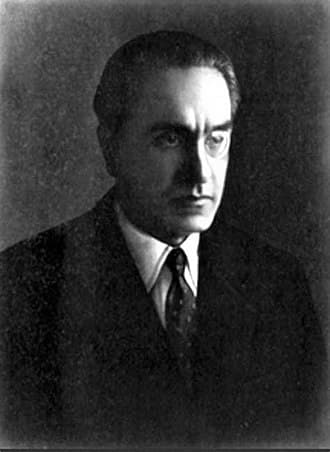
Julius Evola
Revolt Against the Modern World

A thesis presenting Buddhism as an aristocratic reformation that rejected the identification of the self with nature in favor of a pragmatic, transcendent awakening.

...) —a doctrine not found in the early Vedic period—became predominant. Thus, asceticism aimed at achieving a liberation that had the meaning of escapism rather than a truly transcendent fulfillment. Early Buddhism, which was originated by Prince Siddharta Gautama, an ascetic from a warrior clan, may be considered in many ways as a reaction against these views as well as against the purely speculative interest and the ritualistic formalism that had become predominant in so many brāhmaṇa circles.
The Buddhist doctrine of awakening, by declaring that the view of the identification of the self with nature, with the All, and even with the divinity theistically conceived (Brahma) is proper to "an uninstructed average person, taking no account of the pure ones, unskilled in the dharma of the pure ones, untrained in the dharma of the pure ones," firmly upheld the principle of an aristocratic asceticism oriented to an authentically transcendent goal. Thus, Buddhism represented a reformation that occurred at a time of crisis in traditional Indo-Aryan spirituality and was contemporary with the crisis that was manifested in other civilizations,…
Buddhism was opposed to the traditional doctrine of ātman only inasmuch as the latter no longer corresponded to a living reality and had become an emasculated complex of theories and speculations of the priestly caste. By denying that every human being is endowed with an ātman ; by denying the doctrine of reincarnation (Buddhism denies the existence of a personal nucleus that remains identical through various incarnations: according to Buddhism, what reincarnates is not a "self," but "craving,"...
Continue reading →
2
Warrior Asceticism
Julius Evola
Revolt Against the Modern World

The author highlights the Knights Templar as ascetic warriors whose secret initiation allegedly involved a rejection of conventional Christian doctrine in favor of a more primordial, martial spirituality.

...ctrines of the Albigenses cannot be considered to be perfectly orthodox; however, we cannot fail to notice, especially in reference to Frederick II and to the Aragonenses, a certain connection between the Albigenses and a current of chivalry that defended the imperial ideal against the Roman Curia, and which during the Crusades ventured all the way to Jerusalem (not without a reason), which it conceived almost as the center of a higher spirituality than that which was incarnated in papal Rome.
The most characteristic case is that of the Knights Templar, ascetic warriors who gave up the pleasures of the world in order to pursue a discipline not practiced in the monasteries but on the battlefields, and who were animated by a faith consecrated more by blood and victory than by prayer. The Templars had their own secret initiation, the details of which, though they were portrayed by their accusers with blasphemous tinges, are very significant. Among other things, in a preliminary part of the ritual the candidates to the highest degree of Templar initiation were supposed to reject the symbol of the cross and to acknowledge that Christ's doctrine did not lead to salvation.
The Templars were also accused of engaging in secret dealings with the "infidels" and of celebrating wicked rites. These were just symbols, as it was declared repeatedly, though in vain, at the Templars' trial. In all probability, this was not a case of sacrilegious impiety but of acknowledgment of the inferior character of the exoteric tradition represented by devotional Christianity, an acknowledgment that was required in order for one to be elevated to higher forms of spirituality. Generally...
1
Asceticism of Gold
Julius Evola
Revolt Against the Modern World

A critique of modern capitalism, arguing that the drive for wealth has regressed into a form of 'secular asceticism' where managers are enslaved to their fortunes rather than using them for aristocratic magnificence.

...s upon these new slaves as a more fearful threat than the threat of the whip in ancient times. In any event, it is possible to distinguish a general phase in which the yearning for profit displayed by single individuals who pursue wealth and power is the central motif (the phase that corresponds to the advent of the third caste) from a further phase that is still unfolding, characterized by a sovereign economy that has become almost independent or collectivized (the advent of the last caste).
In this regard, it is interesting to note that the regression of the principle of "action" to the form proper to the inferior castes (work, production) is often accompanied by an analogous regression with regard to the principle of "asceticism." What arises is almost a new asceticism of gold and work, because as it is exemplified by representative figures of this phase, to work and amass a fortune become things that are yearned for and loved for their own sake, as if they were a vocation. Thus we often see, especially in America, powerful capitalists who enjoy their wealth less than the last of their employees; rather than owning riches and…
Rich though they may be, they pursue an increasing number of activities; it is almost as if they were impersonal and ascetical instruments whose activity is devoted to gathering, multiplying, and casting into ever wider nets (that sometimes affect the lives of millions of people and the destinies of entire nations) the faceless forces of money and of production. Fiat productio, pereat homo , Sombart correctly remarked when noticing that the spiritual destruction and emptiness that man has creat...
Continue reading →
5
The Last Times' Test
Julius Evola
Revolt Against the Modern World

A vision of the 'last times' where spiritual works are few and temptations are great, suggesting that upholding traditional truths provides essential reference points against the dominance of matter.

...lost, then the last night would surely fall. Let people of our time talk about these things with condescension as if they were anachronistic and antihistorical; we know that this is an alibi for their defeat. Let us leave modern men to their "truths" and let us only be concerned about one thing: to keep standing amid a world of ruins. Even though today an efficacious, general, and realizing action stands almost no chance at all, the ranks that I mentioned before can still set up inner defenses.
In an ancient ascetical text it is said that while in the beginning the law from above could be implemented, those who came afterward were only capable of half of what had been previously done; in the last times very few works will be done, but for people living in these times the great temptation will arise again; those who will endure during this time will be greater than the people of old who were very rich in works. To make the values of truth, reality, and Tradition highly visible to those who do not want "this" but who confusedly seek something "else," means to offer some reference points so that the great temptation may not prevail in…
Finally, we must consider a third possibility. To some the path of acceleration may be the most suitable approach to a solution, considering that given certain conditions, many reactions are the equivalent of those cramps that only prolong agony and by delaying the end also delay the advent of the new principle. Thus, it would be expedient to take on, together with a special inner attitude, the most destructive processes of the modern era in order to use them for liberation; this would be like...
Continue reading →
2
Spiritualizing Defeat
Julius Evola
Revolt Against the Modern World

The author posits that the military failures of the Crusades served to purify the movement, shifting the focus from material victory to the sacrificial and ritual value of action as an end in itself.

...militia super terram was instilled in these knights in an integral, inner, and outer fashion. Through prayers they readied themselves to fight and to move against the enemy. Their matins was the trumpet; their hair shirts, the armor they rarely took off; their fortresses, the monasteries; the trophies taken from the infidels, the relics and the images of saints. A similar kind of asceticism paved the way for that spiritual realization that was also related to the secret dimension of chivalry.
The military defeats the crusaders suffered, after an initial surprise and perplexity, helped to purify the Crusades from any residue of materialism and to focus on the inner rather than on the outer dimension, on the spiritual rather than on the temporal element. By comparing the unfortunate outcome of a Crusade with that of an unnoticed virtue, which is appreciated and rewarded only in the next life, people learned to see something superior to both winning and losing and to put all their values in the ritual and "sacrificial" aspect of an action as an end in itself, which is performed independently from the visible earthly results as an…
Therefore, in the Crusades we find the recurrence of the main meanings of expressions such as: "Paradise lies under the shade of the swords," and "The blood of the heroes is closer to God than the ink of the philosophers and the prayers of the faithful," as well as the view of the seat of immortality as the "island of heroes," (or Valhalla) and as the "court of heroes." What occurs again is the same spirit that animated the warrior in Zoroastrian dualism. By virtue of this spirit, the follower...
Continue reading →
2