Sacrifice for Happiness
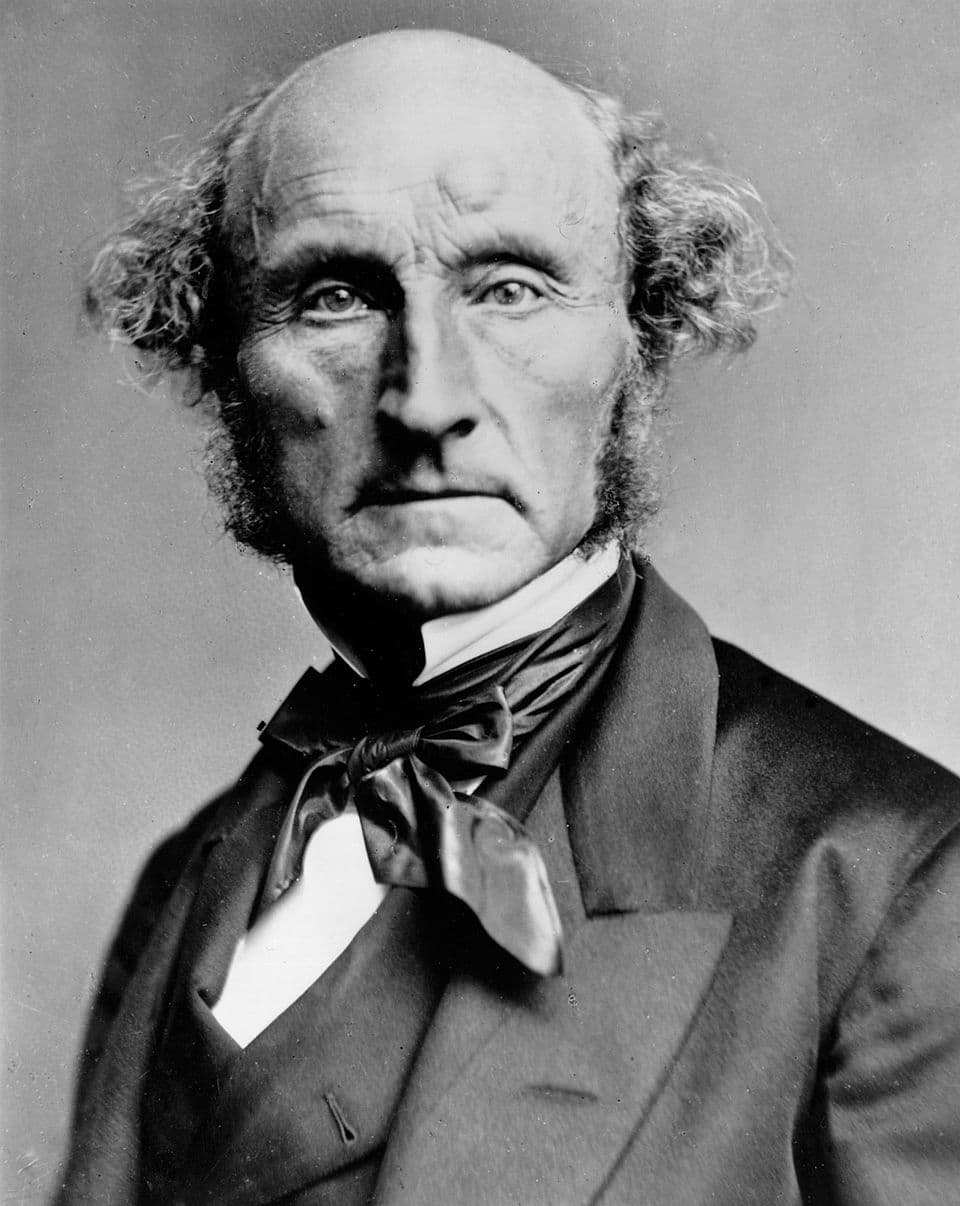
John Stewart Mill
Utilitarianism

Mill acknowledges that while self-sacrifice is the highest virtue in an imperfect world, it is only admirable when it increases the total happiness of others rather than being practiced as an ascetic end in itself.

...it is not its own end; and if we are told that its end is not happiness, but virtue, which is better than happiness, I ask, would the sacrifice be made if the hero or martyr did not believe that it would earn for others immunity from similar sacrifices? Would it be made, if he thought that his renunciation of happiness for himself would produce no fruit for any of his fellow creatures, but to make their lot like his, and place them also in the condition of persons who have renounced happiness?
All honour to those who can abnegate for themselves the personal enjoyment of life, when by such renunciation they contribute worthily to increase the amount of happiness in the world; but he who does it, or professes to do it, for any other purpose, is no more deserving of admiration than the ascetic mounted on his pillar. He may be an inspiriting proof of what men can do, but assuredly not an example of what they should. Though it is only in a very imperfect state of the world's arrangements that any one can best serve the happiness of others by the absolute sacrifice of his own, yet so long as the world is in that imperfect state, I…
For nothing except that consciousness can raise a person above the chances of life, by making him feel that, let fate and fortune do their worst, they have not power to subdue him: which, once felt, frees him from excess of anxiety concerning the evils of life, and enables him, like many a Stoic in the worst times of the Roman Empire, to cultivate in tranquillity the sources of satisfaction accessible to him, without concerning himself about the uncertainty of their duration, any more than abou...
Continue reading →
4
Virtue's Acquired Good
John Stewart Mill
Utilitarianism

The author describes virtue as a good that, while originally valued for its utility, becomes a disinterested good in itself that uniquely benefits society.

...litarian standard sanctions and approves their being so. Life would be a poor thing, very ill provided with sources of happiness, if there were not this provision of nature, by which things originally indifferent, but conducive to, or otherwise associated with, the satisfaction of our primitive desires, become in themselves sources of pleasure more valuable than the primitive pleasures, both in permanency, in the space of human existence that they are capable of covering, and even in intensity.
Virtue, according to the utilitarian conception, is a good of this description. There was no original desire of it, or motive to it, save its conduciveness to pleasure, and especially to protection from pain. But through the association thus formed, it may be felt a good in itself, and desired as such with as great intensity as any other good; and with this difference between it and the love of money, of power, or of fame, that all of these may, and often do, render the individual noxious to the other members of the society to which he belongs, whereas there is nothing which makes him so much a blessing to them as the cultivation of the…
And consequently, the utilitarian standard, while it tolerates and approves those other acquired desires, up to the point beyond which they would be more injurious to the general happiness than promotive of it, enjoins and requires the cultivation of the love of virtue up to the greatest strength possible, as being above all things important to the general happiness. It results from the preceding considerations, that there is in reality nothing desired except happiness. Whatever is desired oth...
Continue reading →
4
Cultivate Virtue's Love
John Stewart Mill
Utilitarianism

The author asserts that happiness is the only thing desired as an end, and that the cultivation of virtue is essential to maximizing general happiness.

...ecially to protection from pain. But through the association thus formed, it may be felt a good in itself, and desired as such with as great intensity as any other good; and with this difference between it and the love of money, of power, or of fame, that all of these may, and often do, render the individual noxious to the other members of the society to which he belongs, whereas there is nothing which makes him so much a blessing to them as the cultivation of the disinterested, love of virtue.
And consequently, the utilitarian standard, while it tolerates and approves those other acquired desires, up to the point beyond which they would be more injurious to the general happiness than promotive of it, enjoins and requires the cultivation of the love of virtue up to the greatest strength possible, as being above all things important to the general happiness. It results from the preceding considerations, that there is in reality nothing desired except happiness. Whatever is desired otherwise than as a means to some end beyond itself, and ultimately to happiness, is desired as itself a part of happiness, and is not desired for itself until it has become so.
Those who desire virtue for its own sake, desire it either because the consciousness of it is a pleasure, or because the consciousness of being without it is a pain, or for both reasons united; as in truth the pleasure and pain seldom exist separately, but almost always together, the same person feeling pleasure in the degree of virtue attained, and pain in not having attained more. If one of these gave him no pleasure, and the other no pain, he would not love or desire virtue, or would desire...
2
Will's Habitual Chains
John Stewart Mill
Utilitarianism

Mill describes the relationship between will, desire, and habit, suggesting that virtue must become a habit to ensure constancy of action when the immediate pull of pleasure or pain is insufficient.

...akened? Only by making the person desire virtue--by making him think of it in a pleasurable light, or of its absence in a painful one. It is by associating the doing right with pleasure, or the doing wrong with pain, or by eliciting and impressing and bringing home to the person's experience the pleasure naturally involved in the one or the pain in the other, that it is possible to call forth that will to be virtuous, which, when confirmed, acts without any thought of either pleasure or pain.
Will is the child of desire, and passes out of the dominion of its parent only to come under that of habit. That which is the result of habit affords no presumption of being intrinsically good; and there would be no reason for wishing that the purpose of virtue should become independent of pleasure and pain, were it not that the influence of the pleasurable and painful associations which prompt to virtue is not sufficiently to be depended on for unerring constancy of action until it has acquired the support of habit.
Both in feeling and in conduct, habit is the only thing which imparts certainty; and it is because of the importance to others of being able to rely absolutely on one's feelings and conduct, and to oneself of being able to rely on one's own, that the will to do right ought to be cultivated into this habitual independence. In other words, this state of the will is a means to good, not intrinsically a good; and does not contradict the doctrine that nothing is a good to human beings but in so far...
6
Virtue as Happiness Part
John Stewart Mill
Utilitarianism

The author explains that specific pleasures and virtues are not merely means to a collective happiness but are desired as constituent parts of happiness itself once they are loved for their own sake.

...neral happiness, unless it does love virtue in this manner--as a thing desirable in itself, even although, in the individual instance, it should not produce those other desirable consequences which it tends to produce, and on account of which it is held to be virtue. This opinion is not, in the smallest degree, a departure from the Happiness principle. The ingredients of happiness are very various, and each of them is desirable in itself, and not merely when considered as swelling an aggregate.
The principle of utility does not mean that any given pleasure, as music, for instance, or any given exemption from pain, as for example health, are to be looked upon as means to a collective something termed happiness, and to be desired on that account. They are desired and desirable in and for themselves; besides being means, they are a part of the end. Virtue, according to the utilitarian doctrine, is not naturally and originally part of the end, but it is capable of becoming so; and in those who love it disinterestedly it has become so, and is desired and cherished, not as a means to happiness, but as a part of their happiness. To…
What, for example, shall we say of the love of money? There is nothing originally more desirable about money than about any heap of glittering pebbles. Its worth is solely that of the things which it will buy; the desires for other things than itself, which it is a means of gratifying. Yet the love of money is not only one of the strongest moving forces of human life, but money is, in many cases, desired in and for itself; the desire to possess it is often stronger than the desire to use it, an...
Continue reading →
4