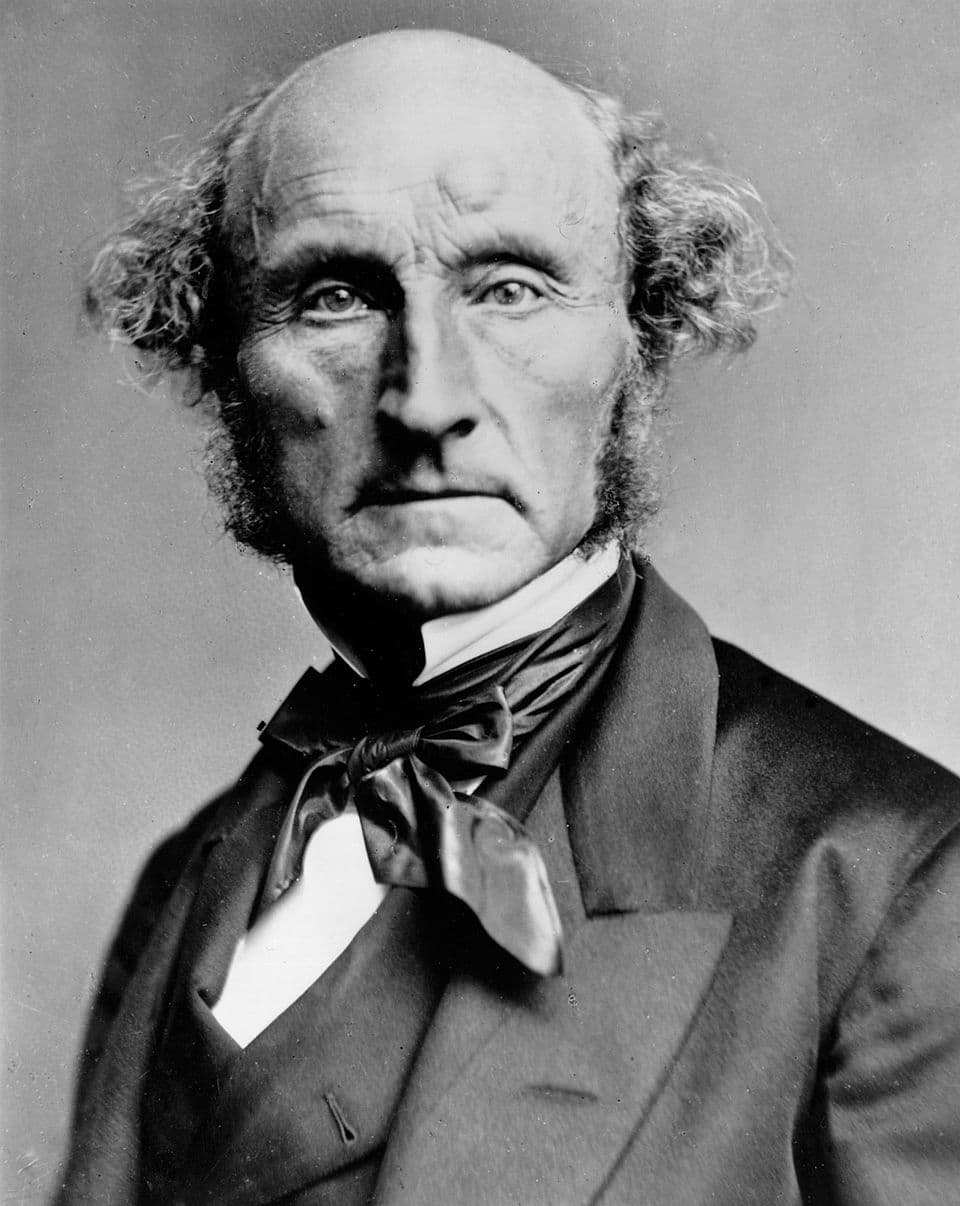
Justice vs Utility
John Stewart Mill
Utilitarianism

Mill examines the common perception of justice as an absolute, natural instinct that many thinkers mistakenly view as distinct from or opposed to utility.

...ual independence. In other words, this state of the will is a means to good, not intrinsically a good; and does not contradict the doctrine that nothing is a good to human beings but in so far as it is either itself pleasurable, or a means of attaining pleasure or averting pain. But if this doctrine be true, the principle of utility is proved. Whether it is so or not, must now be left to the consideration of the thoughtful reader. CHAPTER V. ON THE CONNEXION BETWEEN JUSTICE AND UTILITY.
In all ages of speculation, one of the strongest obstacles to the reception of the doctrine that Utility or Happiness is the criterion of right and wrong, has been drawn from the idea of Justice, The powerful sentiment, and apparently clear perception, which that word recalls with a rapidity and certainty resembling an instinct, have seemed to the majority of thinkers to point to an inherent quality in things; to show that the Just must have an existence in Nature as something absolute-generically distinct from every variety of the Expedient, and, in idea, opposed to it, though (as is commonly acknowledged) never, in the long run, disjoined from it in fact.
In the case of this, as of our other moral sentiments, there is no necessary connexion between the question of its origin, and that of its binding force. That a feeling is bestowed on us by Nature, does not necessarily legitimate all its promptings. The feeling of justice might be a peculiar instinct, and might yet require, like our other instincts, to be controlled and enlightened by a higher reason. If we have intellectual instincts, leading us to judge in a particular way, as well as animal...
3
Utility's Sacred Justice
John Stewart Mill
Utilitarianism

The author maintains that the distinction between justice and expediency is real and sacred, asserting that justice grounded in utility is the most binding and fundamental part of all morality.

...their slaves. Others, again, so far defer to the same conception of justice, as to maintain that all should pay an equal capitation tax for the protection of their persons (these being of equal value to all), and an unequal tax for the protection of their property, which is unequal. To this others reply, that the all of one man is as valuable to him as the all of another. From these confusions there is no other mode of extrication than the utilitarian. * * * * *
Is, then, the difference between the Just and the Expedient a merely imaginary distinction? Have mankind been under a delusion in thinking that justice is a more sacred thing than policy, and that the latter ought only to be listened to after the former has been satisfied? By no means. The exposition we have given of the nature and origin of the sentiment, recognises a real distinction; and no one of those who profess the most sublime contempt for the consequences of actions as an element in their morality, attaches more importance to the distinction than I do. While I dispute the pretensions of any theory which sets up an imaginary standard…
Justice is a name for certain classes of moral rules, which concern the essentials of human well-being more nearly, and are therefore of more absolute obligation, than any other rules for the guidance of life; and the notion which we have found to be of the essence of the idea of justice, that of a right residing in an individual, implies and testifies to this more binding obligation. The moral rules which forbid mankind to hurt one another (in which we must never forget to include wrongful in...
Continue reading →
3
Right as Social Defense
John Stewart Mill
Utilitarianism

The author defines a right as a claim that society ought to protect based on general utility, specifically the vital interest of security, which is fueled by both rational calculation and the animal instinct for retaliation.

...etition; because society ought not to allow any other person to hinder him from endeavouring to earn in that manner as much as he can. But he has not a right to three hundred a-year, though he may happen to be earning it; because society is not called on to provide that he shall earn that sum. On the contrary, if he owns ten thousand pounds three per cent. stock, he has a right to three hundred a-year; because society has come under an obligation to provide him with an income of that amount.
To have a right, then, is, I conceive, to have something which society ought to defend me in the possession of. If the objector goes on to ask why it ought, I can give him no other reason than general utility. If that expression does not seem to convey a sufficient feeling of the strength of the obligation, nor to account for the peculiar energy of the feeling, it is because there goes to the composition of the sentiment, not a rational only but also an animal element, the thirst for retaliation; and this thirst derives its intensity, as well as its moral justification, from the extraordinarily important and impressive kind of utility which…
Nearly all other earthly benefits are needed by one person, not needed by another; and many of them can, if necessary, be cheerfully foregone, or replaced by something else; but security no human being can possibly do without; on it we depend for all our immunity from evil, and for the whole value of all and every good, beyond the passing moment; since nothing but the gratification of the instant could be of any worth to us, if we could be deprived of everything the next instant by whoever was...
Continue reading →
5
End of shuffled session