The Need for Subordinate Principles
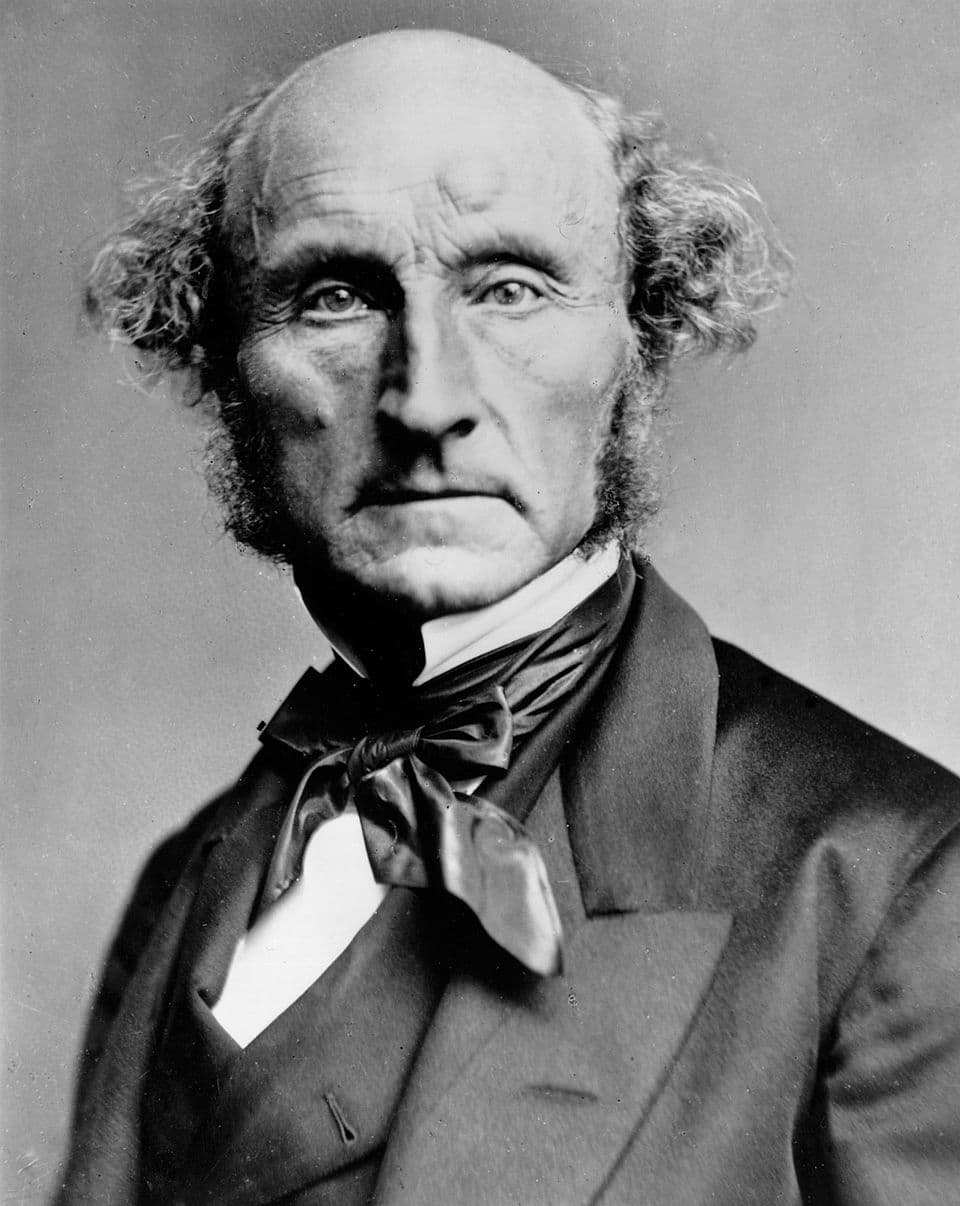
John Stewart Mill
Utilitarianism

The author defends utilitarianism by arguing that all moral systems require secondary principles derived from human experience, and that the theory should not be blamed for the inherent complexities of human nature.

...Nobody argues that the art of navigation is not founded on astronomy, because sailors cannot wait to calculate the Nautical Almanack. Being rational creatures, they go to sea with it ready calculated; and all rational creatures go out upon the sea of life with their minds made up on the common questions of right and wrong, as well as on many of the far more difficult questions of wise and foolish. And this, as long as foresight is a human quality, it is to be presumed they will continue to do.
Whatever we adopt as the fundamental principle of morality, we require subordinate principles to apply it by: the impossibility of doing without them, being common to all systems, can afford no argument against any one in particular: but gravely to argue as if no such secondary principles could be had, and as if mankind had remained till now, and always must remain, without drawing any general conclusions from the experience of human life, is as high a pitch, I think, as absurdity has ever reached in philosophical controversy. The remainder of the stock arguments against utilitarianism mostly consist in laying to its charge the common…
We are told that an utilitarian will be apt to make his own particular case an exception to moral rules, and, when under temptation, will see an utility in the breach of a rule, greater than he will see in its observance. But is utility the only creed which is able to furnish us with excuses for evil doing, and means of cheating our own conscience? They are afforded in abundance by all doctrines which recognise as a fact in morals the existence of conflicting considerations; which all doctrines...
Continue reading →
5
Experience's Long Lesson
John Stewart Mill
Utilitarianism

The author refutes the claim that utilitarianism is impractical due to lack of time for calculation, arguing that humanity has used its entire history to learn the consequences of actions through experience.

...m great and unmerited evil, and when the withholding can only be effected by denial. But in order that the exception may not extend itself beyond the need, and may have the least possible effect in weakening reliance on veracity, it ought to be recognized, and, if possible, its limits defined; and if the principle of utility is good for anything, it must be good for weighing these conflicting utilities against one another, and marking out the region within which one or the other preponderates.
Again, defenders of utility often find themselves called upon to reply to such objections as this--that there is not time, previous to action, for calculating and weighing the effects of any line of conduct on the general happiness. This is exactly as if any one were to say that it is impossible to guide our conduct by Christianity, because there is not time, on every occasion on which anything has to be done, to read through the Old and New Testaments. The answer to the objection is, that there has been ample time, namely, the whole past duration of the human species. During all that time mankind have been learning by experience the…
People talk as if the commencement of this course of experience had hitherto been put off, and as if, at the moment when some man feels tempted to meddle with the property or life of another, he had to begin considering for the first time whether murder and theft are injurious to human happiness. Even then I do not think that he would find the question very puzzling; but, at all events, the matter is now done to his hand. It is truly a whimsical supposition, that if mankind were agreed in consi...
Continue reading →
6
Morality as Utility
John Stewart Mill
Utilitarianism

Mill defines the foundation of utilitarianism as the Greatest Happiness Principle, which holds that actions are right if they promote pleasure and wrong if they produce pain.

...t implied superiority to frivolity and the mere pleasures of the moment. And this perverted use is the only one in which the word is popularly known, and the one from which the new generation are acquiring their sole notion of its meaning. Those who introduced the word, but who had for many years discontinued it as a distinctive appellation, may well feel themselves called upon to resume it, if by doing so they can hope to contribute anything towards rescuing it from this utter degradation.[A]
The creed which accepts as the foundation of morals, Utility, or the Greatest Happiness Principle, holds that actions are right in proportion as they tend to promote happiness, wrong as they tend to produce the reverse of happiness. By happiness is intended pleasure, and the absence of pain; by unhappiness, pain, and the privation of pleasure. To give a clear view of the moral standard set up by the theory, much more requires to be said; in particular, what things it includes in the ideas of pain and pleasure; and to what extent this is left an open question.
But these supplementary explanations do not affect the theory of life on which this theory of morality is grounded--namely, that pleasure, and freedom from pain, are the only things desirable as ends; and that all desirable things (which are as numerous in the utilitarian as in any other scheme) are desirable either for the pleasure inherent in themselves, or as means to the promotion of pleasure and the prevention of pain. Now, such a theory of life excites in many minds, and among them in so...
4
Means Become Ends
John Stewart Mill
Utilitarianism

The author explains how instruments of happiness, such as power or fame, can through association become desired for their own sake and thus transform from mere means into integral parts of an individual's happiness.

...st moving forces of human life, but money is, in many cases, desired in and for itself; the desire to possess it is often stronger than the desire to use it, and goes on increasing when all the desires which point to ends beyond it, to be compassed by it, are falling off. It may be then said truly, that money is desired not for the sake of an end, but as part of the end. From being a means to happiness, it has come to be itself a principal ingredient of the individual's conception of happiness.
The same may be said of the majority of the great objects of human life--power, for example, or fame; except that to each of these there is a certain amount of immediate pleasure annexed, which has at least the semblance of being naturally inherent in them; a thing which cannot be said of money. Still, however, the strongest natural attraction, both of power and of fame, is the immense aid they give to the attainment of our other wishes; and it is the strong association thus generated between them and all our objects of desire, which gives to the direct desire of them the intensity it often assumes, so as in some characters to surpass in…
The person is made, or thinks he would be made, happy by its mere possession; and is made unhappy by failure to obtain it. The desire of it is not a different thing from the desire of happiness, any more than the love of music, or the desire of health. They are included in happiness. They are some of the elements of which the desire of happiness is made up. Happiness is not an abstract idea, but a concrete whole; and these are some of its parts. And the utilitarian standard sanctions and approv...
Continue reading →
6
Happiness as Sole End
John Stewart Mill
Utilitarianism

Mill argues that because human nature is psychologically driven to desire happiness, it serves as the sole end of human action and the ultimate criterion for morality.

...he pleasure and pain seldom exist separately, but almost always together, the same person feeling pleasure in the degree of virtue attained, and pain in not having attained more. If one of these gave him no pleasure, and the other no pain, he would not love or desire virtue, or would desire it only for the other benefits which it might produce to himself or to persons whom he cared for. We have now, then, an answer to the question, of what sort of proof the principle of utility is susceptible.
If the opinion which I have now stated is psychologically true--if human nature is so constituted as to desire nothing which is not either a part of happiness or a means of happiness, we can have no other proof, and we require no other, that these are the only things desirable. If so, happiness is the sole end of human action, and the promotion of it the test by which to judge of all human conduct; from whence it necessarily follows that it must be the criterion of morality, since a part is included in the whole.
And now to decide whether this is really so; whether mankind do desire nothing for itself but that which is a pleasure to them, or of which the absence is a pain; we have evidently arrived at a question of fact and experience, dependent, like all similar questions, upon evidence. It can only be determined by practised self-consciousness and self-observation, assisted by observation of others. I believe that these sources of evidence, impartially consulted, will declare that desiring a thing an...
6