Right as Social Guarantee
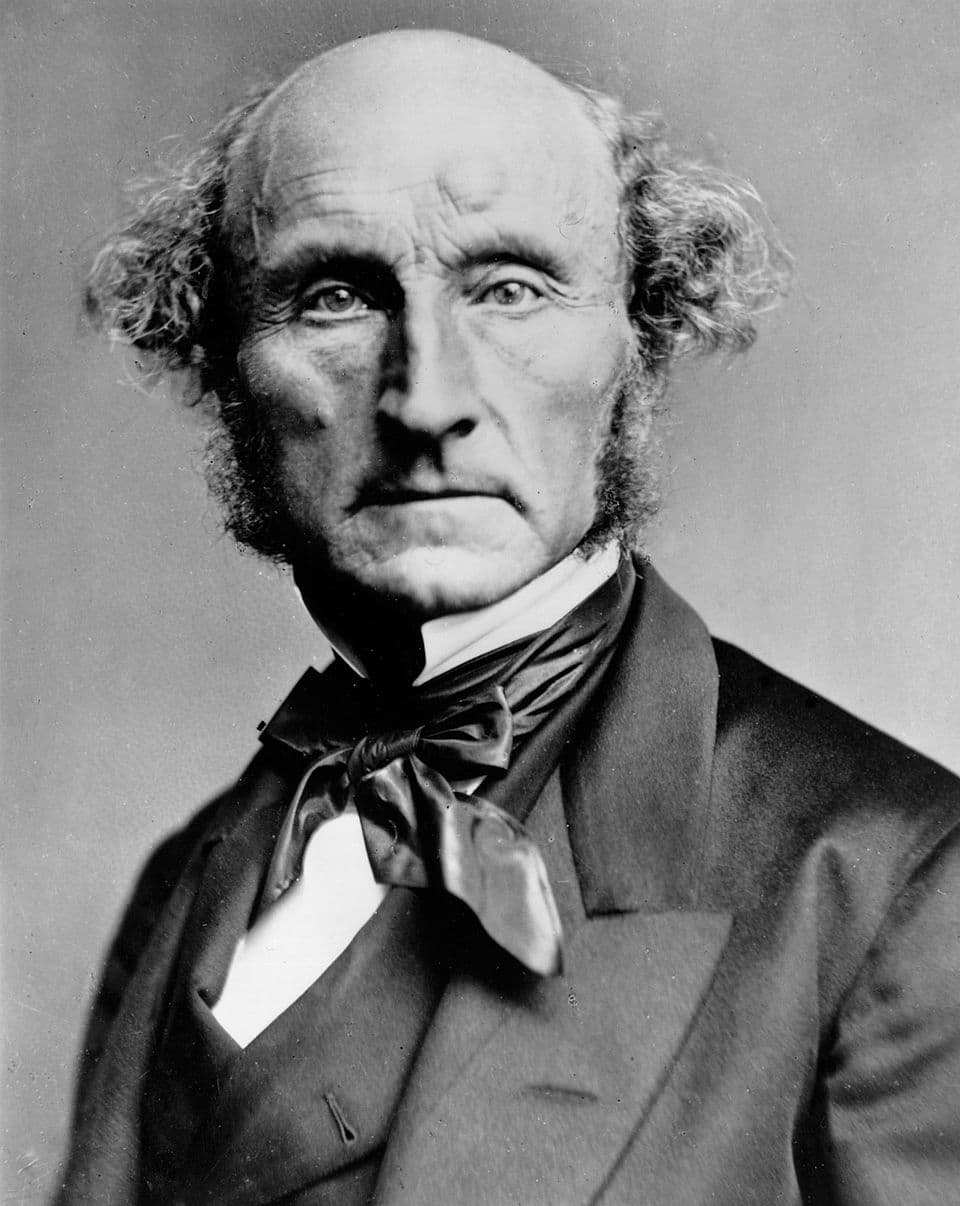
John Stewart Mill
Utilitarianism

A right is defined as a valid claim that an individual has upon society to protect their possession of something through law, education, or public opinion.

...treated the idea of a right residing in the injured person, and violated by the injury, not as a separate element in the composition of the idea and sentiment, but as one of the forms in which the other two elements clothe themselves. These elements are, a hurt to some assignable person or persons on the one hand, and a demand for punishment on the other. An examination of our own minds, I think, will show, that these two things include all that we mean when we speak of violation of a right.
When we call anything a person's right, we mean that he has a valid claim on society to protect him in the possession of it, either by the force of law, or by that of education and opinion. If he has what we consider a sufficient claim, on whatever account, to have something guaranteed to him by society, we say that he has a right to it. If we desire to prove that anything does not belong to him by right, we think this done as soon as it is admitted that society ought not to take measures for securing it to him, but should leave it to chance, or to his own exertions.
Thus, a person is said to have a right to what he can earn in fair professional competition; because society ought not to allow any other person to hinder him from endeavouring to earn in that manner as much as he can. But he has not a right to three hundred a-year, though he may happen to be earning it; because society is not called on to provide that he shall earn that sum. On the contrary, if he owns ten thousand pounds three per cent. stock, he has a right to three hundred a-year; because...
6
Fictions of Freedom
John Stewart Mill
Utilitarianism

The author critiques various philosophical 'fictions,' such as absolute free will and the social contract, which were invented to justify the punishment of individuals and resolve the complexities of moral responsibility.

...tutes his good. The Owenite invokes the admitted principle, that it is unjust to punish any one for what he cannot help. Each is triumphant so long as he is not compelled to take into consideration any other maxims of justice than the one he has selected; but as soon as their several maxims are brought face to face, each disputant seems to have exactly as much to say for himself as the others. No one of them can carry out his own notion of justice without trampling upon another equally binding.
These are difficulties; they have always been felt to be such; and many devices have been invented to turn rather than to overcome them. As a refuge from the last of the three, men imagined what they called the freedom of the will; fancying that they could not justify punishing a man whose will is in a thoroughly hateful state, unless it be supposed to have come into that state through no influence of anterior circumstances. To escape from the other difficulties, a favourite contrivance has been the fiction of a contract, whereby at some unknown period all the members of society engaged to obey the laws, and consented to be punished for any…
This happy thought was considered to get rid of the whole difficulty, and to legitimate the infliction of punishment, in virtue of another received maxim of justice, volenti non fit injuria; that is not unjust which is done with the consent of the person who is supposed to be hurt by it. I need hardly remark, that even if the consent were not a mere fiction, this maxim is not superior in authority to the others which it is brought in to supersede. It is, on the contrary, an instructive specim...
Continue reading →
5
Intelligence Sees Shared Interest
John Stewart Mill
Utilitarianism

Mill argues that human intelligence allows individuals to recognize a shared interest with society, leading them to view threats against the collective security as personal threats that trigger a defensive response.

...ho it thinks are about to hurt, itself or its young. Human beings, on this point, only differ from other animals in two particulars. First, in being capable of sympathizing, not solely with their offspring, or, like some of the more noble animals, with some superior animal who is kind to them, but with all human, and even with all sentient beings. Secondly, in having a more developed intelligence, which gives a wider range to the whole of their sentiments, whether self-regarding or sympathetic.
By virtue of his superior intelligence, even apart from his superior range of sympathy, a human being is capable of apprehending a community of interest between himself and the human society of which he forms a part, such that any conduct which threatens the security of the society generally, is threatening to his own, and calls forth his instinct (if instinct it be) of self-defence.
The same superiority of intelligence, joined to the power of sympathizing with human beings generally, enables him to attach himself to the collective idea of his tribe, his country, or mankind, in such a manner that any act hurtful to them rouses his instinct of sympathy, and urges him to resistance. The sentiment of justice, in that one of its elements which consists of the desire to punish, is thus, I conceive, the natural feeling of retaliation or vengeance, rendered by intellect and sympa...
6
End of shuffled session