Mill argues that the principle of utility must account for the quality of pleasures as well as quantity, suggesting that the preference of those who have experienced both is the ultimate test of superior value.
Pleasure's Quality vs Quantity
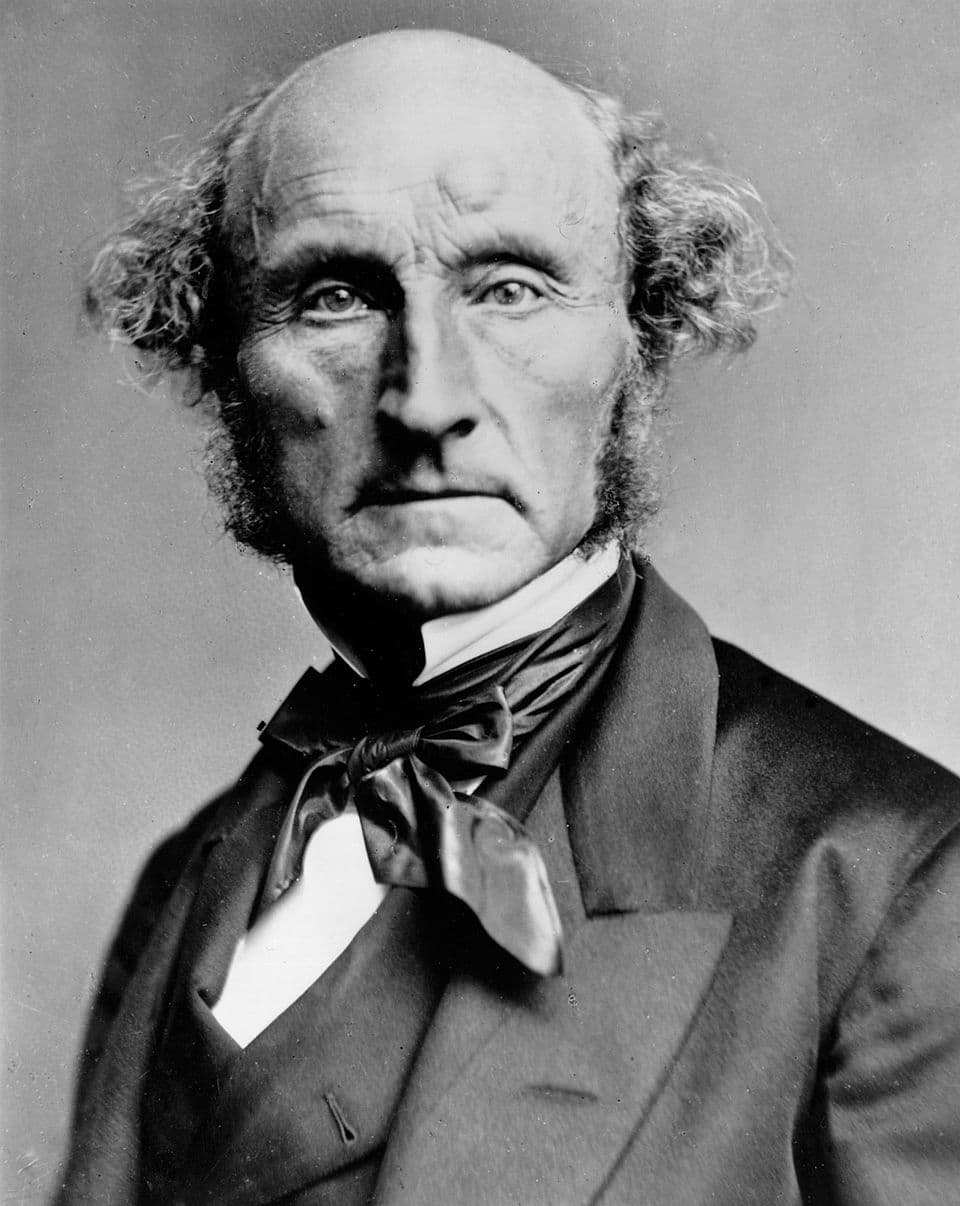
John Stewart Mill
Utilitarianism...pleasures than to those of mere sensation. It must be admitted, however, that utilitarian writers in general have placed the superiority of mental over bodily pleasures chiefly in the greater permanency, safety, uncostliness, &c., of the former--that is, in their circumstantial advantages rather than in their intrinsic nature. And on all these points utilitarians have fully proved their case; but they might have taken the other, and, as it may be called, higher ground, with entire consistency.
It is quite compatible with the principle of utility to recognise the fact, that some kinds of pleasure are more desirable and more valuable than others. It would be absurd that while, in estimating all other things, quality is considered as well as quantity, the estimation of pleasures should be supposed to depend on quantity alone. If I am asked, what I mean by difference of quality in pleasures, or what makes one pleasure more valuable than another, merely as a pleasure, except its being greater in amount, there is but one possible answer. Of two pleasures, if there be one to which all or almost all who have experience of both give a…
If one of the two is, by those who are competently acquainted with both, placed so far above the other that they prefer it, even though knowing it to be attended with a greater amount of discontent, and would not resign it for any quantity of the other pleasure which their nature is capable of, we are justified in ascribing to the preferred enjoyment a superiority in quality, so far outweighing quantity as to render it, in comparison, of small account. Now it is an unquestionable fact that tho...
Continue reading →
4
⚖Aspirations Lost to Circumstance

John Stewart Mill
UtilitarianismThe author observes that people often abandon higher intellectual aspirations for inferior pleasures not by choice, but because they lack the time, opportunity, or remaining capacity to pursue more refined tastes.
...that before they devote themselves exclusively to the one, they have already become incapable of the other. Capacity for the nobler feelings is in most natures a very tender plant, easily killed, not only by hostile influences, but by mere want of sustenance; and in the majority of young persons it speedily dies away if the occupations to which their position in life has devoted them, and the society into which it has thrown them, are not favourable to keeping that higher capacity in exercise.
Men lose their high aspirations as they lose their intellectual tastes, because they have not time or opportunity for indulging them; and they addict themselves to inferior pleasures, not because they deliberately prefer them, but because they are either the only ones to which they have access, or the only ones which they are any longer capable of enjoying.
It may be questioned whether any one who has remained equally susceptible to both classes of pleasures, ever knowingly and calmly preferred the lower; though many, in all ages, have broken down in an ineffectual attempt to combine both. From this verdict of the only competent judges, I apprehend there can be no appeal. On a question which is the best worth having of two pleasures, or which of two modes of existence is the most grateful to the feelings, apart from its moral attributes and from...
2
⚖The Experienced Judge

John Stewart Mill
UtilitarianismThe author proposes that the only valid way to determine the relative quality and value of different pleasures is to rely on the collective judgment of those who have experienced both.
...or opportunity for indulging them; and they addict themselves to inferior pleasures, not because they deliberately prefer them, but because they are either the only ones to which they have access, or the only ones which they are any longer capable of enjoying. It may be questioned whether any one who has remained equally susceptible to both classes of pleasures, ever knowingly and calmly preferred the lower; though many, in all ages, have broken down in an ineffectual attempt to combine both.
From this verdict of the only competent judges, I apprehend there can be no appeal. On a question which is the best worth having of two pleasures, or which of two modes of existence is the most grateful to the feelings, apart from its moral attributes and from its consequences, the judgment of those who are qualified by knowledge of both, or, if they differ, that of the majority among them, must be admitted as final. And there needs be the less hesitation to accept this judgment respecting the quality of pleasures, since there is no other tribunal to be referred to even on the question of quantity. What means are there of determining which is…
Neither pains nor pleasures are homogeneous, and pain is always heterogeneous with pleasure. What is there to decide whether a particular pleasure is worth purchasing at the cost of a particular pain, except the feelings and judgment of the experienced? When, therefore, those feelings and judgment declare the pleasures derived from the higher faculties to be preferable in kind, apart from the question of intensity, to those of which the animal nature, disjoined from the higher faculties, is s...
Continue reading →
4
⚖Youth's Lost Capacity

John Stewart Mill
UtilitarianismMill argues that people do not voluntarily choose lower pleasures over higher ones, but rather sink into them only after they have lost the capacity to enjoy more noble pursuits.
...knows both sides. It may be objected, that many who are capable of the higher pleasures, occasionally, under the influence of temptation, postpone them to the lower. But this is quite compatible with a full appreciation of the intrinsic superiority of the higher. Men often, from infirmity of character, make their election for the nearer good, though they know it to be the less valuable; and this no less when the choice is between two bodily pleasures, than when it is between bodily and mental.
They pursue sensual indulgences to the injury of health, though perfectly aware that health is the greater good. It may be further objected, that many who begin with youthful enthusiasm for everything noble, as they advance in years sink into indolence and selfishness. But I do not believe that those who undergo this very common change, voluntarily choose the lower description of pleasures in preference to the higher. I believe that before they devote themselves exclusively to the one, they have already become incapable of the other.
Capacity for the nobler feelings is in most natures a very tender plant, easily killed, not only by hostile influences, but by mere want of sustenance; and in the majority of young persons it speedily dies away if the occupations to which their position in life has devoted them, and the society into which it has thrown them, are not favourable to keeping that higher capacity in exercise. Men lose their high aspirations as they lose their intellectual tastes, because they have not time or opport...
2
⚖Pleasure as End

John Stewart Mill
UtilitarianismThe author defines the core of utilitarianism as the 'theory of life' where pleasure and the absence of pain are the only inherently desirable ends.
...y well feel themselves called upon to resume it, if by doing so they can hope to contribute anything towards rescuing it from this utter degradation.[A] The creed which accepts as the foundation of morals, Utility, or the Greatest Happiness Principle, holds that actions are right in proportion as they tend to promote happiness, wrong as they tend to produce the reverse of happiness. By happiness is intended pleasure, and the absence of pain; by unhappiness, pain, and the privation of pleasure.
To give a clear view of the moral standard set up by the theory, much more requires to be said; in particular, what things it includes in the ideas of pain and pleasure; and to what extent this is left an open question. But these supplementary explanations do not affect the theory of life on which this theory of morality is grounded--namely, that pleasure, and freedom from pain, are the only things desirable as ends; and that all desirable things (which are as numerous in the utilitarian as in any other scheme) are desirable either for the pleasure inherent in themselves, or as means to the promotion of pleasure and the prevention of pain.
Now, such a theory of life excites in many minds, and among them in some of the most estimable in feeling and purpose, inveterate dislike. To suppose that life has (as they express it) no higher end than pleasure--no better and nobler object of desire and pursuit--they designate as utterly mean and grovelling; as a doctrine worthy only of swine, to whom the followers of Epicurus were, at a very early period, contemptuously likened; and modern holders of the doctrine are occasionally made the s...
6