Utility's Hidden Influence
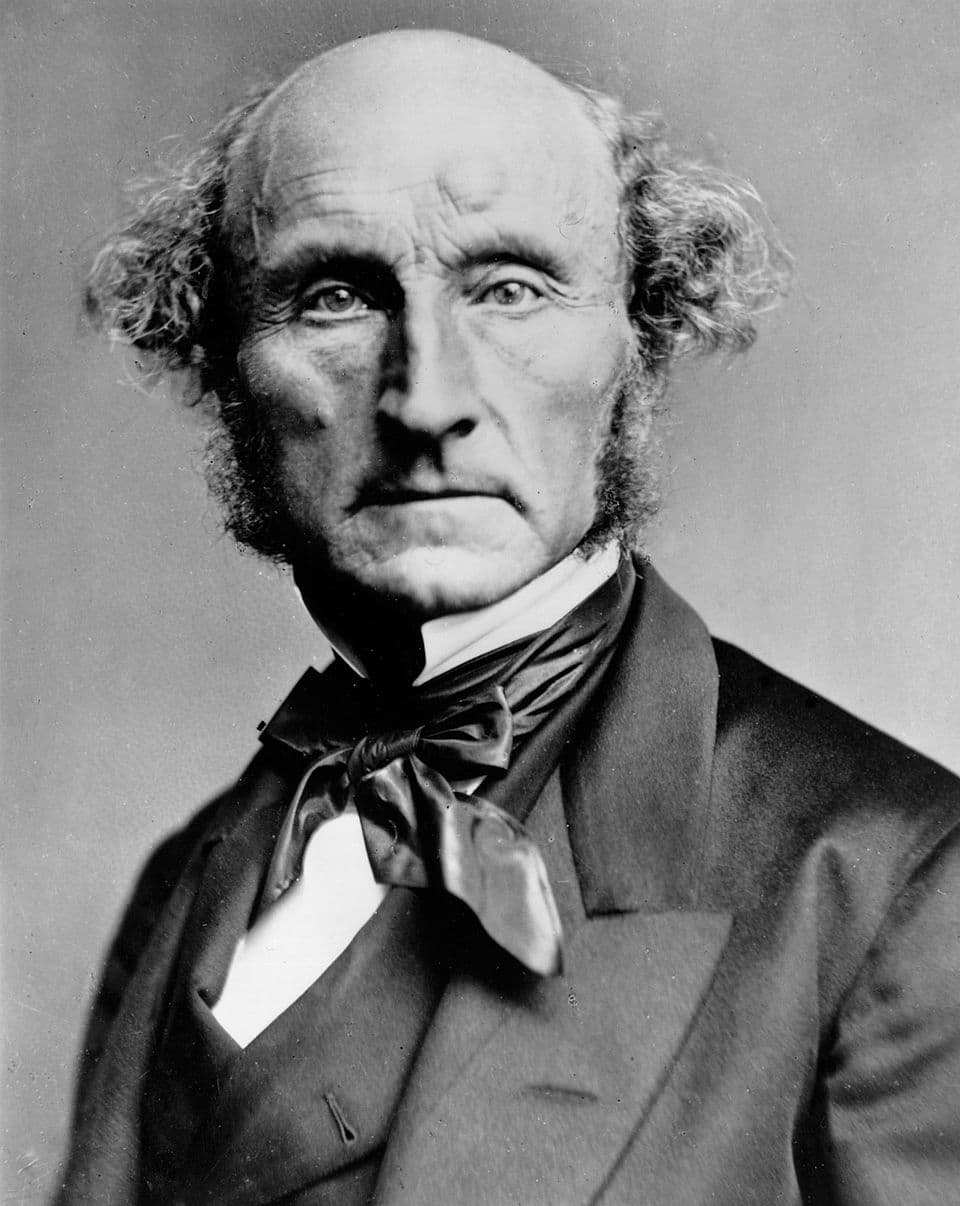
John Stewart Mill
Utilitarianism

Mill argues that the principle of utility has historically shaped moral doctrines even among those who reject it, as the effects of actions on happiness are an undeniable consideration in all ethical systems.

...nquire how far the bad effects of this deficiency have been mitigated in practice, or to what extent the moral beliefs of mankind have been vitiated or made uncertain by the absence of any distinct recognition of an ultimate standard, would imply a complete survey and criticism of past and present ethical doctrine. It would, however, be easy to show that whatever steadiness or consistency these moral beliefs have attained, has been mainly due to the tacit influence of a standard not recognised.
Although the non-existence of an acknowledged first principle has made ethics not so much a guide as a consecration of men's actual sentiments, still, as men's sentiments, both of favour and of aversion, are greatly influenced by what they suppose to be the effects of things upon their happiness, the principle of utility, or as Bentham latterly called it, the greatest happiness principle, has had a large share in forming the moral doctrines even of those who most scornfully reject its authority. Nor is there any school of thought which refuses to admit that the influence of actions on happiness is a most material and even predominant…
I might go much further, and say that to all those à priori moralists who deem it necessary to argue at all, utilitarian arguments are indispensable. It is not my present purpose to criticise these thinkers; but I cannot help referring, for illustration, to a systematic treatise by one of the most illustrious of them, the Metaphysics of Ethics, by Kant. This remarkable man, whose system of thought will long remain one of the landmarks in the history of philosophical speculation, does, in th...
Continue reading →
3
History's Stigmatized Transitions
John Stewart Mill
Utilitarianism

Mill views the history of social progress as the gradual recognition of former 'necessities' as injustices, concluding that justice represents the highest order of social utility despite being occasionally overruled by other urgent duties.

...the reverse. And hence all social inequalities which have ceased to be considered expedient, assume the character not of simple inexpediency, but of injustice, and appear so tyrannical, that people are apt to wonder how they ever could have been tolerated; forgetful that they themselves perhaps tolerate other inequalities under an equally mistaken notion of expediency, the correction of which would make that which they approve seem quite as monstrous as what they have at last learnt to condemn.
The entire history of social improvement has been a series of transitions, by which one custom or institution after another, from being a supposed primary necessity of social existence, has passed into the rank of an universally stigmatized injustice and tyranny. So it has been with the distinctions of slaves and freemen, nobles and serfs, patricians and plebeians; and so it will be, and in part already is, with the aristocracies of colour, race, and sex. It appears from what has been said, that justice is a name for certain moral requirements, which, regarded collectively, stand higher in the scale of social utility, and are therefore of…
Thus, to save a life, it may not only be allowable, but a duty, to steal, or take by force, the necessary food or medicine, or to kidnap, and compel to officiate, the only qualified medical practitioner. In such cases, as we do not call anything justice which is not a virtue, we usually say, not that justice must give way to some other moral principle, but that what is just in ordinary cases is, by reason of that other principle, not just in the particular case. By this useful accommodation of...
Continue reading →
2
Morality's Tangible Standard
John Stewart Mill
Utilitarianism

The author contends that utilitarianism provides a tangible and intelligible framework for deciding moral disputes and enforcing the moral law through social opinion.

...me conditions. What can be said in excuse for other moralists is equally available for them, namely, that if there is to be any error, it is better that it should be on that side. As a matter of fact, we may affirm that among utilitarians as among adherents of other systems, there is every imaginable degree of rigidity and of laxity in the application of their standard: some are even puritanically rigorous, while others are as indulgent as can possibly be desired by sinner or by sentimentalist.
But on the whole, a doctrine which brings prominently forward the interest that mankind have in the repression and prevention of conduct which violates the moral law, is likely to be inferior to no other in turning the sanctions of opinion against such violations. It is true, the question, What does violate the moral law? is one on which those who recognise different standards of morality are likely now and then to differ. But difference of opinion on moral questions was not first introduced into the world by utilitarianism, while that doctrine does supply, if not always an easy, at all events a tangible and intelligible mode of deciding such differences.
* * * * * It may not be superfluous to notice a few more of the common misapprehensions of utilitarian ethics, even those which are so obvious and gross that it might appear impossible for any person of candour and intelligence to fall into them: since persons, even of considerable mental endowments, often give themselves so little trouble to understand the bearings of any opinion against which they entertain a prejudice, and men are in general so little conscio...
4
Utility's Natural Foundation
John Stewart Mill
Utilitarianism

Mill argues that while moral associations can be artificially created through education, utilitarianism is uniquely stable because it is grounded in a natural basis of human sentiment rather than being a mere intellectual construct.

...pable, like them, in a certain small degree, of springing up spontaneously; and susceptible of being brought by cultivation to a high degree of development. Unhappily it is also susceptible, by a sufficient use of the external sanctions and of the force of early impressions, of being cultivated in almost any direction: so that there is hardly anything so absurd or so mischievous that it may not, by means of these influences, be made to act on the human mind with all the authority of conscience.
To doubt that the same potency might be given by the same means to the principle of utility, even if it had no foundation in human nature, would be flying in the face of all experience. But moral associations which are wholly of artificial creation, when intellectual culture goes on, yield by degrees to the dissolving force of analysis: and if the feeling of duty, when associated with utility, would appear equally arbitrary; if there were no leading department of our nature, no powerful class of sentiments, with which that association would harmonize, which would make us feel it congenial, and incline us not only to foster it in others (for…
But there is this basis of powerful natural sentiment; and this it is which, when once the general happiness is recognized as the ethical standard, will constitute the strength of the utilitarian morality. This firm foundation is that of the social feelings of mankind; the desire to be in unity with our fellow creatures, which is already a powerful principle in human nature, and happily one of those which tend to become stronger, even without express inculcation, from the influences of advanci...
Continue reading →
6
Conscience's External Illusion
John Stewart Mill
Utilitarianism

Mill explores the internal sanction of conscience, noting that transcendentalists fear morality will lose its power if individuals view their sense of obligation as merely a subjective feeling within the mind.

...irely subjective, having its seat in human consciousness only. But whatever a person's opinion may be on this point of Ontology, the force he is really urged by is his own subjective feeling, and is exactly measured by its strength. No one's belief that Duty is an objective reality is stronger than the belief that God is so; yet the belief in God, apart from the expectation of actual reward and punishment, only operates on conduct through, and in proportion to, the subjective religious feeling.
The sanction, so far as it is disinterested, is always in the mind itself; and the notion, therefore, of the transcendental moralists must be, that this sanction will not exist in the mind unless it is believed to have its root out of the mind; and that if a person is able to say to himself, That which is restraining me, and which is called my conscience, is only a feeling in my own mind, he may possibly draw the conclusion that when the feeling ceases the obligation ceases, and that if he find the feeling inconvenient, he may disregard it, and endeavour to get rid of it.
But is this danger confined to the utilitarian morality? Does the belief that moral obligation has its seat outside the mind make the feeling of it too strong to be got rid of? The fact is so far otherwise, that all moralists admit and lament the ease with which, in the generality of minds, conscience can be silenced or stifled. The question, Need I obey my conscience? is quite as often put to themselves by persons who never heard of the principle of utility, as by its adherents. Those whose co...
6