Mill observes that humans are naturally social beings who cannot easily conceive of themselves outside of a community, making social cooperation an inseparable part of the human destiny.
The Inescapable Social Body
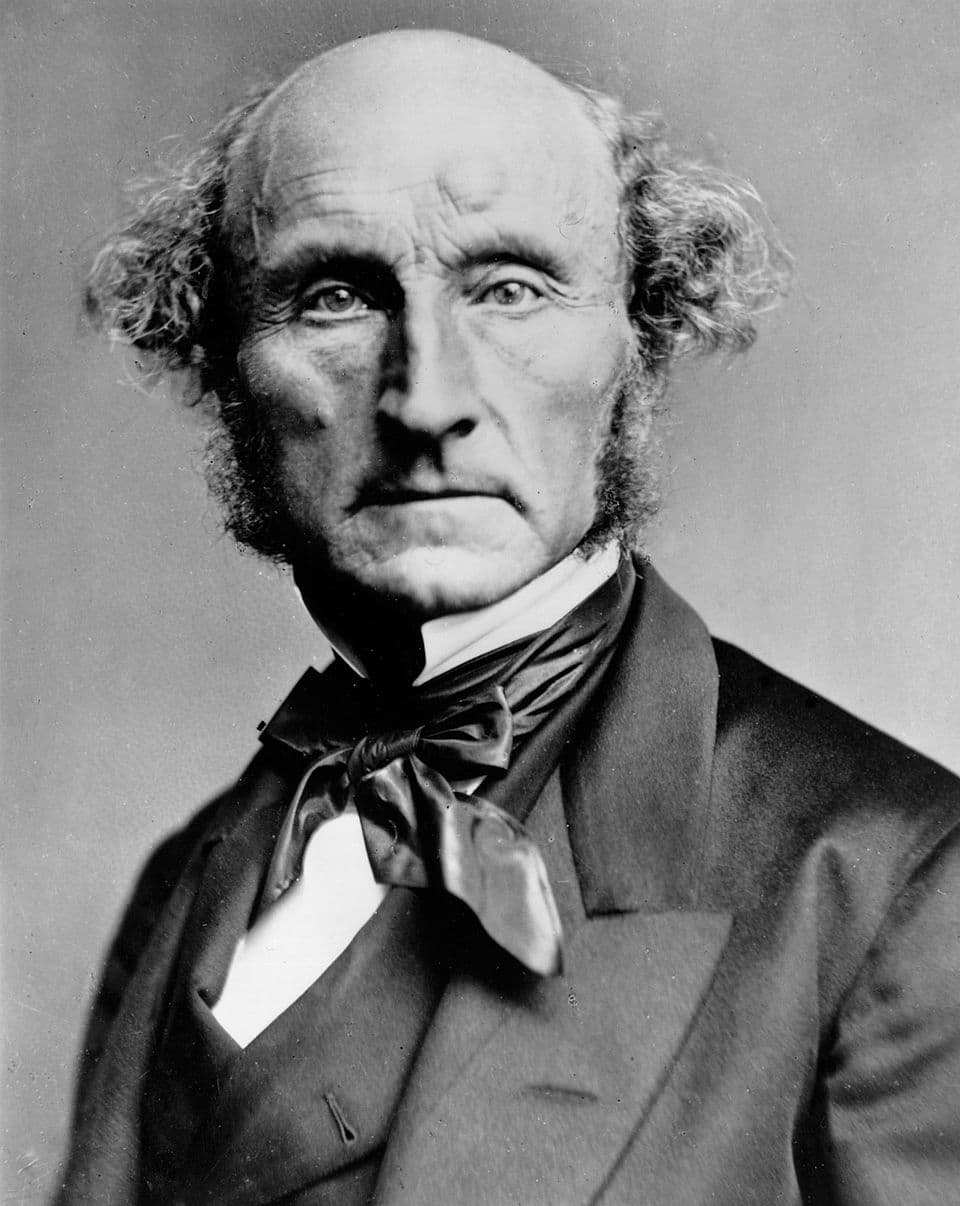
John Stewart Mill
Utilitarianism...is basis of powerful natural sentiment; and this it is which, when once the general happiness is recognized as the ethical standard, will constitute the strength of the utilitarian morality. This firm foundation is that of the social feelings of mankind; the desire to be in unity with our fellow creatures, which is already a powerful principle in human nature, and happily one of those which tend to become stronger, even without express inculcation, from the influences of advancing civilization.
The social state is at once so natural, so necessary, and so habitual to man, that, except in some unusual circumstances or by an effort of voluntary abstraction, he never conceives himself otherwise than as a member of a body; and this association is riveted more and more, as mankind are further removed from the state of savage independence. Any condition, therefore, which is essential to a state of society, becomes more and more an inseparable part of every person's conception of the state of things which he is born into, and which is the destiny of a human being.
Now, society between human beings, except in the relation of master and slave, is manifestly impossible on any other footing than that the interests of all are to be consulted. Society between equals can only exist on the understanding that the interests of all are to be regarded equally. And since in all states of civilization, every person, except an absolute monarch, has equals, every one is obliged to live on these terms with somebody; and in every age some advance is made towards a state i...
2
⚖Pleasure's Degrading Accusation

John Stewart Mill
UtilitarianismThe author defends utilitarianism against the charge that it is a 'doctrine worthy only of swine' by arguing that human beings are capable of higher pleasures than those of mere animals.
...f pain and pleasure; and to what extent this is left an open question. But these supplementary explanations do not affect the theory of life on which this theory of morality is grounded--namely, that pleasure, and freedom from pain, are the only things desirable as ends; and that all desirable things (which are as numerous in the utilitarian as in any other scheme) are desirable either for the pleasure inherent in themselves, or as means to the promotion of pleasure and the prevention of pain.
Now, such a theory of life excites in many minds, and among them in some of the most estimable in feeling and purpose, inveterate dislike. To suppose that life has (as they express it) no higher end than pleasure--no better and nobler object of desire and pursuit--they designate as utterly mean and grovelling; as a doctrine worthy only of swine, to whom the followers of Epicurus were, at a very early period, contemptuously likened; and modern holders of the doctrine are occasionally made the subject of equally polite comparisons by its German, French, and English assailants. When thus attacked, the Epicureans have always answered, that it is…
If this supposition were true, the charge could not be gainsaid, but would then be no longer an imputation; for if the sources of pleasure were precisely the same to human beings and to swine, the rule of life which is good enough for the one would be good enough for the other. The comparison of the Epicurean life to that of beasts is felt as degrading, precisely because a beast's pleasures do not satisfy a human being's conceptions of happiness. Human beings have faculties more elevated than t...
Continue reading →
2
⚖Instincts' Fallible Judgments

John Stewart Mill
UtilitarianismMill suggests that while we may have natural instincts regarding justice, these instincts are not infallible and must be distinguished from the ultimate criteria used to judge moral conduct.
...o it, though (as is commonly acknowledged) never, in the long run, disjoined from it in fact. In the case of this, as of our other moral sentiments, there is no necessary connexion between the question of its origin, and that of its binding force. That a feeling is bestowed on us by Nature, does not necessarily legitimate all its promptings. The feeling of justice might be a peculiar instinct, and might yet require, like our other instincts, to be controlled and enlightened by a higher reason.
If we have intellectual instincts, leading us to judge in a particular way, as well as animal instincts that prompt us to act in a particular way, there is no necessity that the former should be more infallible in their sphere than the latter in theirs: it may as well happen that wrong judgments are occasionally suggested by those, as wrong actions by these. But though it is one thing to believe that we have natural feelings of justice, and another to acknowledge them as an ultimate criterion of conduct, these two opinions are very closely connected in point of fact.
Mankind are always predisposed to believe that any subjective feeling, not otherwise accounted for, is a revelation of some objective reality. Our present object is to determine whether the reality, to which the feeling of justice corresponds, is one which needs any such special revelation; whether the justice or injustice of an action is a thing intrinsically peculiar, and distinct from all its other qualities, or only a combination of certain of those qualities, presented under a peculiar asp...
5
⚖Noble Feelings' Fragility

John Stewart Mill
UtilitarianismA reflection on how the capacity for noble feelings is a fragile trait that can easily wither if not actively nurtured by one's social environment and daily occupations.
...e is between two bodily pleasures, than when it is between bodily and mental. They pursue sensual indulgences to the injury of health, though perfectly aware that health is the greater good. It may be further objected, that many who begin with youthful enthusiasm for everything noble, as they advance in years sink into indolence and selfishness. But I do not believe that those who undergo this very common change, voluntarily choose the lower description of pleasures in preference to the higher.
I believe that before they devote themselves exclusively to the one, they have already become incapable of the other. Capacity for the nobler feelings is in most natures a very tender plant, easily killed, not only by hostile influences, but by mere want of sustenance; and in the majority of young persons it speedily dies away if the occupations to which their position in life has devoted them, and the society into which it has thrown them, are not favourable to keeping that higher capacity in exercise.
Men lose their high aspirations as they lose their intellectual tastes, because they have not time or opportunity for indulging them; and they addict themselves to inferior pleasures, not because they deliberately prefer them, but because they are either the only ones to which they have access, or the only ones which they are any longer capable of enjoying. It may be questioned whether any one who has remained equally susceptible to both classes of pleasures, ever knowingly and calmly preferred...
2
⚖Rules Without Exceptions

John Stewart Mill
UtilitarianismThe author observes that no moral system can be perfectly rigid, as the complexity of human affairs necessitates exceptions and the resolution of conflicting duties.
...o make his own particular case an exception to moral rules, and, when under temptation, will see an utility in the breach of a rule, greater than he will see in its observance. But is utility the only creed which is able to furnish us with excuses for evil doing, and means of cheating our own conscience? They are afforded in abundance by all doctrines which recognise as a fact in morals the existence of conflicting considerations; which all doctrines do, that have been believed by sane persons.
It is not the fault of any creed, but of the complicated nature of human affairs, that rules of conduct cannot be so framed as to require no exceptions, and that hardly any kind of action can safely be laid down as either always obligatory or always condemnable. There is no ethical creed which does not temper the rigidity of its laws, by giving a certain latitude, under the moral responsibility of the agent, for accommodation to peculiarities of circumstances; and under every creed, at the opening thus made, self-deception and dishonest casuistry get in. There exists no moral system under which there do not arise unequivocal cases of conflicting obligation.
These are the real difficulties, the knotty points both in the theory of ethics, and in the conscientious guidance of personal conduct. They are overcome practically with greater or with less success according to the intellect and virtue of the individual; but it can hardly be pretended that any one will be the less qualified for dealing with them, from possessing an ultimate standard to which conflicting rights and duties can be referred. If utility is the ultimate source of moral obligations,...
6