Mill expresses general agreement with Herbert Spencer’s view that morality should be deduced from the laws of life to produce happiness, though he remains cautious about the word 'necessarily.'
Happiness by Deduction
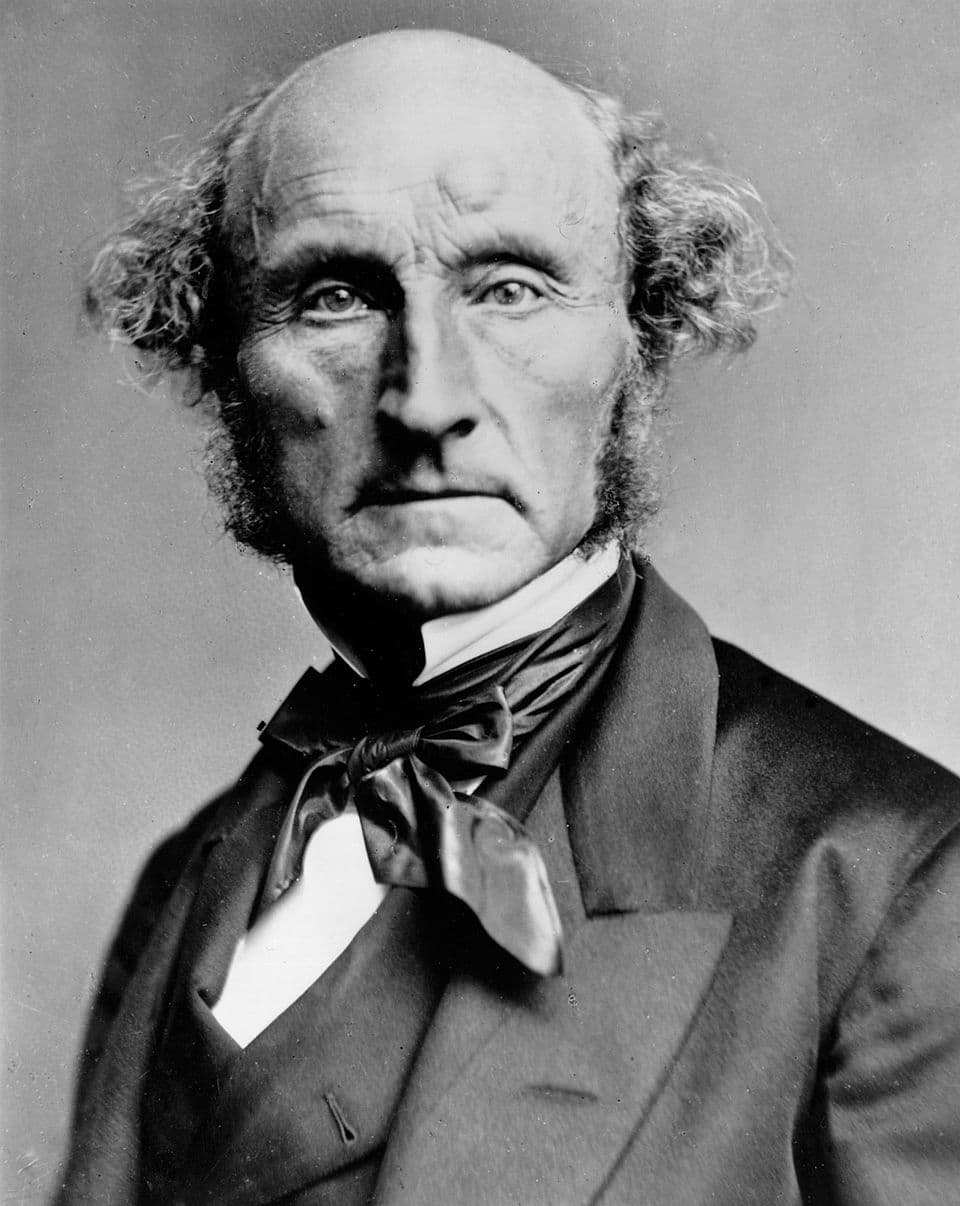
John Stewart Mill
Utilitarianism...re equally desirable, whether felt by the same or by different persons. This, however, is not a pre-supposition; not a premise needful to support the principle of utility, but the very principle itself; for what is the principle of utility, if it be not that 'happiness' and 'desirable' are synonymous terms? If there is any anterior principle implied, it can be no other than this, that the truths of arithmetic are applicable to the valuation of happiness, as of all other measurable quantities.
[Mr. Herbert Spencer, in a private communication on the subject of the preceding Note, objects to being considered an opponent of Utilitarianism; and states that he regards happiness as the ultimate end of morality; but deems that end only partially attainable by empirical generalizations from the observed results of conduct, and completely attainable only by deducing, from the laws of life and the conditions of existence, what kinds of action necessarily tend to produce happiness, and what kinds to produce unhappiness. With the exception of the word "necessarily," I have no dissent to express from this doctrine; and (omitting that word) I am not aware that any modern advocate of utilitarianism is of a different opinion.
Bentham, certainly, to whom in the Social Statics Mr. Spencer particularly referred, is, least of all writers, chargeable with unwillingness to deduce the effect of actions on happiness from the laws of human nature and the universal conditions of human life. The common charge against him is of relying too exclusively upon such deductions, and declining altogether to be bound by the generalizations from specific experience which Mr. Spencer thinks that utilitarians generally confine themselve...
3
⚖Sacrifice's Utilitarian Claim

John Stewart Mill
UtilitarianismThe author asserts that utilitarianism values self-devotion only when it increases the total sum of happiness, viewing sacrifice without such a result as a wasted effort.
...consciousness can raise a person above the chances of life, by making him feel that, let fate and fortune do their worst, they have not power to subdue him: which, once felt, frees him from excess of anxiety concerning the evils of life, and enables him, like many a Stoic in the worst times of the Roman Empire, to cultivate in tranquillity the sources of satisfaction accessible to him, without concerning himself about the uncertainty of their duration, any more than about their inevitable end.
Meanwhile, let utilitarians never cease to claim the morality of self-devotion as a possession which belongs by as good a right to them, as either to the Stoic or to the Transcendentalist. The utilitarian morality does recognise in human beings the power of sacrificing their own greatest good for the good of others. It only refuses to admit that the sacrifice is itself a good. A sacrifice which does not increase, or tend to increase, the sum total of happiness, it considers as wasted.
The only self-renunciation which it applauds, is devotion to the happiness, or to some of the means of happiness, of others; either of mankind collectively, or of individuals within the limits imposed by the collective interests of mankind. I must again repeat, what the assailants of utilitarianism seldom have the justice to acknowledge, that the happiness which forms the utilitarian standard of what is right in conduct, is not the agent's own happiness, but that of all concerned. As between h...
4
⚖Motive's Moral Irrelevance

John Stewart Mill
UtilitarianismThe author clarifies that while ethics defines duty, utilitarianism does not require duty to be the sole motive of action, as the morality of an act depends on its consequences rather than the agent's internal motivations.
...s be charged with representing it in a discreditable light. On the contrary, those among them who entertain anything like a just idea of its disinterested character, sometimes find fault with its standard as being too high for humanity. They say it is exacting too much to require that people shall always act from the inducement of promoting the general interests of society. But this is to mistake the very meaning of a standard of morals, and to confound the rule of action with the motive of it.
It is the business of ethics to tell us what are our duties, or by what test we may know them; but no system of ethics requires that the sole motive of all we do shall be a feeling of duty; on the contrary, ninety-nine hundredths of all our actions are done from other motives, and rightly so done, if the rule of duty does not condemn them. It is the more unjust to utilitarianism that this particular misapprehension should be made a ground of objection to it, inasmuch as utilitarian moralists have gone beyond almost all others in affirming that the motive has nothing to do with the morality of the action, though much with the worth of the…
The great majority of good actions are intended, not for the benefit of the world, but for that of individuals, of which the good of the world is made up; and the thoughts of the most virtuous man need not on these occasions travel beyond the particular persons concerned, except so far as is necessary to assure himself that in benefiting them he is not violating the rights--that is, the legitimate and authorized expectations--of any one else. The multiplication of happiness is, according to the...
Continue reading →
6
⚖Ethics as Divine Interpretation

John Stewart Mill
UtilitarianismMill suggests that ethical doctrines are necessary to interpret the general spirit of religious revelation into specific moral guidance for human conduct.
...reatures, and that this was his purpose in their creation, utility is not only not a godless doctrine, but more profoundly religious than any other. If it be meant that utilitarianism does not recognise the revealed will of God as the supreme law of morals, I answer, that an utilitarian who believes in the perfect goodness and wisdom of God, necessarily believes that whatever God has thought fit to reveal on the subject of morals, must fulfil the requirements of utility in a supreme degree. But
Others besides utilitarians have been of opinion that the Christian revelation was intended, and is fitted, to inform the hearts and minds of mankind with a spirit which should enable them to find for themselves what is right, and incline them to do it when found, rather than to tell them, except in a very general way, what it is: and that we need a doctrine of ethics, carefully followed out, to interpret to us the will of God.
Whether this opinion is correct or not, it is superfluous here to discuss; since whatever aid religion, either natural or revealed, can afford to ethical investigation, is as open to the utilitarian moralist as to any other. He can use it as the testimony of God to the usefulness or hurtfulness of any given course of action, by as good a right as others can use it for the indication of a transcendental law, having no connexion with usefulness or with happiness. Again, Utility is often summaril...
2
⚖Utility as Religious Doctrine

John Stewart Mill
UtilitarianismThe author defends utilitarianism against charges of godlessness, arguing that if God desires the happiness of His creatures, then utility is a profoundly religious doctrine.
...f candour and intelligence to fall into them: since persons, even of considerable mental endowments, often give themselves so little trouble to understand the bearings of any opinion against which they entertain a prejudice, and men are in general so little conscious of this voluntary ignorance as a defect, that the vulgarest misunderstandings of ethical doctrines are continually met with in the deliberate writings of persons of the greatest pretensions both to high principle and to philosophy.
We not uncommonly hear the doctrine of utility inveighed against as a godless doctrine. If it be necessary to say anything at all against so mere an assumption, we may say that the question depends upon what idea we have formed of the moral character of the Deity. If it be a true belief that God desires, above all things, the happiness of his creatures, and that this was his purpose in their creation, utility is not only not a godless doctrine, but more profoundly religious than any other.
If it be meant that utilitarianism does not recognise the revealed will of God as the supreme law of morals, I answer, that an utilitarian who believes in the perfect goodness and wisdom of God, necessarily believes that whatever God has thought fit to reveal on the subject of morals, must fulfil the requirements of utility in a supreme degree. But others besides utilitarians have been of opinion that the Christian revelation was intended, and is fitted, to inform the hearts and minds of mankin...
6