Mill rejects the idea that utilitarianism requires constant recalculation, arguing that humanity has already learned the moral tendencies of actions through centuries of experience.
Experience's Accumulated Wisdom
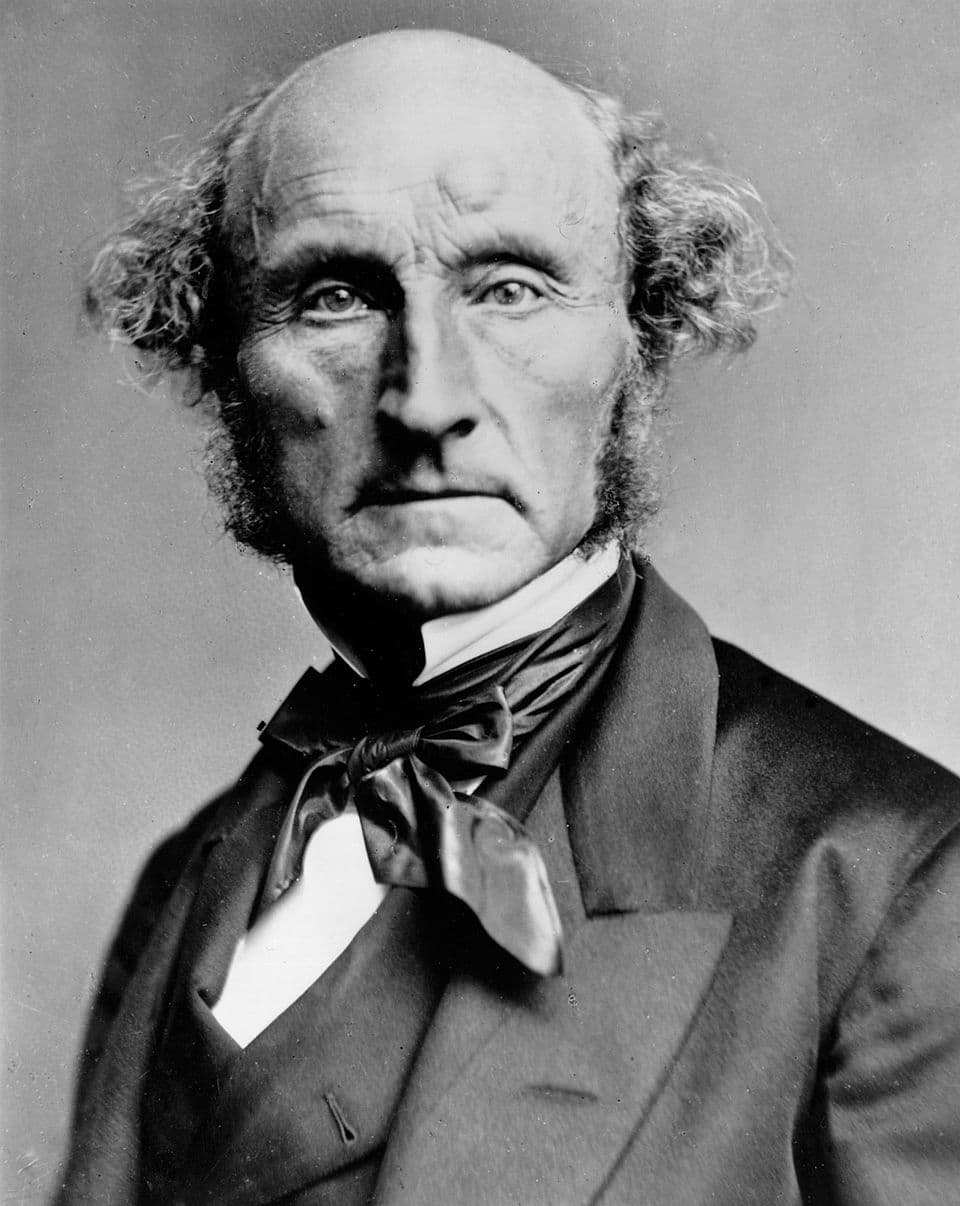
John Stewart Mill
Utilitarianism...ch objections as this--that there is not time, previous to action, for calculating and weighing the effects of any line of conduct on the general happiness. This is exactly as if any one were to say that it is impossible to guide our conduct by Christianity, because there is not time, on every occasion on which anything has to be done, to read through the Old and New Testaments. The answer to the objection is, that there has been ample time, namely, the whole past duration of the human species.
During all that time mankind have been learning by experience the tendencies of actions; on which experience all the prudence, as well as all the morality of life, is dependent. People talk as if the commencement of this course of experience had hitherto been put off, and as if, at the moment when some man feels tempted to meddle with the property or life of another, he had to begin considering for the first time whether murder and theft are injurious to human happiness. Even then I do not think that he would find the question very puzzling; but, at all events, the matter is now done to his hand.
It is truly a whimsical supposition, that if mankind were agreed in considering utility to be the test of morality, they would remain without any agreement as to what is useful, and would take no measures for having their notions on the subject taught to the young, and enforced by law and opinion. There is no difficulty in proving any ethical standard whatever to work ill, if we suppose universal idiocy to be conjoined with it, but on any hypothesis short of that, mankind must by this time have...
6
⚖Noble Feelings' Fragility

John Stewart Mill
UtilitarianismA reflection on how the capacity for noble feelings is a fragile trait that can easily wither if not actively nurtured by one's social environment and daily occupations.
...e is between two bodily pleasures, than when it is between bodily and mental. They pursue sensual indulgences to the injury of health, though perfectly aware that health is the greater good. It may be further objected, that many who begin with youthful enthusiasm for everything noble, as they advance in years sink into indolence and selfishness. But I do not believe that those who undergo this very common change, voluntarily choose the lower description of pleasures in preference to the higher.
I believe that before they devote themselves exclusively to the one, they have already become incapable of the other. Capacity for the nobler feelings is in most natures a very tender plant, easily killed, not only by hostile influences, but by mere want of sustenance; and in the majority of young persons it speedily dies away if the occupations to which their position in life has devoted them, and the society into which it has thrown them, are not favourable to keeping that higher capacity in exercise.
Men lose their high aspirations as they lose their intellectual tastes, because they have not time or opportunity for indulging them; and they addict themselves to inferior pleasures, not because they deliberately prefer them, but because they are either the only ones to which they have access, or the only ones which they are any longer capable of enjoying. It may be questioned whether any one who has remained equally susceptible to both classes of pleasures, ever knowingly and calmly preferred...
2
⚖The Noble Struggle

John Stewart Mill
UtilitarianismA visionary reflection on the human capacity to conquer suffering through collective effort, suggesting that participating in this struggle provides a noble form of enjoyment.
...future of still more direct conquests over this detestable foe. And every advance in that direction relieves us from some, not only of the chances which cut short our own lives, but, what concerns us still more, which deprive us of those in whom our happiness is wrapt up. As for vicissitudes of fortune, and other disappointments connected with worldly circumstances, these are principally the effect either of gross imprudence, of ill-regulated desires, or of bad or imperfect social institutions.
All the grand sources, in short, of human suffering are in a great degree, many of them almost entirely, conquerable by human care and effort; and though their removal is grievously slow--though a long succession of generations will perish in the breach before the conquest is completed, and this world becomes all that, if will and knowledge were not wanting, it might easily be made--yet every mind sufficiently intelligent and generous to bear a part, however small and unconspicuous, in the endeavour, will draw a noble enjoyment from the contest itself, which he would not for any bribe in the form of selfish indulgence consent to be without.
And this leads to the true estimation of what is said by the objectors concerning the possibility, and the obligation, of learning to do without happiness. Unquestionably it is possible to do without happiness; it is done involuntarily by nineteen-twentieths of mankind, even in those parts of our present world which are least deep in barbarism; and it often has to be done voluntarily by the hero or the martyr, for the sake of something which he prizes more than his individual happiness. But th...
2
⚖Expediency's False Face

John Stewart Mill
UtilitarianismMill clarifies the difference between utility and 'expediency,' arguing that true utility rejects short-term gains or selfish interests that violate the broader rules necessary for social well-being.
...nterpret_ to us the will of God. Whether this opinion is correct or not, it is superfluous here to discuss; since whatever aid religion, either natural or revealed, can afford to ethical investigation, is as open to the utilitarian moralist as to any other. He can use it as the testimony of God to the usefulness or hurtfulness of any given course of action, by as good a right as others can use it for the indication of a transcendental law, having no connexion with usefulness or with happiness.
Again, Utility is often summarily stigmatized as an immoral doctrine by giving it the name of Expediency, and taking advantage of the popular use of that term to contrast it with Principle. But the Expedient, in the sense in which it is opposed to the Right, generally means that which is expedient for the particular interest of the agent himself: as when a minister sacrifices the interest of his country to keep himself in place. When it means anything better than this, it means that which is expedient for some immediate object, some temporary purpose, but which violates a rule whose observance is expedient in a much higher degree. The…
Thus, it would often be expedient, for the purpose of getting over some momentary embarrassment, or attaining some object immediately useful to ourselves or others, to tell a lie. But inasmuch as the cultivation in ourselves of a sensitive feeling on the subject of veracity, is one of the most useful, and the enfeeblement of that feeling one of the most hurtful, things to which our conduct can be instrumental; and inasmuch as any, even unintentional, deviation from truth, does that much towards...
Continue reading →
4
⚖Happiness's Concrete Parts

John Stewart Mill
UtilitarianismMill explains how things originally associated with primitive desires can become valuable parts of happiness in themselves, enriching the human experience.
...ment of happiness, has come to be desired for its own sake. In being desired for its own sake it is, however, desired as part of happiness. The person is made, or thinks he would be made, happy by its mere possession; and is made unhappy by failure to obtain it. The desire of it is not a different thing from the desire of happiness, any more than the love of music, or the desire of health. They are included in happiness. They are some of the elements of which the desire of happiness is made up.
Happiness is not an abstract idea, but a concrete whole; and these are some of its parts. And the utilitarian standard sanctions and approves their being so. Life would be a poor thing, very ill provided with sources of happiness, if there were not this provision of nature, by which things originally indifferent, but conducive to, or otherwise associated with, the satisfaction of our primitive desires, become in themselves sources of pleasure more valuable than the primitive pleasures, both in permanency, in the space of human existence that they are capable of covering, and even in intensity.
Virtue, according to the utilitarian conception, is a good of this description. There was no original desire of it, or motive to it, save its conduciveness to pleasure, and especially to protection from pain. But through the association thus formed, it may be felt a good in itself, and desired as such with as great intensity as any other good; and with this difference between it and the love of money, of power, or of fame, that all of these may, and often do, render the individual noxious to th...
2