The author advises that experience should be the sole standard for conduct and warns against using uncertain theological inferences to establish rules of behavior.
Appeal to Experience
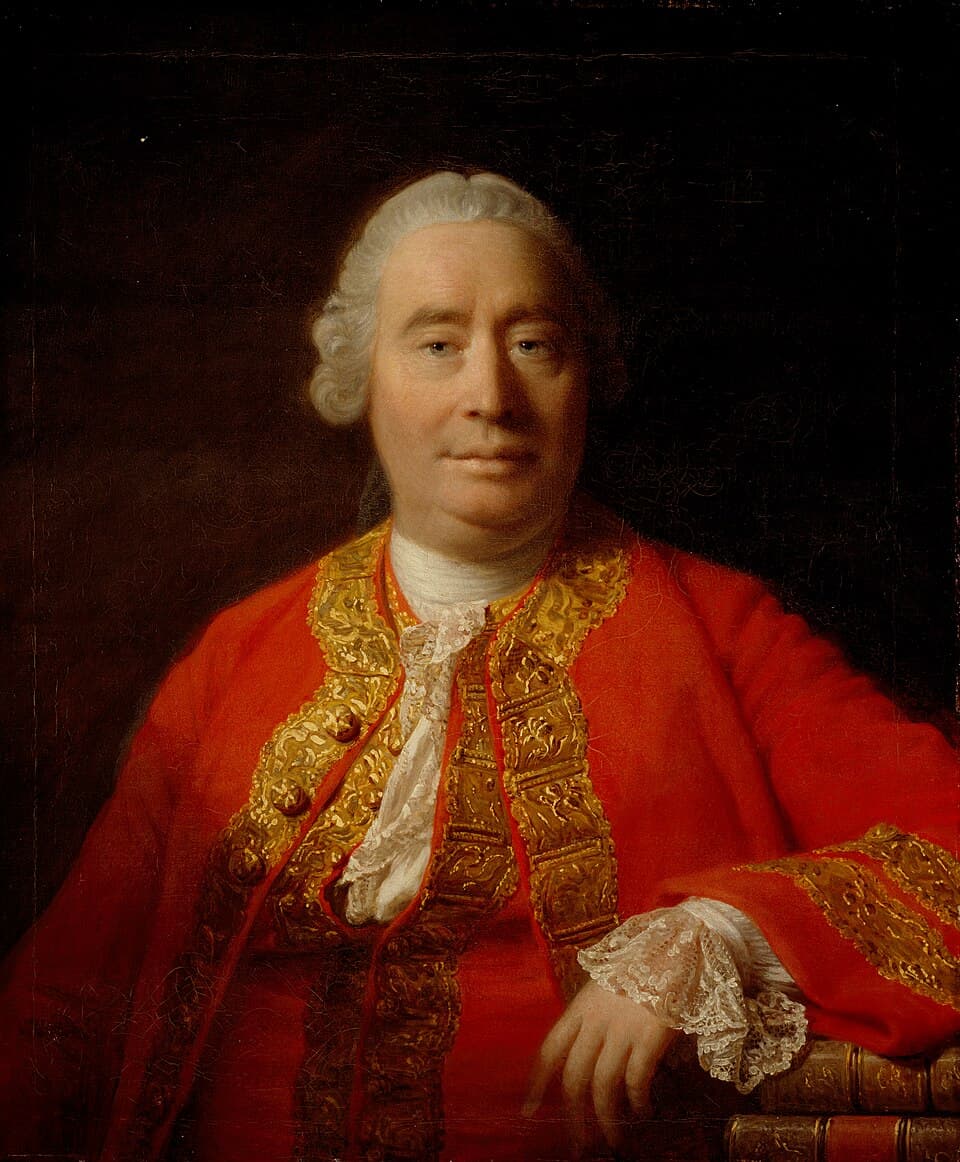
David Hume
An Enquiry Concerning Human Understanding...sfied. If you reply in the negative, I conclude, that you have then no reason to ascribe justice, in our sense of it, to the gods. If you hold a medium between affirmation and negation, by saying, that the justice of the gods, at present, exerts itself in part, but not in its full extent; I answer, that you have no reason to give it any particular extent, but only so far as you see it, at present, exert itself. 110. Thus I bring the dispute, O Athenians, to a short issue with my antagonists.
The course of nature lies open to my contemplation as well as to theirs. The experienced train of events is the great standard, by which we all regulate our conduct. Nothing else can be appealed to in the field, or in the senate. Nothing else ought ever to be heard of in the school, or in the closet. In vain would our limited understanding break through those boundaries, which are too narrow for our fond imagination. While we argue from the course of nature, and infer a particular intelligent cause, which first bestowed, and still preserves order in the universe, we embrace a principle, which is both uncertain and useless. It is uncertain;…
111. I observe (said I, finding he had finished his harangue) that you neglect not the artifice of the demagogues of old; and as you were pleased to make me stand for the people, you insinuate yourself into my favour by embracing those principles, to which, you know, I have always expressed a particular attachment. But allowing you to make experience (as indeed I think you ought) the only standard of our judgement concerning this, and all other questions of fact; I doubt not but, from the very...
Continue reading →
2
⚖Mind's Distinct Faculties

David Hume
An Enquiry Concerning Human UnderstandingThe author asserts that the various powers of the mind are distinct and can be accurately mapped and understood through careful reflection and categorization.
...al geography, or delineation of the distinct parts and powers of the mind, it is at least a satisfaction to go so far; and the more obvious this science may appear (and it is by no means obvious) the more contemptible still must the ignorance of it be esteemed, in all pretenders to learning and philosophy. Nor can there remain any suspicion, that this science is uncertain and chimerical; unless we should entertain such a scepticism as is entirely subversive of all speculation, and even action.
It cannot be doubted, that the mind is endowed with several powers and faculties, that these powers are distinct from each other, that what is really distinct to the immediate perception may be distinguished by reflexion; and consequently, that there is a truth and falsehood in all propositions on this subject, and a truth and falsehood, which lie not beyond the compass of human understanding. There are many obvious distinctions of this kind, such as those between the will and understanding, the imagination and passions, which fall within the comprehension of every human creature; and the finer and more philosophical distinctions are no less real and certain, though more difficult to be comprehended.
Some instances, especially late ones, of success in these enquiries, may give us a juster notion of the certainty and solidity of this branch of learning. And shall we esteem it worthy the labour of a philosopher to give us a true system of the planets, and adjust the position and order of those remote bodies; while we affect to overlook those, who, with so much success, delineate the parts of the mind, in which we are so intimately concerned? 9. But may we not hope, that philosophy, if cultiv...
3
⚖Miracle's Inherent Implausibility

David Hume
An Enquiry Concerning Human UnderstandingThe passage argues that a rational person should reject testimony regarding miracles because the inherent improbability of the event outweighs the reliability of the witnesses.
...ter, as well as of great genius; the miracle of so singular a nature as could scarcely admit of a counterfeit, and the witnesses very numerous, and all of them, in a manner, spectators of the fact, to which they gave their testimony. And what adds mightily to the force of the evidence, and may double our surprise on this occasion, is, that the cardinal himself, who relates the story, seems not to give any credit to it, and consequently cannot be suspected of any concurrence in the holy fraud.
He considered justly, that it was not requisite, in order to reject a fact of this nature, to be able accurately to disprove the testimony, and to trace its falsehood, through all the circumstances of knavery and credulity which produced it. He knew, that, as this was commonly altogether impossible at any small distance of time and place; so was it extremely difficult, even where one was immediately present, by reason of the bigotry, ignorance, cunning, and roguery of a great part of mankind. He therefore concluded, like a just reasoner, that such an evidence carried falsehood upon the very face of it, and that a miracle, supported by any…
There surely never was a greater number of miracles ascribed to one person, than those, which were lately said to have been wrought in France upon the tomb of Abbé Paris, the famous Jansenist, with whose sanctity the people were so long deluded. The curing of the sick, giving hearing to the deaf, and sight to the blind, were every where talked of as the usual effects of that holy sepulchre. But what is more extraordinary; many of the miracles were immediately proved upon the spot, before judge...
Continue reading →
6
⚖Wonder's Persuasive Power

David Hume
An Enquiry Concerning Human UnderstandingThe text identifies a psychological principle where the very absurdity of a miracle increases its believability because the resulting emotion of wonder is agreeable to the human mind.
...; of such undoubted integrity, as to place them beyond all suspicion of any design to deceive others; of such credit and reputation in the eyes of mankind, as to have a great deal to lose in case of their being detected in any falsehood; and at the same time, attesting facts performed in such a public manner and in so celebrated a part of the world, as to render the detection unavoidable: All which circumstances are requisite to give us a full assurance in the testimony of men. 93. Secondly.
We may observe in human nature a principle which, if strictly examined, will be found to diminish extremely the assurance, which we might, from human testimony, have, in any kind of prodigy. The maxim, by which we commonly conduct ourselves in our reasonings, is, that the objects, of which we have no experience, resembles those, of which we have; that what we have found to be most usual is always most probable; and that where there is an opposition of arguments, we ought to give the preference to such as are founded on the greatest number of past observations. But though, in proceeding by this rule, we readily reject any fact which is unusual…
And this goes so far, that even those who cannot enjoy this pleasure immediately, nor can believe those miraculous events, of which they are informed, yet love to partake of the satisfaction at second-hand or by rebound, and place a pride and delight in exciting the admiration of others. With what greediness are the miraculous accounts of travellers received, their descriptions of sea and land monsters, their relations of wonderful adventures, strange men, and uncouth manners? But if the spiri...
Continue reading →
3
⚖Cause and Effect's Bond

David Hume
An Enquiry Concerning Human UnderstandingThe author asserts that all reasoning about matters of fact beyond immediate memory and sensation is based on the perceived relation of cause and effect.
...e the more excusable; while we march through such difficult paths without any guide or direction. They may even prove useful, by exciting curiosity, and destroying that implicit faith and security, which is the bane of all reasoning and free enquiry. The discovery of defects in the common philosophy, if any such there be, will not, I presume, be a discouragement, but rather an incitement, as is usual, to attempt something more full and satisfactory than has yet been proposed to the public. 22.
All reasonings concerning matter of fact seem to be founded on the relation of Cause and Effect. By means of that relation alone we can go beyond the evidence of our memory and senses. If you were to ask a man, why he believes any matter of fact, which is absent; for instance, that his friend is in the country, or in France; he would give you a reason; and this reason would be some other fact; as a letter received from him, or the knowledge of his former resolutions and promises. A man finding a watch or any other machine in a desert island, would conclude that there had once been men in that island. All our reasonings concerning fact are…
The hearing of an articulate voice and rational discourse in the dark assures us of the presence of some person: Why? because these are the effects of the human make and fabric, and closely connected with it. If we anatomize all the other reasonings of this nature, we shall find that they are founded on the relation of cause and effect, and that this relation is either near or remote, direct or collateral. Heat and light are collateral effects of fire, and the one effect may justly be inferred...
Continue reading →
4