The author argues that the mind cannot discover an effect within a cause through pure reason, as effects are distinct events from their causes and can only be known through experience.
Cause's Hidden Effect
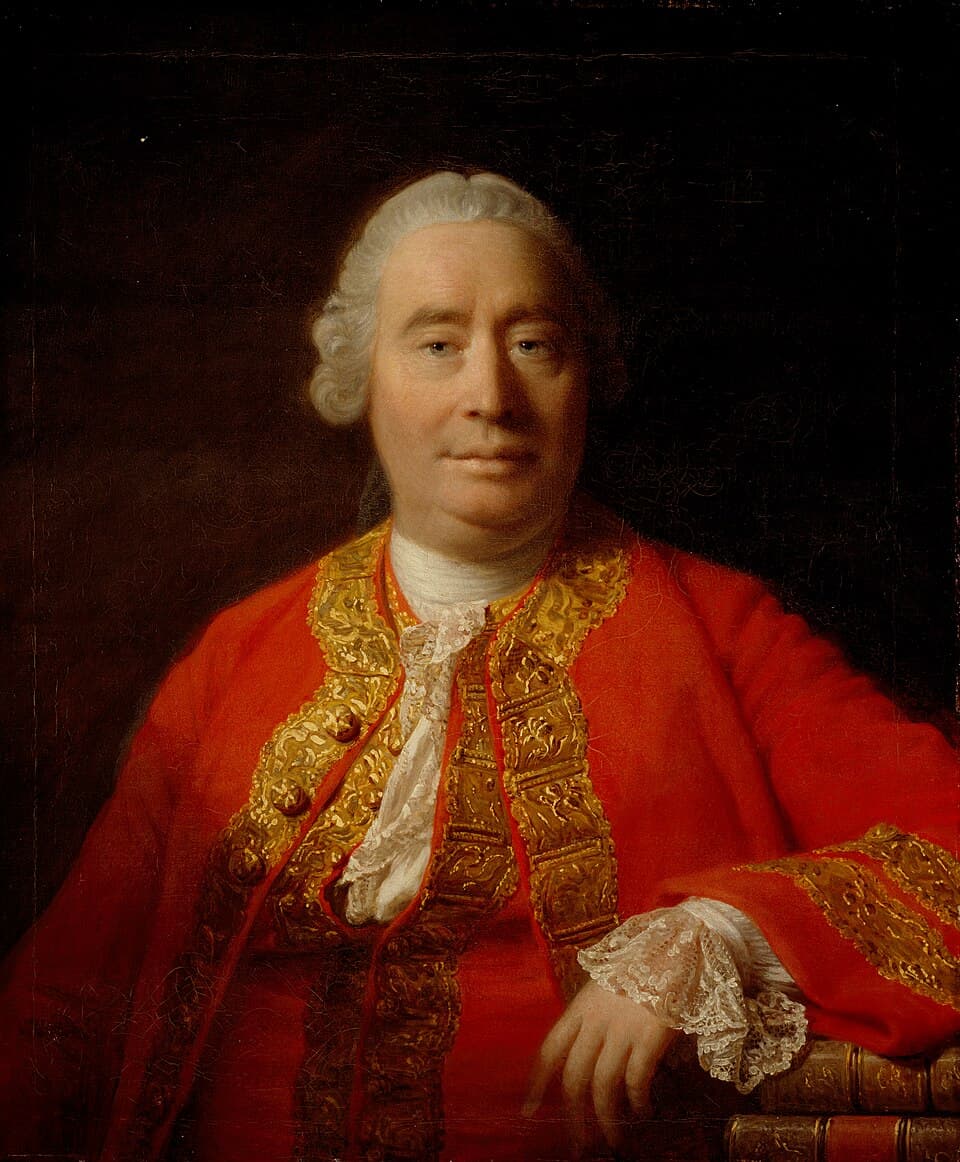
David Hume
An Enquiry Concerning Human Understanding...; and that we needed not to have waited for the event, in order to pronounce with certainty concerning it. Such is the influence of custom, that, where it is strongest, it not only covers our natural ignorance, but even conceals itself, and seems not to take place, merely because it is found in the highest degree. 25. But to convince us that all the laws of nature, and all the operations of bodies without exception, are known only by experience, the following reflections may, perhaps, suffice.
Were any object presented to us, and were we required to pronounce concerning the effect, which will result from it, without consulting past observation; after what manner, I beseech you, must the mind proceed in this operation? It must invent or imagine some event, which it ascribes to the object as its effect; and it is plain that this invention must be entirely arbitrary. The mind can never possibly find the effect in the supposed cause, by the most accurate scrutiny and examination. For the effect is totally different from the cause, and consequently can never be discovered in it. Motion in the second Billiard-ball is a quite distinct…
A stone or piece of metal raised into the air, and left without any support, immediately falls: but to consider the matter a priori, is there anything we discover in this situation which can beget the idea of a downward, rather than an upward, or any other motion, in the stone or metal? And as the first imagination or invention of a particular effect, in all natural operations, is arbitrary, where we consult not experience; so must we also esteem the supposed tie or connexion between the caus...
Continue reading →
2
⚖The Mind's Elusive Operations

David Hume
An Enquiry Concerning Human UnderstandingThe text describes the difficulty of observing the mind's own operations and asserts that a primary task of science is to categorize and clarify these obscure mental processes.
...ons and all dispositions; and is alone able to subvert that abstruse philosophy and metaphysical jargon, which, being mixed up with popular superstition, renders it in a manner impenetrable to careless reasoners, and gives it the air of science and wisdom. 8. Besides this advantage of rejecting, after deliberate enquiry, the most uncertain and disagreeable part of learning, there are many positive advantages, which result from an accurate scrutiny into the powers and faculties of human nature.
It is remarkable concerning the operations of the mind, that, though most intimately present to us, yet, whenever they become the object of reflexion, they seem involved in obscurity; nor can the eye readily find those lines and boundaries, which discriminate and distinguish them. The objects are too fine to remain long in the same aspect or situation; and must be apprehended in an instant, by a superior penetration, derived from nature, and improved by habit and reflexion. It becomes, therefore, no inconsiderable part of science barely to know the different operations of the mind, to separate them from each other, to class them under their…
This talk of ordering and distinguishing, which has no merit, when performed with regard to external bodies, the objects of our senses, rises in its value, when directed towards the operations of the mind, in proportion to the difficulty and labour, which we meet with in performing it. And if we can go no farther than this mental geography, or delineation of the distinct parts and powers of the mind, it is at least a satisfaction to go so far; and the more obvious this science may appear (and i...
Continue reading →
4
⚖Will's Hidden Power

David Hume
An Enquiry Concerning Human UnderstandingThe author contends that we have no internal impression of 'power' or 'energy' when we command our will, as the mechanism by which the mind produces an idea remains entirely incomprehensible.
...ning up of force; to inanimate matter, which is not capable of this sentiment. Secondly, This sentiment of an endeavour to overcome resistance has no known connexion with any event: What follows it, we know by experience; but could not know it à priori. It must, however, be confessed, that the animal nisus, which we experience, though it can afford no accurate precise idea of power, enters very much into that vulgar, inaccurate idea, which is formed of it. 53.
Shall we then assert, that we are conscious of a power or energy in our own minds, when, by an act or command of our will, we raise up a new idea, fix the mind to the contemplation of it, turn it on all sides, and at last dismiss it for some other idea, when we think that we have surveyed it with sufficient accuracy? I believe the same arguments will prove, that even this command of the will gives us no real idea of force or energy. First, It must be allowed, that, when we know a power, we know that very circumstance in the cause, by which it is enabled to produce the effect: For these are supposed to be synonimous. We must, therefore, know…
Secondly, The command of the mind over itself is limited, as well as its command over the body; and these limits are not known by reason, or any acquaintance with the nature of cause and effect, but only by experience and observation, as in all other natural events and in the operation of external objects. Our authority over our sentiments and passions is much weaker than that over our ideas; and even the latter authority is circumscribed within very narrow boundaries. Will any one pretend t...
Continue reading →
3
⚖Will's Limits from Experience

David Hume
An Enquiry Concerning Human UnderstandingThe author argues that we have no internal consciousness of the power of the will, as evidenced by our inability to control internal organs or paralyzed limbs.
...if by consciousness we perceived any power or energy in the will, we must know this power; we must know its connexion with the effect; we must know the secret union of soul and body, and the nature of both these substances; by which the one is able to operate, in so many instances, upon the other. Secondly, We are not able to move all the organs of the body with a like authority; though we cannot assign any reason besides experience, for so remarkable a difference between one and the other.
Why has the will an influence over the tongue and fingers, not over the heart or liver? This question would never embarrass us, were we conscious of a power in the former case, not in the latter. We should then perceive, independent of experience, why the authority of will over the organs of the body is circumscribed within such particular limits. Being in that case fully acquainted with the power or force, by which it operates, we should also know, why its influence reaches precisely to such boundaries, and no farther. A man, suddenly struck with palsy in the leg or arm, or who had newly lost those members, frequently endeavours, at first to…
And experience only teaches us, how one event constantly follows another; without instructing us in the secret connexion, which binds them together, and renders them inseparable. Thirdly, We learn from anatomy, that the immediate object of power in voluntary motion, is not the member itself which is moved, but certain muscles, and nerves, and animal spirits, and, perhaps, something still more minute and more unknown, through which the motion is successively propagated, ere it reach the membe...
Continue reading →
6
⚖Belief as Vivid Conception

David Hume
An Enquiry Concerning Human UnderstandingThe author defines belief as a vivid and steady conception of an object that differs from fiction only in the manner of its feeling to the mind.
...r to define the feeling of cold or passion of anger, to a creature who never had any experience of these sentiments. Belief is the true and proper name of this feeling; and no one is ever at a loss to know the meaning of that term; because every man is every moment conscious of the sentiment represented by it. It may not, however, be improper to attempt a description of this sentiment; in hopes we may, by that means, arrive at some analogies, which may afford a more perfect explication of it.
I say, then, that belief is nothing but a more vivid, lively, forcible, firm, steady conception of an object, than what the imagination alone is ever able to attain. This variety of terms, which may seem so unphilosophical, is intended only to express that act of the mind, which renders realities, or what is taken for such, more present to us than fictions, causes them to weigh more in the thought, and gives them a superior influence on the passions and imagination. Provided we agree about the thing, it is needless to dispute about the terms. The imagination has the command over all its ideas, and can join and mix and vary them, in all the…
I confess, that it is impossible perfectly to explain this feeling or manner of conception. We may make use of words which express something near it. But its true and proper name, as we observed before, is belief; which is a term that every one sufficiently understands in common life. And in philosophy, we can go no farther than assert, that belief is something felt by the mind, which distinguishes the ideas of the judgement from the fictions of the imagination. It gives them more weight an...
Continue reading →
4