Custom's Hidden Power
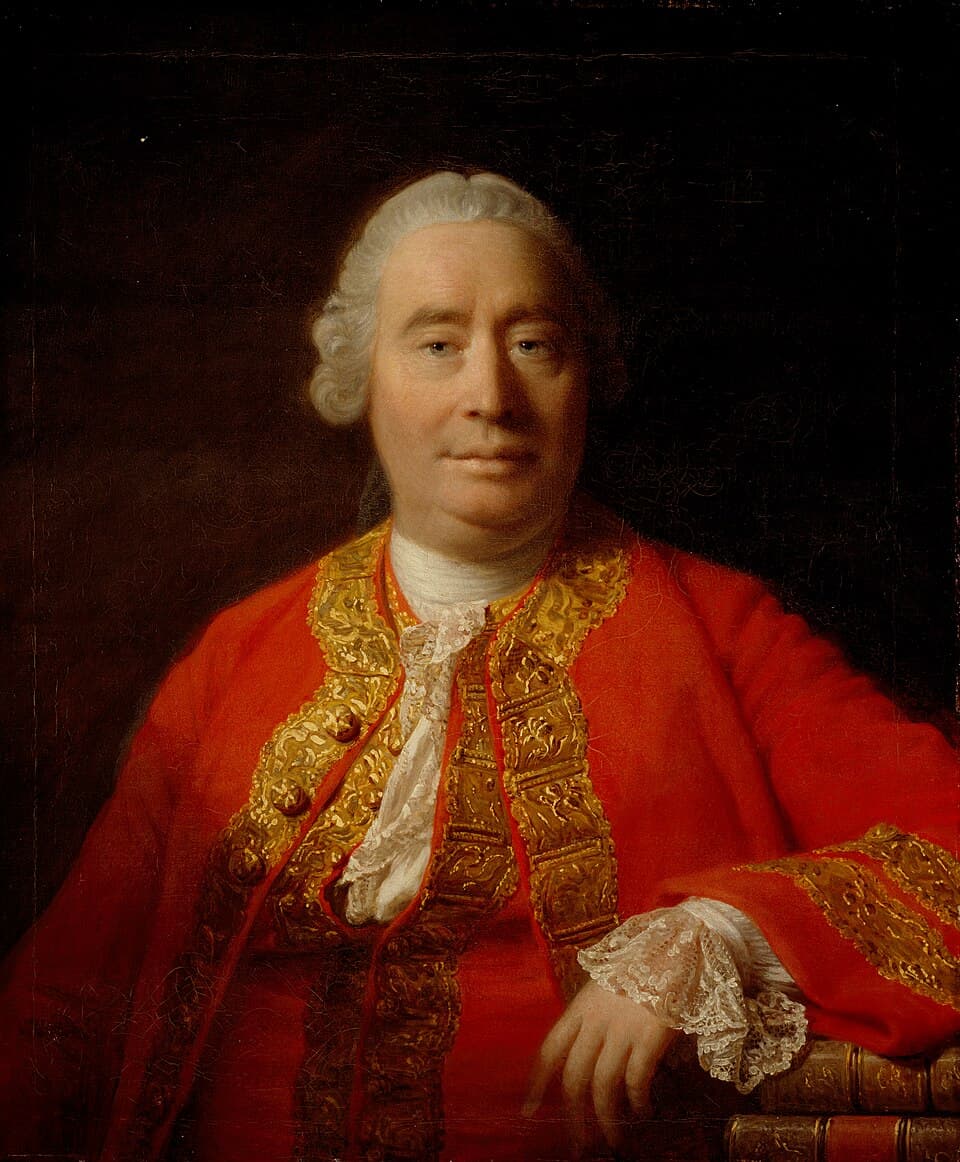
David Hume
An Enquiry Concerning Human Understanding

Hume explains that the influence of custom is so strong that it makes us falsely believe we could have inferred cause and effect through pure reason.

...wledge of it to experience. Who will assert that he can give the ultimate reason, why milk or bread is proper nourishment for a man, not for a lion or a tiger? But the same truth may not appear, at first sight, to have the same evidence with regard to events, which have become familiar to us from our first appearance in the world, which bear a close analogy to the whole course of nature, and which are supposed to depend on the simple qualities of objects, without any secret structure of parts.
We are apt to imagine that we could discover these effects by the mere operation of our reason, without experience. We fancy, that were we brought on a sudden into this world, we could at first have inferred that one Billiard-ball would communicate motion to another upon impulse; and that we needed not to have waited for the event, in order to pronounce with certainty concerning it. Such is the influence of custom, that, where it is strongest, it not only covers our natural ignorance, but even conceals itself, and seems not to take place, merely because it is found in the highest degree.
25. But to convince us that all the laws of nature, and all the operations of bodies without exception, are known only by experience, the following reflections may, perhaps, suffice. Were any object presented to us, and were we required to pronounce concerning the effect, which will result from it, without consulting past observation; after what manner, I beseech you, must the mind proceed in this operation? It must invent or imagine some event, which it ascribes to the object as its effect; a...
2
Custom's Universal Inference
David Hume
An Enquiry Concerning Human Understanding

The author identifies custom as the primary mechanism by which sensitive beings infer future events from past appearances, forming the basis of belief.

...neral use and application; nor can an operation of such immense consequence in life, as that of inferring effects from causes, be trusted to the uncertain process of reasoning and argumentation. Were this doubtful with regard to men, it seems to admit of no question with regard to the brute creation; and the conclusion being once firmly established in the one, we have a strong presumption, from all the rules of analogy, that it ought to be universally admitted, without any exception or reserve.
It is custom alone, which engages animals, from every object, that strikes their senses, to infer its usual attendant, and carries their imagination, from the appearance of the one, to conceive the other, in that particular manner, which we denominate belief. No other explication can be given of this operation, in all the higher, as well as lower classes of sensitive beings, which fall under our notice and observation . Since all reasonings concerning facts or causes is derived merely from custom, it may be asked how it happens, that men so much surpass animals in reasoning, and one man so much surpasses another? Has not the same custom the same influence on all?
We shall here endeavour briefly to explain the great difference in human understandings: After which the reason of the difference between men and animals will easily be comprehended. 1. When we have lived any time, and have been accustomed to the uniformity of nature, we acquire a general habit, by which we always transfer the known to the unknown, and conceive the latter to resemble the former. By means of this general habitual principle, we regard even one ex...
2
Habit's Necessary Connection
David Hume
An Enquiry Concerning Human Understanding

The author defines the idea of 'necessary connexion' as a sentiment or internal impression produced by the mind's habit of transitioning between conjoined events.

...species of event has always, in all instances, been conjoined with another, we make no longer any scruple of foretelling one upon the appearance of the other, and of employing that reasoning, which can alone assure us of any matter of fact or existence. We then call the one object, Cause; the other, Effect. We suppose that there is some connexion between them; some power in the one, by which it infallibly produces the other, and operates with the greatest certainty and strongest necessity.
It appears, then, that this idea of a necessary connexion among events arises from a number of similar instances which occur of the constant conjunction of these events; nor can that idea ever be suggested by any one of these instances, surveyed in all possible lights and positions. But there is nothing in a number of instances, different from every single instance, which is supposed to be exactly similar; except only, that after a repetition of similar instances, the mind is carried by habit, upon the appearance of one event, to expect its usual attendant, and to believe that it will exist. This connexion, therefore, which we feel in the…
Nothing farther is in the case. Contemplate the subject on all sides; you will never find any other origin of that idea. This is the sole difference between one instance, from which we can never receive the idea of connexion, and a number of similar instances, by which it is suggested. The first time a man saw the communication of motion by impulse, as by the shock of two billiard balls, he could not pronounce that the one event was connected: but only that it was conjoined with the other....
Continue reading →
2
Custom as Guide
David Hume
An Enquiry Concerning Human Understanding

Hume identifies custom as the essential guide of human life, without which we would be unable to act or reason beyond our immediate memory.

...y depend. Not to mention, that, to a young beginner, the general observations and maxims occur not always on the proper occasions, nor can be immediately applied with due calmness and distinction. The truth is, an unexperienced reasoner could be no reasoner at all, were he absolutely unexperienced; and when we assign that character to any one, we mean it only in a comparative sense, and suppose him possessed of experience, in a smaller and more imperfect degree.
Custom, then, is the great guide of human life. It is that principle alone which renders our experience useful to us, and makes us expect, for the future, a similar train of events with those which have appeared in the past. Without the influence of custom, we should be entirely ignorant of every matter of fact beyond what is immediately present to the memory and senses. We should never know how to adjust means to ends, or to employ our natural powers in the production of any effect. There would be an end at once of all action, as well as of the chief part of speculation.
37. But here it may be proper to remark, that though our conclusions from experience carry us beyond our memory and senses, and assure us of matters of fact which happened in the most distant places and most remote ages, yet some fact must always be present to the senses or memory, from which we may first proceed in drawing these conclusions. A man, who should find in a desert country the remains of pompous buildings, would conclude that the country had, in ancient times, been cultivated by ci...
4
Custom's Ultimate Principle
David Hume
An Enquiry Concerning Human Understanding

Hume acknowledges 'Custom' as an ultimate principle of human nature beyond which inquiry cannot go, urging acceptance of the limits of our faculties.

...erience, acquired any idea or knowledge of the secret power by which the one object produces the other; nor is it, by any process of reasoning, he is engaged to draw this inference. But still he finds himself determined to draw it: And though he should be convinced that his understanding has no part in the operation, he would nevertheless continue in the same course of thinking. There is some other principle which determines him to form such a conclusion. 36. This principle is Custom or Habit.
For wherever the repetition of any particular act or operation produces a propensity to renew the same act or operation, without being impelled by any reasoning or process of the understanding, we always say, that this propensity is the effect of Custom. By employing that word, we pretend not to have given the ultimate reason of such a propensity. We only point out a principle of human nature, which is universally acknowledged, and which is well known by its effects. Perhaps we can push our enquiries no farther, or pretend to give the cause of this cause; but must rest contented with it as the ultimate principle, which we can assign, of all…
And it is certain we here advance a very intelligible proposition at least, if not a true one, when we assert that, after the constant conjunction of two objects--heat and flame, for instance, weight and solidity--we are determined by custom alone to expect the one from the appearance of the other. This hypothesis seems even the only one which explains the difficulty, why we draw, from a thousand instances, an inference which we are not able to draw from one instance, that is, in no respect, di...
Continue reading →
4