Custom's Universal Inference
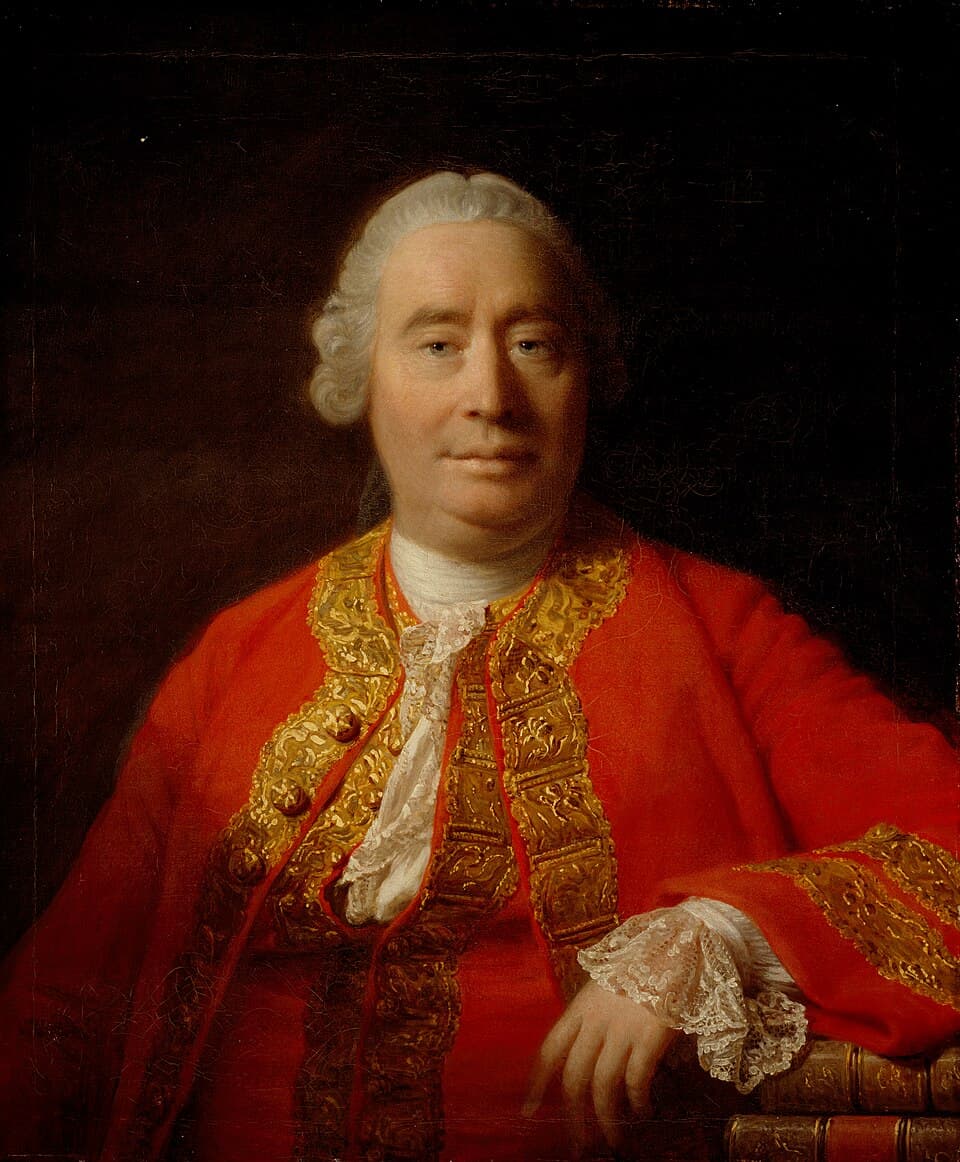
David Hume
An Enquiry Concerning Human Understanding

The author identifies custom as the primary mechanism by which sensitive beings infer future events from past appearances, forming the basis of belief.

...neral use and application; nor can an operation of such immense consequence in life, as that of inferring effects from causes, be trusted to the uncertain process of reasoning and argumentation. Were this doubtful with regard to men, it seems to admit of no question with regard to the brute creation; and the conclusion being once firmly established in the one, we have a strong presumption, from all the rules of analogy, that it ought to be universally admitted, without any exception or reserve.
It is custom alone, which engages animals, from every object, that strikes their senses, to infer its usual attendant, and carries their imagination, from the appearance of the one, to conceive the other, in that particular manner, which we denominate belief. No other explication can be given of this operation, in all the higher, as well as lower classes of sensitive beings, which fall under our notice and observation . Since all reasonings concerning facts or causes is derived merely from custom, it may be asked how it happens, that men so much surpass animals in reasoning, and one man so much surpasses another? Has not the same custom the same influence on all?
We shall here endeavour briefly to explain the great difference in human understandings: After which the reason of the difference between men and animals will easily be comprehended. 1. When we have lived any time, and have been accustomed to the uniformity of nature, we acquire a general habit, by which we always transfer the known to the unknown, and conceive the latter to resemble the former. By means of this general habitual principle, we regard even one ex...
2
Belief's Governing Weight
David Hume
An Enquiry Concerning Human Understanding

Hume describes belief as a specific feeling or sentiment in the mind that distinguishes real judgments from mere imagination, giving them greater weight and emotional impact.

...lty of imagination can ever, of itself, reach belief, it is evident that belief consists not in the peculiar nature or order of ideas, but in the manner of their conception, and in their feeling to the mind. I confess, that it is impossible perfectly to explain this feeling or manner of conception. We may make use of words which express something near it. But its true and proper name, as we observed before, is belief; which is a term that every one sufficiently understands in common life.
And in philosophy, we can go no farther than assert, that belief is something felt by the mind, which distinguishes the ideas of the judgement from the fictions of the imagination. It gives them more weight and influence; makes them appear of greater importance; enforces them in the mind; and renders them the governing principle of our actions. I hear at present, for instance, a person's voice, with whom I am acquainted; and the sound comes as from the next room. This impression of my senses immediately conveys my thought to the person, together with all the surrounding objects. I paint them out to myself as existing at present, with the…
Let us, then, take in the whole compass of this doctrine, and allow, that the sentiment of belief is nothing but a conception more intense and steady than what attends the mere fictions of the imagination, and that this manner of conception arises from a customary conjunction of the object with something present to the memory or senses: I believe that it will not be difficult, upon these suppositions, to find other operations of the mind analogous to it, and to trace up these phenomena to pr...
Continue reading →
2
Belief Proportioned to Evidence
David Hume
An Enquiry Concerning Human Understanding

Hume advises that a wise person should always proportion their belief to the available evidence, weighing probabilities based on the frequency of past experiences.

...ontrariety of events, which we may learn from a diligent observation. All effects follow not with like certainty from their supposed causes. Some events are found, in all countries and all ages, to have been constantly conjoined together: Others are found to have been more variable, and sometimes to disappoint our expectations; so that, in our reasonings concerning matter of fact, there are all imaginable degrees of assurance, from the highest certainty to the lowest species of moral evidence.
A wise man, therefore, proportions his belief to the evidence. In such conclusions as are founded on an infallible experience, he expects the event with the last degree of assurance, and regards his past experience as a full proof of the future existence of that event. In other cases, he proceeds with more caution: He weighs the opposite experiments: He considers which side is supported by the greater number of experiments: to that side he inclines, with doubt and hesitation; and when at last he fixes his judgement, the evidence exceeds not what we properly call probability. All probability, then, supposes an opposition of experiments and…
A hundred instances or experiments on one side, and fifty on another, afford a doubtful expectation of any event; though a hundred uniform experiments, with only one that is contradictory, reasonably beget a pretty strong degree of assurance. In all cases, we must balance the opposite experiments, where they are opposite, and deduct the smaller number from the greater, in order to know the exact force of the superior evidence. 88. To apply these principles to a particular instance; we may obse...
Continue reading →
2
Belief from Custom
David Hume
An Enquiry Concerning Human Understanding

Hume defines belief in matters of fact as an instinctive operation of the mind caused by the customary conjunction of objects, rather than a purely rational deduction.

...ny particular matter of fact, which you relate, you must tell me some reason; and this reason will be some other fact, connected with it. But as you cannot proceed after this manner, in infinitum, you must at last terminate in some fact, which is present to your memory or senses; or must allow that your belief is entirely without foundation. 38. What, then, is the conclusion of the whole matter? A simple one; though, it must be confessed, pretty remote from the common theories of philosophy.
All belief of matter of fact or real existence is derived merely from some object, present to the memory or senses, and a customary conjunction between that and some other object. Or in other words; having found, in many instances, that any two kinds of objects--flame and heat, snow and cold--have always been conjoined together; if flame or snow be presented anew to the senses, the mind is carried by custom to expect heat or cold, and to believe that such a quality does exist, and will discover itself upon a nearer approach. This belief is the necessary result of placing the mind in such circumstances. It is an operation of the soul, when…
All these operations are a species of natural instincts, which no reasoning or process of the thought and understanding is able either to produce or to prevent. At this point, it would be very allowable for us to stop our philosophical researches. In most questions we can never make a single step farther; and in all questions we must terminate here at last, after our most restless and curious enquiries. But still our curiosity will be pardonable, perhaps commendable, if it carry us on to still...
Continue reading →
2
Relics as Connections
David Hume
An Enquiry Concerning Human Understanding

The author explains the psychological mechanism by which physical objects, like relics or the sight of a friend's son, enliven associated ideas in the mind.

...a illa sessio fuit, quam videmus. Equidem etiam curiam nostram, Hostiliam dico, non hanc novam, quae mihi minor esse videtur postquam est maior, solebam intuens, Scipionem, Catonem, Laelium, nostrum vero in primis avum cogitare. Tanta vis admonitionis est in locis; ut non sine causa ex his memoriae deducta sit disciplina.' Cicero de Finibus. Lib. v. 43. No one can doubt but causation has the same influence as the other two relations of resemblance and contiguity.
Superstitious people are fond of the reliques of saints and holy men, for the same reason, that they seek after types or images, in order to enliven their devotion, and give them a more intimate and strong conception of those exemplary lives, which they desire to imitate. Now it is evident, that one of the best reliques, which a devotee could procure, would be the handywork of a saint; and if his cloaths and furniture are ever to be considered in this light, it is because they were once at his disposal, and were moved and affected by him; in which respect they are to be considered as imperfect effects, and as connected with him by a shorter…
This is another phaenomenon, which seems to prove the principle above mentioned. 44. We may observe, that, in these phaenomena, the belief of the correlative object is always presupposed; without which the relation could have no effect. The influence of the picture supposes, that we believe our friend to have once existed. Contiguity to home can never excite our ideas of home, unless we believe that it really exists. Now I assert, that this belief, where it reaches beyond the memory or sen...
Continue reading →
5