Miracles' Diminished Authority
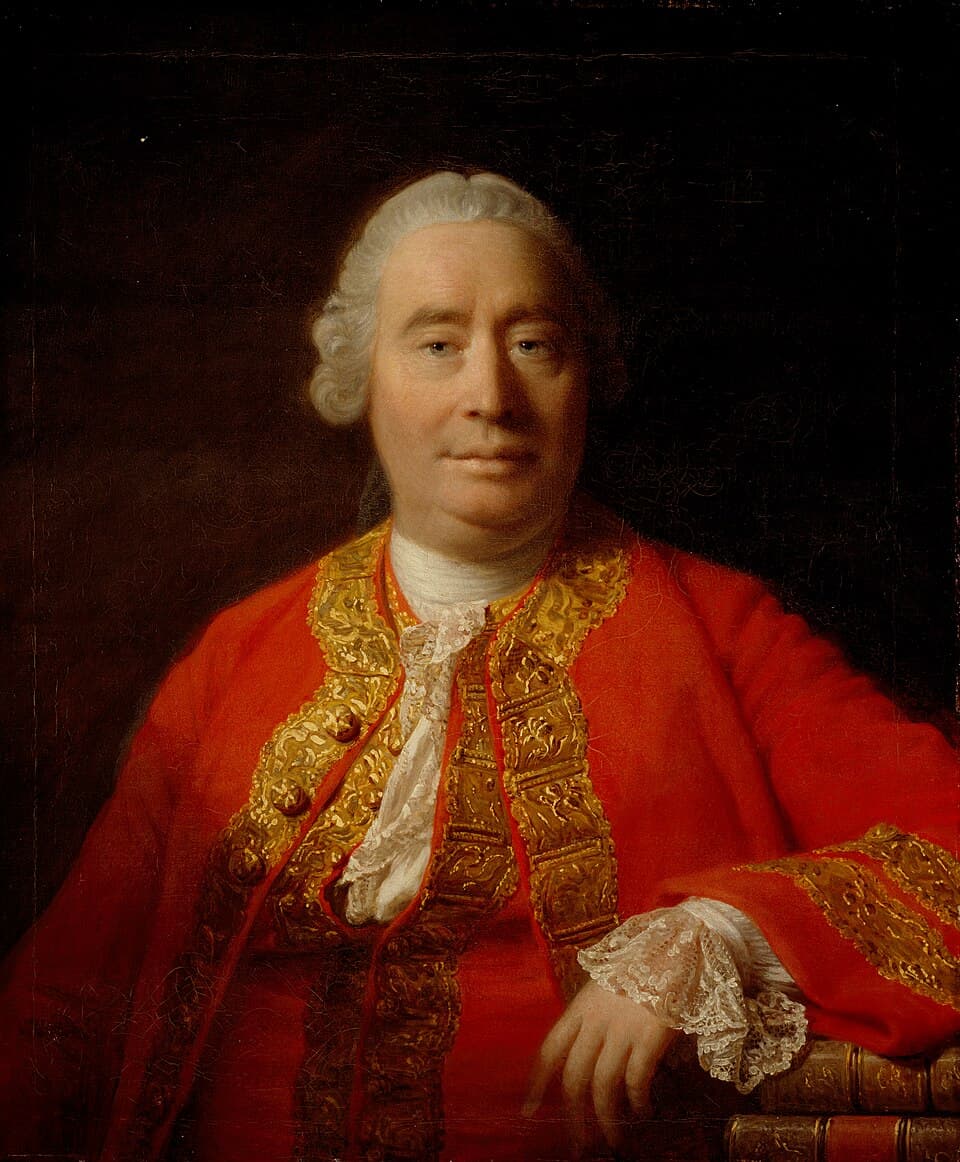
David Hume
An Enquiry Concerning Human Understanding

The author recommends a general resolution to distrust testimony regarding miracles, as the commonality of human falsehood outweighs the probability of a violation of natural law.

...henomena, that I should rather believe the most extraordinary events to arise from their concurrence, than admit of so signal a violation of the laws of nature. But should this miracle be ascribed to any new system of religion; men, in all ages, have been so much imposed on by ridiculous stories of that kind, that this very circumstance would be a full proof of a cheat, and sufficient, with all men of sense, not only to make them reject the fact, but even reject it without farther examination.
Though the Being to whom the miracle is ascribed, be, in this case, Almighty, it does not, upon that account, become a whit more probable; since it is impossible for us to know the attributes or actions of such a Being, otherwise than from the experience which we have of his productions, in the usual course of nature. This still reduces us to past observation, and obliges us to compare the instances of the violation of truth in the testimony of men, with those of the violation of the laws of nature by miracles, in order to judge which of them is most likely and probable. As the violations of truth are more common in the testimony concerning…
Lord Bacon seems to have embraced the same principles of reasoning. 'We ought,' says he, 'to make a collection or particular history of all monsters and prodigious births or productions, and in a word of every thing new, rare, and extraordinary in nature. But this must be done with the most severe scrutiny, lest we depart from truth. Above all, every relation must be considered as suspicious, which depends in any degree upon religion, as the prodigies of Livy: And no less so, every thing that...
Continue reading →
4
Custom as Guide
David Hume
An Enquiry Concerning Human Understanding

The author concludes that custom is the essential guide of human life, enabling us to use experience to predict the future and navigate the world.

...nd application. In every situation or incident, there are many particular and seemingly minute circumstances, which the man of greatest talent is, at first, apt to overlook, though on them the justness of his conclusions, and consequently the prudence of his conduct, entirely depend. Not to mention, that, to a young beginner, the general observations and maxims occur not always on the proper occasions, nor can be immediately applied with due calmness and distinction.
The truth is, an unexperienced reasoner could be no reasoner at all, were he absolutely unexperienced; and when we assign that character to any one, we mean it only in a comparative sense, and suppose him possessed of experience, in a smaller and more imperfect degree. Custom, then, is the great guide of human life. It is that principle alone which renders our experience useful to us, and makes us expect, for the future, a similar train of events with those which have appeared in the past. Without the influence of custom, we should be entirely ignorant of every matter of fact beyond what is immediately present to the memory and senses.
We should never know how to adjust means to ends, or to employ our natural powers in the production of any effect. There would be an end at once of all action, as well as of the chief part of speculation. 37. But here it may be proper to remark, that though our conclusions from experience carry us beyond our memory and senses, and assure us of matters of fact which happened in the most distant places and most remote ages, yet some fact must always be present to the senses or memory, from which...
4
The Mixed Life
David Hume
An Enquiry Concerning Human Understanding

The author advises a balanced life that integrates reason, sociability, and action, warning against allowing any single pursuit to dominate one's nature.

...st philosophy. In order to diffuse and cultivate so accomplished a character, nothing can be more useful than compositions of the easy style and manner, which draw not too much from life, require no deep application or retreat to be comprehended, and send back the student among mankind full of noble sentiments and wise precepts, applicable to every exigence of human life. By means of such compositions, virtue becomes amiable, science agreeable, company instructive, and retirement entertaining.
Man is a reasonable being; and as such, receives from science his proper food and nourishment: But so narrow are the bounds of human understanding, that little satisfaction can be hoped for in this particular, either from the extent of security or his acquisitions. Man is a sociable, no less than a reasonable being: But neither can he always enjoy company agreeable and amusing, or preserve the proper relish for them. Man is also an active being; and from that disposition, as well as from the various necessities of human life, must submit to business and occupation: But the mind requires some relaxation, and cannot always support its bent to…
Indulge your passion for science, says she, but let your science be human, and such as may have a direct reference to action and society. Abstruse thought and profound researches I prohibit, and will severely punish, by the pensive melancholy which they introduce, by the endless uncertainty in which they involve you, and by the cold reception which your pretended discoveries shall meet with, when communicated. Be a philosopher; but, amidst all your philosophy, be still a man. 5. Were the gener...
Continue reading →
4
The Missing Medium
David Hume
An Enquiry Concerning Human Understanding

Hume challenges philosophers to identify the logical 'medium' that allows the mind to infer future effects from past observations, confessing that such a link remains incomprehensible.

...at, nourished me; that is, a body of such sensible qualities was, at that time, endued with such secret powers: but does it follow, that other bread must also nourish me at another time, and that like sensible qualities must always be attended with like secret powers? The consequence seems nowise necessary. At least, it must be acknowledged that there is here a consequence drawn by the mind; that there is a certain step taken; a process of thought, and an inference, which wants to be explained.
These two propositions are far from being the same, I have found that such an object has always been attended with such an effect, and I foresee, that other objects, which are, in appearance, similar, will be attended with similar effects. I shall allow, if you please, that the one proposition may justly be inferred from the other: I know, in fact, that it always is inferred. But if you insist that the inference is made by a chain of reasoning, I desire you to produce that reasoning. The connexion between these propositions is not intuitive. There is required a medium, which may enable the mind to draw such an inference, if indeed it be…
[6] The word, Power, is here used in a loose and popular sense. The more accurate explication of it would give additional evidence to this argument. See Sect. 7. 30. This negative argument must certainly, in process of time, become altogether convincing, if many penetrating and able philosophers shall turn their enquiries this way and no one be ever able to discover any connecting proposition or intermediate step, which supports the understanding in this conclusion. But as the que...
Continue reading →
2
Miracle vs Testimony
David Hume
An Enquiry Concerning Human Understanding

The author establishes a maxim for evaluating miracles, instructing that one should always reject the greater miracle and only accept testimony if its falsehood would be more improbable than the event.

...rately defined, a transgression of a law of nature by a particular volition of the Deity, or by the interposition of some invisible agent. A miracle may either be discoverable by men or not. This alters not its nature and essence. The raising of a house or ship into the air is a visible miracle. The raising of a feather, when the wind wants ever so little of a force requisite for that purpose, is as real a miracle, though not so sensible with regard to us. 91.
The plain consequence is (and it is a general maxim worthy of our attention), 'That no testimony is sufficient to establish a miracle, unless the testimony be of such a kind, that its falsehood would be more miraculous, than the fact, which it endeavours to establish; and even in that case there is a mutual destruction of arguments, and the superior only gives us an assurance suitable to that degree of force, which remains, after deducting the inferior.' When anyone tells me, that he saw a dead man restored to life, I immediately consider with myself, whether it be more probable, that this person should either deceive or be deceived, or that…
PART II. 92. In the foregoing reasoning we have supposed, that the testimony, upon which a miracle is founded, may possibly amount to an entire proof, and that the falsehood of that testimony would be a real prodigy: But it is easy to shew, that we have been a great deal too liberal in our concession, and that there never was a miraculous event established on so full an evidence. For first, there is not to be found, in all history, any miracle attested by a sufficient number of men, of s...
Continue reading →
3