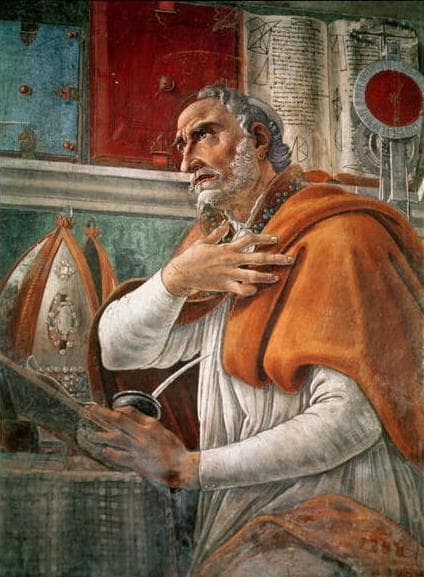
Truth's Double Edge
Augustine of Hippo
Confessions

An exploration of why people hate the truth, concluding that they love truth when it enlightens them but hate it when it exposes their faults.

...a happy life, which is no other than joying in the truth, then also do they love the truth; which yet they would not love, were there not some notice of it in their memory. Why then joy they not in it? why are they not happy? because they are more strongly taken up with other things which have more power to make them miserable, than that which they so faintly remember to make them happy. For there is yet a little light in men; let them walk, let them walk, that the darkness overtake them not.
But why doth "truth generate hatred," and the man of Thine, preaching the truth, become an enemy to them? whereas a happy life is loved, which is nothing else but joying in the truth; unless that truth is in that kind loved, that they who love anything else would gladly have that which they love to be the truth: and because they would not be deceived, would not be convinced that they are so? Therefore do they hate the truth for that thing's sake which they loved instead of the truth. They love truth when she enlightens, they hate her when she reproves. For since they would not be deceived, and would deceive, they love her when she discovers…
Whence she shall so repay them, that they who would not be made manifest by her, she both against their will makes manifest, and herself becometh not manifest unto them. Thus, thus, yea thus doth the mind of man, thus blind and sick, foul and ill-favoured, wish to be hidden, but that aught should be hidden from it, it wills not. But the contrary is requited it, that itself should not be hidden from the Truth; but the Truth is hid from it. Yet even thus miserable, it had rather joy in truths tha...
Continue reading →
6
Grace as Prerequisite
Augustine of Hippo
Confessions

The author advises that all truth found in secular philosophy should be redirected toward the praise of Grace, ensuring that the seeker remains humble and focused on the path to God.

...d thence imbibed, I might have thought that it might have been obtained by the study of those books alone. Most eagerly then did I seize that venerable writing of Thy Spirit; and chiefly the Apostle Paul. Whereupon those difficulties vanished away, wherein he once seemed to me to contradict himself, and the text of his discourse not to agree with the testimonies of the Law and the Prophets. And the face of that pure word appeared to me one and the same; and I learned to rejoice with trembling.
So I began; and whatsoever truth I had read in those other books, I found here amid the praise of Thy Grace; that whoso sees, may not so glory as if he had not received, not only what he sees, but also that he sees (for what hath he, which he hath not received?), and that he may be not only admonished to behold Thee, who art ever the same, but also healed, to hold Thee; and that he who cannot see afar off, may yet walk on the way, whereby he may arrive, and behold, and hold Thee.
For, though a man be delighted with the law of God after the inner man, what shall he do with that other law in his members which warreth against the law of his mind, and bringeth him into captivity to the law of sin which is in his members? For, Thou art righteous, O Lord, but we have sinned and committed iniquity, and have done wickedly, and Thy hand is grown heavy upon us, and we are justly delivered over unto that ancient sinner, the king of death; because he persuaded our will to be like h...
2
Joy in Truth
Augustine of Hippo
Confessions

The author defines the 'happy life' as joy in the truth, arguing that because all people desire happiness and dislike being deceived, they must possess an inherent, remembered love for the truth.

...ome semblance of joy. It is not certain then that all wish to be happy, inasmuch as they who wish not to joy in Thee, which is the only happy life, do not truly desire the happy life. Or do all men desire this, but because the flesh lusteth against the Spirit, and the Spirit against the flesh, that they cannot do what they would, they fall upon that which they can, and are content therewith; because, what they are not able to do, they do not will so strongly as would suffice to make them able?
For I ask any one, had he rather joy in truth, or in falsehood? They will as little hesitate to say "in the truth," as to say "that they desire to be happy," for a happy life is joy in the truth: for this is a joying in Thee, Who art the Truth, O God my light, health of my countenance, my God. This is the happy life which all desire; this life which alone is happy, all desire; to joy in the truth all desire. I have met with many that would deceive; who would be deceived, no one. Where then did they know this happy life, save where they know the truth also? For they love it also, since they would not be deceived. And when they love a happy…
Why then joy they not in it? why are they not happy? because they are more strongly taken up with other things which have more power to make them miserable, than that which they so faintly remember to make them happy. For there is yet a little light in men; let them walk, let them walk, that the darkness overtake them not. But why doth "truth generate hatred," and the man of Thine, preaching the truth, become an enemy to them? whereas a happy life is loved, which is nothing else but joying in...
Continue reading →
6
Conscience's Upbraiding
Augustine of Hippo
Confessions

Augustine reflects on his internal struggle and the weight of his conscience, lamenting his delay in seeking truth compared to others who have found spiritual lightness.

...oon, and soon cure me of the disease of concupiscence, which I wished to have satisfied, rather than extinguished. And I had wandered through crooked ways in a sacrilegious superstition, not indeed assured thereof, but as preferring it to the others which I did not seek religiously, but opposed maliciously. And I had thought that I therefore deferred from day to day to reject the hopes of this world, and follow Thee only, because there did not appear aught certain, whither to direct my course.
And now was the day come wherein I was to be laid bare to myself, and my conscience was to upbraid me. "Where art thou now, my tongue? Thou saidst that for an uncertain truth thou likedst not to cast off the baggage of vanity; now, it is certain, and yet that burden still oppresseth thee, while they who neither have so worn themselves out with seeking it, nor for often years and more have been thinking thereon, have had their shoulders lightened, and received wings to fly away."
Thus was I gnawed within, and exceedingly confounded with a horrible shame, while Pontitianus was so speaking. And he having brought to a close his tale and the business he came for, went his way; and I into myself. What said I not against myself? with what scourges of condemnation lashed I not my soul, that it might follow me, striving to go after Thee! Yet it drew back; refused, but excused not itself. All arguments were spent and confuted; there remained a mute shrinking; and she feared, as...
2
Truth Without Piety
Augustine of Hippo
Confessions

The author criticizes philosophers who understand the natural world but fail to honor the Creator, falling instead into vanity and idolatry.

...er, and the understanding, out of which they number; or that of Thy wisdom there is no number. But the Only Begotten is Himself made unto us wisdom, and righteousness, and sanctification, and was numbered among us, and paid tribute unto Caesar. They knew not this way whereby to descend to Him from themselves, and by Him ascend unto Him. They knew not this way, and deemed themselves exalted amongst the stars and shining; and behold, they fell upon the earth, and their foolish heart was darkened.
They discourse many things truly concerning the creature; but Truth, Artificer of the creature, they seek not piously, and therefore find Him not; or if they find Him, knowing Him to be God, they glorify Him not as God, neither are thankful, but become vain in their imaginations, and profess themselves to be wise, attributing to themselves what is Thine; and thereby with most perverse blindness, study to impute to Thee what is their own, forging lies of Thee who art the Truth, and changing the glory of uncorruptible God into an image made like corruptible man, and to birds, and four-footed beasts, and creeping things, changing Thy truth into…
Yet many truths concerning the creature retained I from these men, and saw the reason thereof from calculations, the succession of times, and the visible testimonies of the stars; and compared them with the saying of Manichaeus, which in his frenzy he had written most largely on these subjects; but discovered not any account of the solstices, or equinoxes, or the eclipses of the greater lights, nor whatever of this sort I had learned in the books of secular philosophy. But I was commanded to b...
Continue reading →
2