Memory's Expanding Past
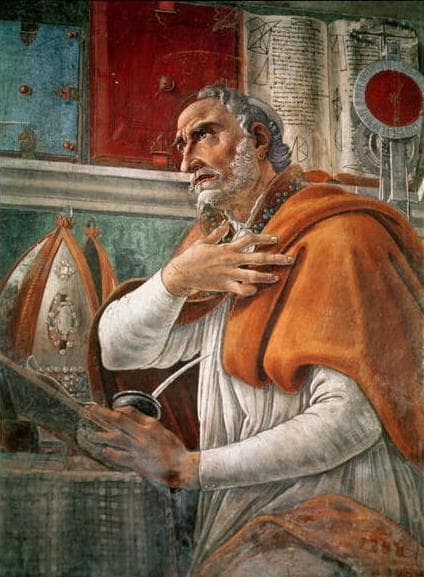
Augustine of Hippo
Confessions

A logical breakdown of how time is perceived through the transition of future expectation into past memory during a present action, such as reciting a Psalm.

...l in the mind a memory of things past. And who denieth the present time hath no space, because it passeth away in a moment? and yet our consideration continueth, through which that which shall be present proceedeth to become absent. It is not then future time, that is long, for as yet it is not: but a long future, is "a long expectation of the future," nor is it time past, which now is not, that is long; but a long past, is "a long memory of the past." I am about to repeat a Psalm that I know.
Before I begin, my expectation is extended over the whole; but when I have begun, how much soever of it I shall separate off into the past, is extended along my memory; thus the life of this action of mine is divided between my memory as to what I have repeated, and expectation as to what I am about to repeat; but "consideration" is present with me, that through it what was future, may be conveyed over, so as to become past. Which the more it is done again and again, so much the more the expectation being shortened, is the memory enlarged: till the whole expectation be at length exhausted, when that whole action being ended, shall have passed…
But because Thy loving-kindness is better than all lives, behold, my life is but a distraction, and Thy right hand upheld me, in my Lord the Son of man, the Mediator betwixt Thee, The One, and us many, many also through our manifold distractions amid many things, that by Him I may apprehend in Whom I have been apprehended, and may be re-collected from my old conversation, to follow The One, forgetting what is behind, and not distended but extended, not to things which shall be and shall pass a...
Continue reading →
4
Seeking the Happy Life
Augustine of Hippo
Confessions

The author reiterates his existential search for God as the source of a happy life, questioning how one can seek a state of being they do not currently possess.

...that present itself, but out of the memory itself? for even when we recognise it, on being reminded by another, it is thence it comes. For we do not believe it as something new, but, upon recollection, allow what was named to be right. But were it utterly blotted out of the mind, we should not remember it, even when reminded. For we have not as yet utterly forgotten that, which we remember ourselves to have forgotten. What then we have utterly forgotten, though lost, we cannot even seek after.
How then do I seek Thee, O Lord? For when I seek Thee, my God, I seek a happy life. I will seek Thee, that my soul may live. For my body liveth by my soul; and my soul by Thee. How then do I seek a happy life, seeing I have it not, until I can say, where I ought to say it, "It is enough"? How seek I it? By remembrance, as though I had forgotten it, remembering that I had forgotten it? Or, desiring to learn it as a thing unknown, either never having known, or so forgotten it, as not even to remember that I had forgotten it?
is not a happy life what all will, and no one altogether wills it not? where have they known it, that they so will it? where seen it, that they so love it? Truly we have it, how, I know not. Yea, there is another way, wherein when one hath it, then is he happy; and there are, who are blessed, in hope. These have it in a lower kind, than they who have it in very deed; yet are they better off than such as are happy neither in deed nor in hope. Yet even these, had they it not in some sort, would n...
2
Three Mental Presents
Augustine of Hippo
Confessions

The author redefines the three types of time as the present of things past (memory), the present of things present (sight), and the present of things future (expectation).

...gs present, which are already, and are seen. Thou then, Ruler of Thy creation, by what way dost Thou teach souls things to come? For Thou didst teach Thy Prophets. By what way dost Thou, to whom nothing is to come, teach things to come; or rather of the future, dost teach things present? For, what is not, neither can it be taught. Too far is this way of my ken: it is too mighty for me, I cannot attain unto it; but from Thee I can, when Thou shalt vouchsafe it, O sweet light of my hidden eyes.
What now is clear and plain is, that neither things to come nor past are. Nor is it properly said, "there be three times, past, present, and to come": yet perchance it might be properly said, "there be three times; a present of things past, a present of things present, and a present of things future." For these three do exist in some sort, in the soul, but otherwhere do I not see them; present of things past, memory; present of things present, sight; present of things future, expectation. If thus we be permitted to speak, I see three times, and I confess there are three.
Let it be said too, "there be three times, past, present, and to come": in our incorrect way. See, I object not, nor gainsay, nor find fault, if what is so said be but understood, that neither what is to be, now is, nor what is past. For but few things are there, which we speak properly, most things improperly; still the things intended are understood. I said then even now, we measure times as they pass, in order to be able to say, this time is twice so much as that one; or, this is just so mu...
5
Memory's Secret Windings
Augustine of Hippo
Confessions

A poetic description of the memory as a vast, secret harbor where sensory images are stored and can be recalled internally even in darkness and silence.

...m sight, ready to come when I will. All which takes place when I repeat a thing by heart. There are all things preserved distinctly and under general heads, each having entered by its own avenue: as light, and all colours and forms of bodies by the eyes; by the ears all sorts of sounds; all smells by the avenue of the nostrils; all tastes by the mouth; and by the sensation of the whole body, what is hard or soft; hot or cold; or rugged; heavy or light; either outwardly or inwardly to the body.
All these doth that great harbour of the memory receive in her numberless secret and inexpressible windings, to be forthcoming, and brought out at need; each entering in by his own gate, and there laid up. Nor yet do the things themselves enter in; only the images of the things perceived are there in readiness, for thought to recall. Which images, how they are formed, who can tell, though it doth plainly appear by which sense each hath been brought in and stored up? For even while I dwell in darkness and silence, in my memory I can produce colours, if I will, and discern betwixt black and white, and what others I will: nor yet do sounds break…
For these too I call for, and forthwith they appear. And though my tongue be still, and my throat mute, so can I sing as much as I will; nor do those images of colours, which notwithstanding be there, intrude themselves and interrupt, when another store is called for, which flowed in by the ears. So the other things, piled in and up by the other senses, I recall at my pleasure. Yea, I discern the breath of lilies from violets, though smelling nothing; and I prefer honey to sweet wine, smooth be...
Continue reading →
2
Memory of Happiness
Augustine of Hippo
Confessions

The author analyzes the universal desire for happiness, arguing that it must exist in the memory as a known concept even if it has not been physically experienced.

...; but only, whether the happy life be in the memory? For neither should we love it, did we not know it. We hear the name, and we all confess that we desire the thing; for we are not delighted with the mere sound. For when a Greek hears it in Latin, he is not delighted, not knowing what is spoken; but we Latins are delighted, as would he too, if he heard it in Greek; because the thing itself is neither Greek nor Latin, which Greeks and Latins, and men of all other tongues, long for so earnestly.
Known therefore it is to all, for they with one voice be asked, "would they be happy?" they would answer without doubt, "they would." And this could not be, unless the thing itself whereof it is the name were retained in their memory. But is it so, as one remembers Carthage who hath seen it? No. For a happy life is not seen with the eye, because it is not a body. As we remember numbers then? No. For these, he that hath in his knowledge, seeks not further to attain unto; but a happy life we have in our knowledge, and therefore love it, and yet still desire to attain it, that we may be happy.
As we remember eloquence then? No. For although upon hearing this name also, some call to mind the thing, who still are not yet eloquent, and many who desire to be so, whence it appears that it is in their knowledge; yet these have by their bodily senses observed others to be eloquent, and been delighted, and desire to be the like (though indeed they would not be delighted but for some inward knowledge thereof, nor wish to be the like, unless they were thus delighted); whereas a happy life, we...
5