A contemplative insight into God's eternity, describing the soul's potential to transcend time by cleaving to the unchanging Divine.
Eternal Unchangeable House
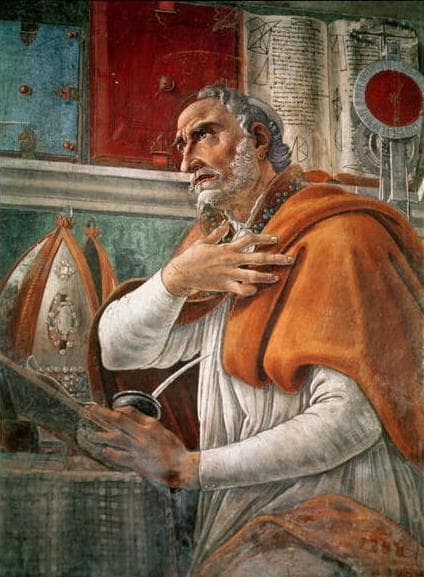
Augustine of Hippo
Confessions...far above those heavenly places that we see. By this may the soul, whose pilgrimage is made long and far away, by this may she understand, if she now thirsts for Thee, if her tears be now become her bread, while they daily say unto her, Where is Thy God? if she now seeks of Thee one thing, and desireth it, that she may dwell in Thy house all the days of her life (and what is her life, but Thou? and what Thy days, but Thy eternity, as Thy years which fail not, because Thou art ever the same?);
By this then may the soul that is able, understand how far Thou art, above all times, eternal; seeing Thy house which at no time went into a far country, although it be not coeternal with Thee, yet by continually and unfailingly cleaving unto Thee, suffers no changeableness of times. This is in Thy sight clear unto me, and let it be more and more cleared unto me, I beseech Thee, and in the manifestation thereof, let me with sobriety abide under Thy wings.
There is, behold, I know not what formlessness in those changes of these last and lowest creatures; and who shall tell me (unless such a one as through the emptiness of his own heart, wonders and tosses himself up and down amid his own fancies?), who but such a one would tell me, that if all figure be so wasted and consumed away, that there should only remain that formlessness, through which the thing was changed and turned from one figure to another, that that could exhibit the vicissitudes o...
2
⚖Confession as Devotion

Augustine of Hippo
ConfessionsAugustine explains that his prayers and narrations are not to inform an omniscient God, but to stir his own devotion and that of his readers.
...hat I may live, and consider wondrous things out of Thy law. Thou knowest my unskilfulness, and my infirmities; teach me, and heal me. He, Thine only Son, in Whom are hid all the treasures of wisdom and knowledge, hath redeemed me with His blood. Let not the proud speak evil of me; because I meditate on my ransom, and eat and drink, and communicate it; and poor, desired to be satisfied from Him, amongst those that eat and are satisfied, and they shall praise the Lord who seek Him. BOOK XI
Lord, since eternity is Thine, art Thou ignorant of what I say to Thee? or dost Thou see in time, what passeth in time? Why then do I lay in order before Thee so many relations? Not, of a truth, that Thou mightest learn them through me, but to stir up mine own and my readers' devotions towards Thee, that we may all say, Great is the Lord, and greatly to be praised. I have said already; and again will say, for love of Thy love do I this.
For we pray also, and yet Truth hath said, Your Father knoweth what you have need of, before you ask. It is then our affections which we lay open unto Thee, confessing our own miseries, and Thy mercies upon us, that Thou mayest free us wholly, since Thou hast begun, that we may cease to be wretched in ourselves, and be blessed in Thee; seeing Thou hast called us, to become poor in spirit, and meek, and mourners, and hungering and athirst after righteousness, and merciful, and pure in heart, and...
2
⚖Soaring Beyond Minds

Augustine of Hippo
ConfessionsA description of a mystical ascent where the mind moves beyond the physical heavens to reach the eternal 'Self-same' Wisdom.
...unto those things which are before, we were enquiring between ourselves in the presence of the Truth, which Thou art, of what sort the eternal life of the saints was to be, which eye hath not seen, nor ear heard, nor hath it entered into the heart of man. But yet we gasped with the mouth of our heart, after those heavenly streams of Thy fountain, the fountain of life, which is with Thee; that being bedewed thence according to our capacity, we might in some sort meditate upon so high a mystery.
And when our discourse was brought to that point, that the very highest delight of the earthly senses, in the very purest material light, was, in respect of the sweetness of that life, not only not worthy of comparison, but not even of mention; we raising up ourselves with a more glowing affection towards the "Self-same," did by degrees pass through all things bodily, even the very heaven whence sun and moon and stars shine upon the earth; yea, we were soaring higher yet, by inward musing, and discourse, and admiring of Thy works; and we came to our own minds, and went beyond them, that we might arrive at that region of never-failing plenty,…
For to "have been," and to "be hereafter," are not eternal. And while we were discoursing and panting after her, we slightly touched on her with the whole effort of our heart; and we sighed, and there we leave bound the first fruits of the Spirit; and returned to vocal expressions of our mouth, where the word spoken has beginning and end. And what is like unto Thy Word, our Lord, who endureth in Himself without becoming old, and maketh all things new? We were saying then: If to any the tumult...
Continue reading →
1
⚖Eternity's Unchanging Will

Augustine of Hippo
ConfessionsThe author presents the logical challenges regarding God's activity before creation, questioning the nature of eternity and the divine will.
...corruption, and crown me with loving kindness and tender mercies, and shalt satisfy my desire with good things, because my youth shall be renewed like an eagle's. For in hope we are saved, wherefore we through patience wait for Thy promises. Let him that is able, hear Thee inwardly discoursing out of Thy oracle: I will boldly cry out, How wonderful are Thy works, O Lord, in Wisdom hast Thou made them all; and this Wisdom is the Beginning, and in that Beginning didst Thou make heaven and earth.
Lo, are they not full of their old leaven, who say to us, "What was God doing before He made heaven and earth? For if (say they) He were unemployed and wrought not, why does He not also henceforth, and for ever, as He did heretofore? For did any new motion arise in God, and a new will to make a creature, which He had never before made, how then would that be a true eternity, where there ariseth a will, which was not? For the will of God is not a creature, but before the creature; seeing nothing could be created, unless the will of the Creator had preceded.
The will of God then belongeth to His very Substance. And if aught have arisen in God's Substance, which before was not, that Substance cannot be truly called eternal. But if the will of God has been from eternity that the creature should be, why was not the creature also from eternity?" Who speak thus, do not yet understand Thee, O Wisdom of God, Light of souls, understand not yet how the things be made, which by Thee, and in Thee are made: yet they strive to comprehend things eternal, whilst...
3
⚖The Eternal Sabbath

Augustine of Hippo
ConfessionsAugustine prays for the eternal peace of the 'Sabbath which hath no evening,' symbolizing the final rest of the soul in God after the works of life are finished.
...d likeness; and didst subject its rational actions to the excellency of the understanding, as the woman to the man; and to all Offices of Thy Ministry, necessary for the perfecting of the faithful in this life, Thou willedst, that for their temporal uses, good things, fruitful to themselves in time to come, be given by the same faithful. All these we see, and they are very good, because Thou seest them in us, Who hast given unto us Thy Spirit, by which we might see them, and in them love Thee.
O Lord God, give peace unto us: (for Thou hast given us all things;) the peace of rest, the peace of the Sabbath, which hath no evening. For all this most goodly array of things very good, having finished their courses, is to pass away, for in them there was morning and evening. But the seventh day hath no evening, nor hath it setting; because Thou hast sanctified it to an everlasting continuance; that that which Thou didst after Thy works which were very good, resting the seventh day, although Thou madest them in unbroken rest, that may the voice of Thy Book announce beforehand unto us, that we also after our works (therefore very good,…
For then shalt Thou rest in us, as now Thou workest in us; and so shall that be Thy rest through us, as these are Thy works through us. But Thou, Lord, ever workest, and art ever at rest. Nor dost Thou see in time, nor art moved in time, nor restest in a time; and yet Thou makest things seen in time, yea the times themselves, and the rest which results from time. We therefore see these things which Thou madest, because they are: but they are, because Thou seest them. And we see without, that...
Continue reading →
2