Inward Wealth's Protection
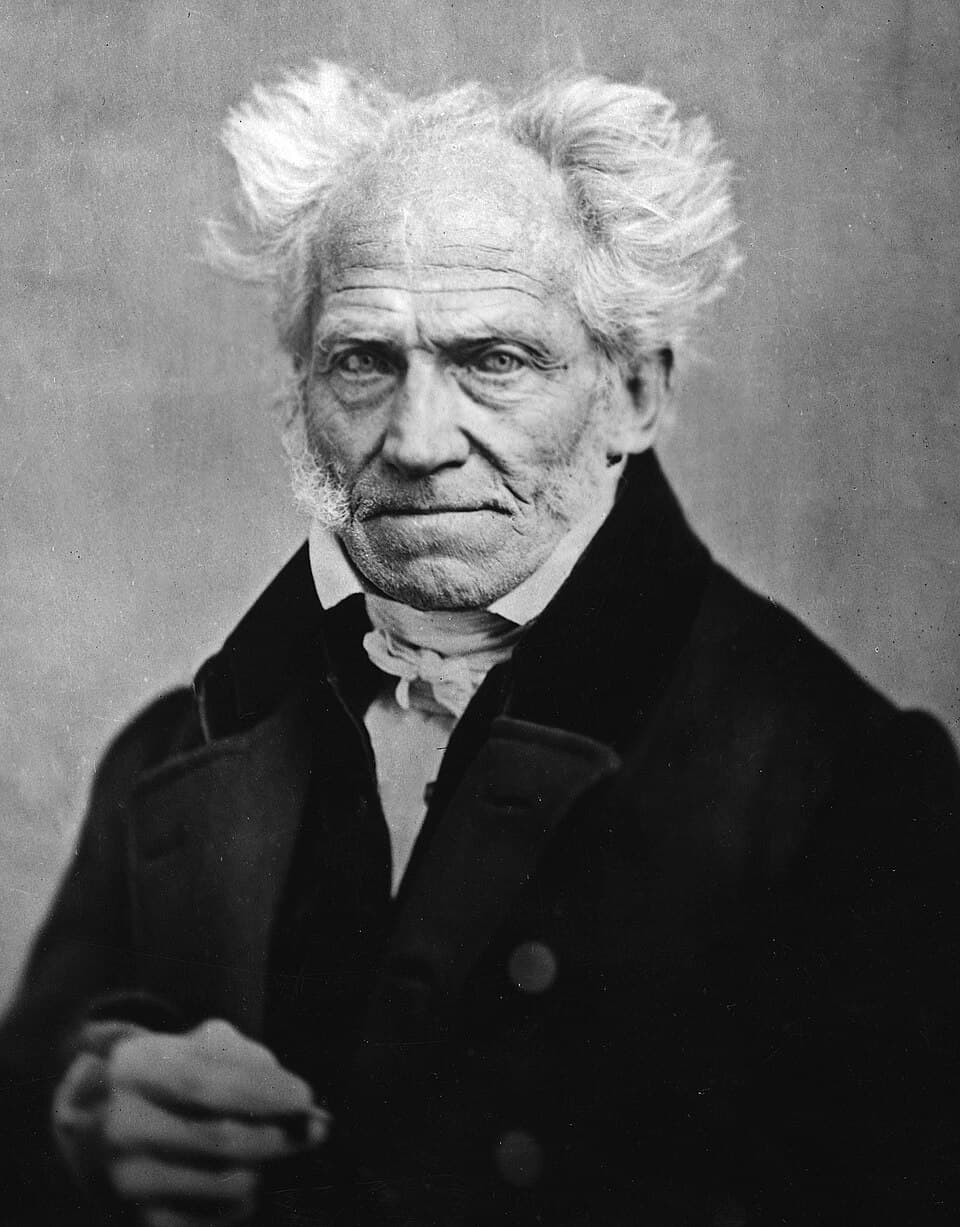
Arthur Schopenhauer
The Wisdom of Life

A prescription for avoiding boredom through the cultivation of inward wealth, which provides the mind with inexhaustible material for thought and activity.

...and spirits something to occupy them. The kind of things people choose for this purpose shows that they are not very particular, as witness the miserable pastimes they have recourse to, and their ideas of social pleasure and conversation: or again, the number of people who gossip on the doorstep or gape out of the window. It is mainly because of this inner vacuity of soul that people go in quest of society, diversion, amusement, luxury of every sort, which lead many to extravagance and misery.
Nothing is so good a protection against such misery as inward wealth, the wealth of the mind, because the greater it grows, the less room it leaves for boredom. The inexhaustible activity of thought! Finding ever new material to work upon in the multifarious phenomena of self and nature, and able and ready to form new combinations of them,--there you have something that invigorates the mind, and apart from moments of relaxation, sets it far above the reach of boredom.
[Footnote 1: And the extremes meet; for the lowest state of civilization, a nomad or wandering life, finds its counterpart in the highest, where everyone is at times a tourist. The earlier stage was a case of necessity; the latter is a remedy for boredom.] But, on the other hand, this high degree of intelligence is rooted in a high degree of susceptibility, greater strength of will, greater passionateness; and from the union of these qualities comes an increased capacity for emotion, an enhan...
2
The Wise Man's Response
Arthur Schopenhauer
The Wisdom of Life

Drawing on Seneca and Cato, the author argues that a wise person should ignore physical or verbal insults rather than seeking revenge.

...ar from Nicodromus, the musician, that his face swelled up and became black and blue; whereupon he put a label on his forehead, with the inscription, Nicodromus fecit, which brought much disgrace to the fluteplayer who had committed such a piece of brutality upon the man whom all Athens honored as a household god.[1] And in a letter to Melesippus, Diogenes of Sinope tells us that he got a beating from the drunken sons of the Athenians; but he adds that it was a matter of no importance.[2] And
Seneca devotes the last few chapters of his De Constantia to a lengthy discussion on insult--contumelia; in order to show that a wise man will take no notice of it. In Chapter XIV, he says, What shall a wise man do, if he is given a blow? What Cato did, when some one struck him on the mouth;--not fire up or avenge the insult, or even return the blow, but simply ignore it.
[Footnote 1: Diogenes Laertius, vi. 87, and Apul: Flor: p. 126.] [Footnote 2: Cf. Casaubon's Note, Diog. Laert., vi. 33.] Yes, you say, but these men were philosophers.--And you are fools, eh? Precisely. It is clear that the whole code of knightly honor was utterly unknown to the ancients; for the simple reason that they always took a natural and unprejudiced view of human affairs, and did not allow themselves to be influenced by any such vicious and abominable folly. A blow in the face...
4
Guard Inner Fountains
Arthur Schopenhauer
The Wisdom of Life

This passage suggests that the wise individual prioritizes independence and leisure above all else, as these allow them to cultivate their internal sources of happiness without relying on the external world.

...ived for twenty years in the deepest solitude in Holland, and, apart from report, was known to her only by a single essay: M. Descartes, she said, is the happiest of men, and his condition seems to me much to be envied.[1] Of course, as was the case with Descartes, external circumstances must be favorable enough to allow a man to be master of his life and happiness; or, as we read in Ecclesiastes[2]--Wisdom is good together with an inheritance, and profitable unto them that see the sun.
The man to whom nature and fate have granted the blessing of wisdom, will be most anxious and careful to keep open the fountains of happiness which he has in himself; and for this, independence and leisure are necessary. To obtain them, he will be willing to moderate his desires and harbor his resources, all the more because he is not, like others, restricted to the external world for his pleasures.
So he will not be misled by expectations of office, or money, or the favor and applause of his fellowmen, into surrendering himself in order to conform to low desires and vulgar tastes; nay, in such a case he will follow the advice that Horace gives in his epistle to Maecenas.[3] [Footnote 1: Vie de Descartes, par Baillet. Liv. vii., ch. 10.] [Footnote 2: vii. 12.] [Footnote 3: Lib. 1., ep. 7.] Nec somnum plebis laudo, satur altilium, nec Otia divitiis Arabum liberrima muto. It is...
3
The Mind's Protection
Arthur Schopenhauer
The Wisdom of Life

The author posits that an active intellectual life serves as a vital shield against the dangers, extravagances, and misery of boredom.

...be a real superfluity of power, set free from the service of the will and devoted to that of the intellect; for, as Seneca says, otium sine litteris mors est et vivi hominis sepultura--illiterate leisure is a form of death, a living tomb. Varying with the amount of the superfluity, there will be countless developments in this second life, the life of the mind; it may be the mere collection and labelling of insects, birds, minerals, coins, or the highest achievements of poetry and philosophy.
The life of the mind is not only a protection against boredom; it also wards off the pernicious effects of boredom; it keeps us from bad company, from the many dangers, misfortunes, losses and extravagances which the man who places his happiness entirely in the objective world is sure to encounter, My philosophy, for instance, has never brought me in a six-pence;
but it has spared me many an expense. The ordinary man places his life's happiness in things external to him, in property, rank, wife and children, friends, society, and the like, so that when he loses them or finds them disappointing, the foundation of his happiness is destroyed. In other words, his centre of gravity is not in himself; it is constantly changing its place, with every wish and whim. If he is a man of means, one day it will be his house in the country, another buying horses, or...
6
Wisdom's Unheeded Echo
Arthur Schopenhauer
The Wisdom of Life

A cynical reflection on the static nature of human folly, suggesting that the wise have always known the truth while the majority remains foolish.

...'s De utilitate ex adversis capienda, which is well worth reading, and may be used to supplement the present work. Aristotle, it is true, has a few words on eudaemonology in the fifth chapter of the first book of his Rhetoric; but what he says does not come to very much. As compilation is not my business, I have made no use of these predecessors; more especially because in the process of compiling, individuality of view is lost, and individuality of view is the kernel of works of this kind.
In general, indeed, the wise in all ages have always said the same thing, and the fools, who at all times form the immense majority, have in their way too acted alike, and done just the opposite; and so it will continue. For, as Voltaire says, we shall leave this world as foolish and as wicked as we found it on our arrival.
THE WISDOM OF LIFE. CHAPTER I. DIVISION OF THE SUBJECT. Aristotle[1] divides the blessings of life into three classes--those which come to us from without, those of the soul, and those of the body. Keeping nothing of this division but the number, I observe that the fundamental differences in human lot may be reduced to three distinct classes: [Footnote 1: Eth. Nichom., I. 8.] (1) What a man is: that is to say, personality, in the widest sense of the word; under which are included...
2