Honor's Double-Edged Sword
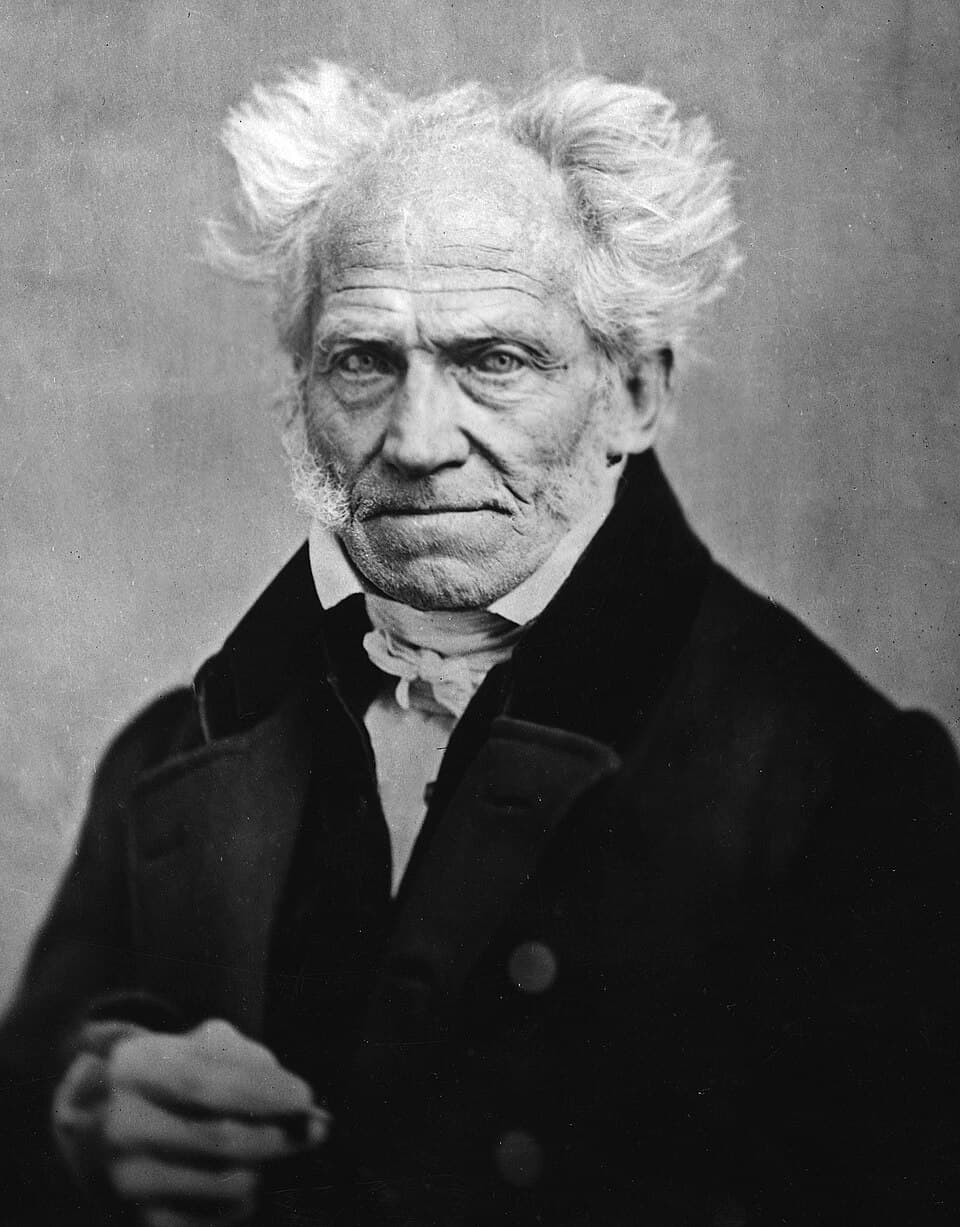
Arthur Schopenhauer
The Wisdom of Life

The author argues that while the sense of honor can promote social welfare, it is detrimental to individual happiness and should be tempered to maintain peace of mind.

...ome, if the matter is one on which he prides himself. If only other people will applaud him, a man may console himself for downright misfortune or for the pittance he gets from the two sources of human happiness already discussed: and conversely, it is astonishing how infallibly a man will be annoyed, and in some cases deeply pained, by any wrong done to his feeling of self-importance, whatever be the nature, degree, or circumstances of the injury, or by any depreciation, slight, or disregard.
If the feeling of honor rests upon this peculiarity of human nature, it may have a very salutary effect upon the welfare of a great many people, as a substitute for morality; but upon their happiness, more especially upon that peace of mind and independence which are so essential to happiness, its effect will be disturbing and prejudicial rather than salutary. Therefore it is advisable, from our point of view, to set limits to this weakness, and duly to consider and rightly to estimate the relative value of advantages, and thus temper, as far as possible, this great susceptibility to other people's opinion, whether the opinion be one…
Otherwise, a man is the slave of what other people are pleased to think,--and how little it requires to disconcert or soothe the mind that is greedy of praise: Sic leve, sic parvum est, animum quod laudis avarum Subruit ac reficit.[1] [Footnote 1: Horace, Epist: II., 1, 180.] Therefore it will very much conduce to our happiness if we duly compare the value of what a man is in and for himself with what he is in the eyes of others. Under the former conies everything that fills up the spa...
Continue reading →
6
Thirst for More
Arthur Schopenhauer
The Wisdom of Life

The author observes that the pursuit of wealth and fame is an endless cycle of increasing desire, whereas the pain of loss eventually fades as one adjusts their expectations.

...o, every man has an horizon of his own, and he will expect as much as he thinks it is possible for him to get. If an object within his horizon looks as though he could confidently reckon on getting it, he is happy; but if difficulties come in the way, he is miserable. What lies beyond his horizon has no effect at all upon him. So it is that the vast possessions of the rich do not agitate the poor, and conversely, that a wealthy man is not consoled by all his wealth for the failure of his hopes.
Riches, one may say, are like sea-water; the more you drink the thirstier you become; and the same is true of fame. The loss of wealth and prosperity leaves a man, as soon as the first pangs of grief are over, in very much the same habitual temper as before; and the reason of this is, that as soon as fate diminishes the amount of his possessions, he himself immediately reduces the amount of his claims. But when misfortune comes upon us, to reduce the amount of our claims is just what is most painful; once that we have done so, the pain becomes less and less, and is felt no more; like an old wound which has healed.
Conversely, when a piece of good fortune befalls us, our claims mount higher and higher, as there is nothing to regulate them; it is in this feeling of expansion that the delight of it lies. But it lasts no longer than the process itself, and when the expansion is complete, the delight ceases; we have become accustomed to the increase in our claims, and consequently indifferent to the amount of wealth which satisfies them. There is a passage in the Odyssey[1] illustrating this truth, of which...
2
Honor's Modern Tragedy
Arthur Schopenhauer
The Wisdom of Life

Schopenhauer contrasts the ancient world's pragmatic view of physical altercations with the modern obsession with 'knightly honor,' which he dismisses as a foolish and artificial social construct.

...--contumelia; in order to show that a wise man will take no notice of it. In Chapter XIV, he says, What shall a wise man do, if he is given a blow? What Cato did, when some one struck him on the mouth;--not fire up or avenge the insult, or even return the blow, but simply ignore it. [Footnote 1: Diogenes Laertius, vi. 87, and Apul: Flor: p. 126.] [Footnote 2: Cf. Casaubon's Note, Diog. Laert., vi. 33.] Yes, you say, but these men were philosophers.--And you are fools, eh? Precisely.
It is clear that the whole code of knightly honor was utterly unknown to the ancients; for the simple reason that they always took a natural and unprejudiced view of human affairs, and did not allow themselves to be influenced by any such vicious and abominable folly. A blow in the face was to them a blow and nothing more, a trivial physical injury; whereas the moderns make a catastrophe out of it, a theme for a tragedy;
as, for instance, in the Cid of Corneille, or in a recent German comedy of middle-class life, called The Power of Circumstance, which should have been entitled The Power of Prejudice. If a member of the National Assembly at Paris got a blow on the ear, it would resound from one end of Europe to the other. The examples which I have given of the way in which such an occurrence would have been treated in classic times may not suit the ideas of honorable people; so let me recommend to their...
6
Recognize Opinion's Folly
Arthur Schopenhauer
The Wisdom of Life

A prescription to end the folly of vanity by recognizing that most public opinion is false or absurd and that honor has only an indirect value in one's life.

...the most part in peace of mind and contentment, would be served by nothing so much as by reducing this impulse of human nature within reasonable limits,--which would perhaps make it one fiftieth part of what it is now. By doing so, we should get rid of a thorn in the flesh which is always causing us pain. But it is a very difficult task, because the impulse in question is a natural and innate perversity of human nature. Tacitus says, The lust of fame is the last that a wise man shakes off[1]
The only way of putting an end to this universal folly is to see clearly that it is a folly; and this may be done by recognizing the fact that most of the opinions in men's heads are apt to be false, perverse, erroneous and absurd, and so in themselves unworthy of attention; further, that other people's opinions can have very little real and positive influence upon us in most of the circumstances and affairs of life. Again, this opinion is generally of such an unfavorable character that it would worry a man to death to hear everything that was said of him, or the tone in which he was spoken of. And finally, among other things, we should be…
If people were generally converted from this universal folly, the result would be such an addition to our piece of mind and cheerfulness as at present seems inconceivable; people would present a firmer and more confident front to the world, and generally behave with less embarrassment and restraint. It is observable that a retired mode of life has an exceedingly beneficial influence on our peace of mind, and this is mainly because we thus escape having to live constantly in the sight of others,...
Continue reading →
2
Others' Superficial Consciousness
Arthur Schopenhauer
The Wisdom of Life

The author contends that we should remain indifferent to the opinions of others, as their thoughts are often superficial and have no direct impact on our true inner selves.

...otnote 1: Horace, Epist: II., 1, 180.] Therefore it will very much conduce to our happiness if we duly compare the value of what a man is in and for himself with what he is in the eyes of others. Under the former conies everything that fills up the span of our existence and makes it what it is, in short, all the advantages already considered and summed up under the heads of personality and property; and the sphere in which all this takes place is the man's own consciousness. On the other hand,
The sphere of what we are for other people is their consciousness, not ours; it is the kind of figure we make in their eyes, together with the thoughts which this arouses. But this is something which has no direct and immediate existence for us, but can affect us only mediately and indirectly, so far, that is, as other people's behavior towards us is directed by it; and even then it ought to affect us only in so far as it can move us to modify what we are in and for ourselves. Apart from this, what goes on in other people's consciousness is, as such, a matter of indifference to us; and in time we get really indifferent to it, when we come…
when we learn by experience with what depreciation a man will speak of his fellow, when he is not obliged to fear him, or thinks that what he says will not come to his ears. And if ever we have had an opportunity of seeing how the greatest of men will meet with nothing but slight from half-a-dozen blockheads, we shall understand that to lay great value upon what other people say is to pay them too much honor. [Footnote 1: Let me remark that people in the highest positions in life, with all the...
Continue reading →
6