A reflection on how solitude reveals a person's inner character, where the talented individual finds richness in thought while the fool suffers the burden of their own company.
Solitude Reveals Self
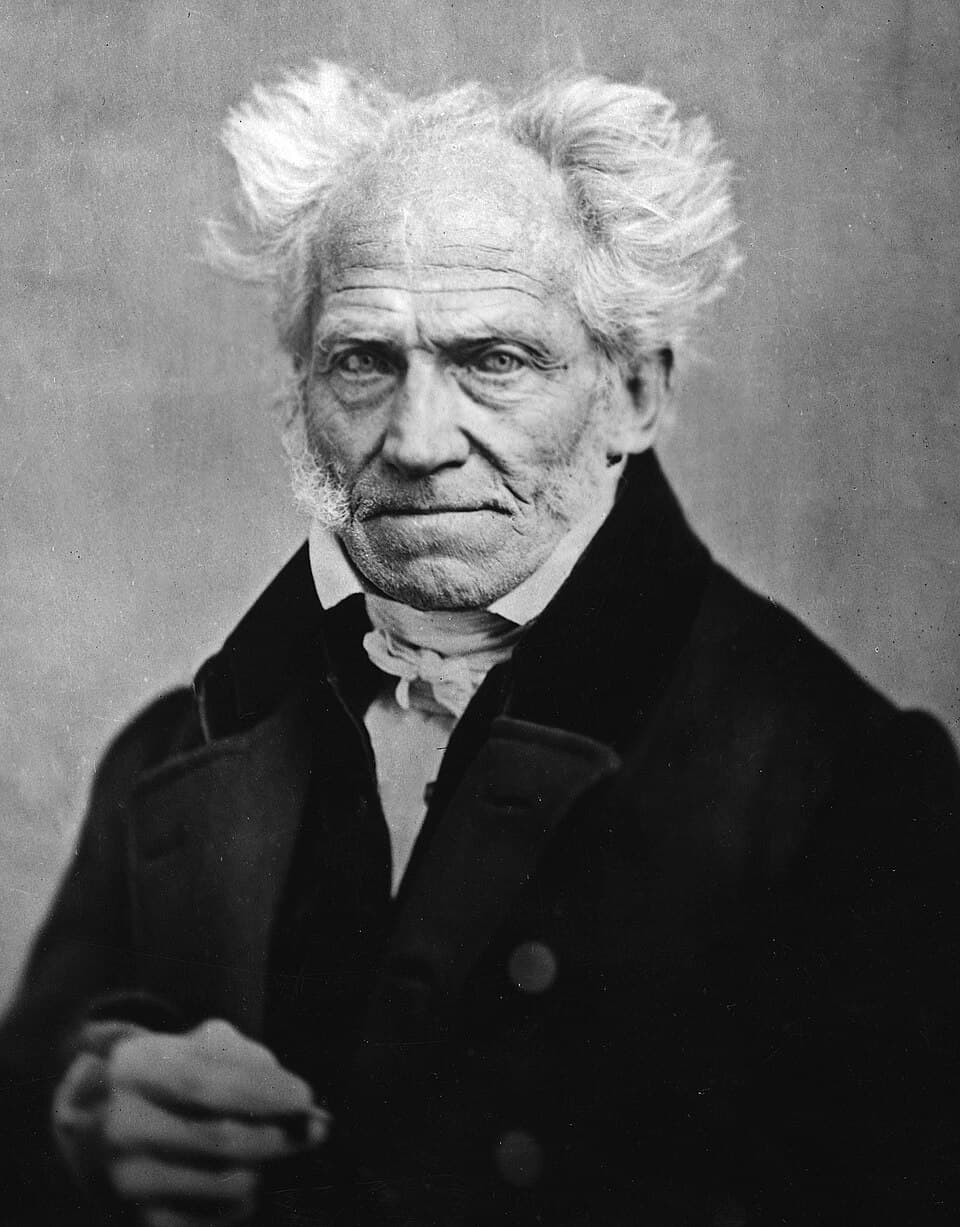
Arthur Schopenhauer
The Wisdom of Life...a high degree of intellect tends to make a man unsocial. True, if quality of intellect could be made up for by quantity, it might be worth while to live even in the great world; but unfortunately, a hundred fools together will not make one wise man. But the individual who stands at the other end of the scale is no sooner free from the pangs of need than he endeavors to get pastime and society at any cost, taking up with the first person he meets, and avoiding nothing so much as himself. For
In solitude, where every one is thrown upon his own resources, what a man has in himself comes to light; the fool in fine raiment groans under the burden of his miserable personality, a burden which he can never throw off, whilst the man of talent peoples the waste places with his animating thoughts. Seneca declares that folly is its own burden,--omnis stultitia laborat fastidio sui,--a very true saying, with which may be compared the words of Jesus, the son of Sirach, The life of a fool is worse than death.
And, as a rule, it will be found that a man is sociable just in the degree in which he is intellectually poor and generally vulgar. For one's choice in this world does not go much beyond solitude on one side and vulgarity on the other. It is said that the most sociable of all people are the negroes; and they are at the bottom of the scale in intellect. I remember reading once in a French paper[2] that the blacks in North America, whether free or enslaved, are fond of shutting themselves up in l...
2
⚖The Solitary Intellect

Arthur Schopenhauer
The Wisdom of LifeThe author advises that wise and intellectual individuals should seek solitude and retirement, as their internal richness makes them less dependent on the company of others.
...he long scale of mental power, from the veriest dunce to the greatest genius that ever lived. Therefore the nearer anyone is, either from a subjective or from an objective point of view, to one of those sources of suffering in human life, the farther he is from the other. And so a man's natural bent will lead him to make his objective world conform to his subjective as much as possible; that is to say, he will take the greatest measures against that form of suffering to which he is most liable.
The wise man will, above all, strive after freedom from pain and annoyance, quiet and leisure, consequently a tranquil, modest life, with as few encounters as may be; and so, after a little experience of his so-called fellowmen, he will elect to live in retirement, or even, if he is a man of great intellect, in solitude. For the more a man has in himself, the less he will want from other people,--the less, indeed, other people can be to him. This is why a high degree of intellect tends to make a man unsocial.
True, if quality of intellect could be made up for by quantity, it might be worth while to live even in the great world; but unfortunately, a hundred fools together will not make one wise man. But the individual who stands at the other end of the scale is no sooner free from the pangs of need than he endeavors to get pastime and society at any cost, taking up with the first person he meets, and avoiding nothing so much as himself. For in solitude, where every one is thrown upon his own resou...
4
⚖Intellect's Alienation

Arthur Schopenhauer
The Wisdom of LifeThe author suggests that high intelligence naturally isolates an individual, as they find little value in the shallow interests of the average person.
...e-eminently nervous in its character, and consequently a very high degree of susceptibility to pain in every form. Further, such gifts imply an intense temperament, larger and more vivid ideas, which, as the inseparable accompaniment of great intellectual power, entail on its possessor a corresponding intensity of the emotions, making them incomparably more violent than those to which the ordinary man is a prey. Now, there are more things in the world productive of pain than of pleasure. Again,
A large endowment of intellect tends to estrange the man who has it from other people and their doings; for the more a man has in himself, the less he will be able to find in them; and the hundred things in which they take delight, he will think shallow and insipid.
Here, then, perhaps, is another instance of that law of compensation which makes itself felt everywhere. How often one hears it said, and said, too, with some plausibility, that the narrow-minded man is at bottom the happiest, even though his fortune is unenviable. I shall make no attempt to forestall the reader's own judgment on this point; more especially as Sophocles himself has given utterance to two diametrically opposite opinions:-- [Greek: Pollo to phronein eudaimonias proton uparch...
6
⚖The Self as Source

Arthur Schopenhauer
The Wisdom of LifeThe author contends that true happiness is found within oneself, as every individual is ultimately alone and must rely on their own internal resources for fulfillment.
...lettante interest in art or literature.] Further, as no land is so well off as that which requires few imports, or none at all, so the happiest man is one who has enough in his own inner wealth, and requires little or nothing from outside for his maintenance, for imports are expensive things, reveal dependence, entail danger, occasion trouble, and when all is said and done, are a poor substitute for home produce. No man ought to expect much from others, or, in general, from the external world.
What one human being can be to another is not a very great deal: in the end every one stands alone, and the important thing is who it is that stands alone. Here, then, is another application of the general truth which Goethe recognizes in Dichtung und Wahrheit (Bk. III.), that in everything a man has ultimately to appeal to himself; or, as Goldsmith puts it in The Traveller: Still to ourselves in every place consign'd Our own felicity we make or find. Himself is the source of the best and most a man can be or achieve. The more this is so--the more a man finds his sources of pleasure in himself--the happier he will be.
Therefore, it is with great truth that Aristotle[1] says, To be happy means to be self-sufficient. For all other sources of happiness are in their nature most uncertain, precarious, fleeting, the sport of chance; and so even under the most favorable circumstances they can easily be exhausted; nay, this is unavoidable, because they are not always within reach. And in old age these sources of happiness must necessarily dry up:--love leaves us then, and wit, desire to travel, delight in horses,...
2
⚖Retreat to Self

Arthur Schopenhauer
The Wisdom of LifeA prescription for a retired and solitary life as a means to escape the tyranny of public opinion and focus on solid realities rather than social shadows.
...g that was said of him, or the tone in which he was spoken of. And finally, among other things, we should be clear about the fact that honor itself has no really direct, but only an indirect, value. If people were generally converted from this universal folly, the result would be such an addition to our piece of mind and cheerfulness as at present seems inconceivable; people would present a firmer and more confident front to the world, and generally behave with less embarrassment and restraint.
It is observable that a retired mode of life has an exceedingly beneficial influence on our peace of mind, and this is mainly because we thus escape having to live constantly in the sight of others, and pay everlasting regard to their casual opinions; in a word, we are able to return upon ourselves. At the same time a good deal of positive misfortune might be avoided, which we are now drawn into by striving after shadows, or, to speak more correctly, by indulging a mischievous piece of folly; and we should consequently have more attention to give to solid realities and enjoy them with less interruption that at present.
But [Greek: chalepa ga kala]--what is worth doing is hard to do. [Footnote 1: Hist., iv., 6.] Section 2.--Pride. The folly of our nature which we are discussing puts forth three shoots, ambition, vanity and pride. The difference between the last two is this: pride is an established conviction of one's own paramount worth in some particular respect; while vanity is the desire of rousing such a conviction in others, and it is generally accompanied by the secret hope of ultimately comin...
4