Guard Inner Fountains
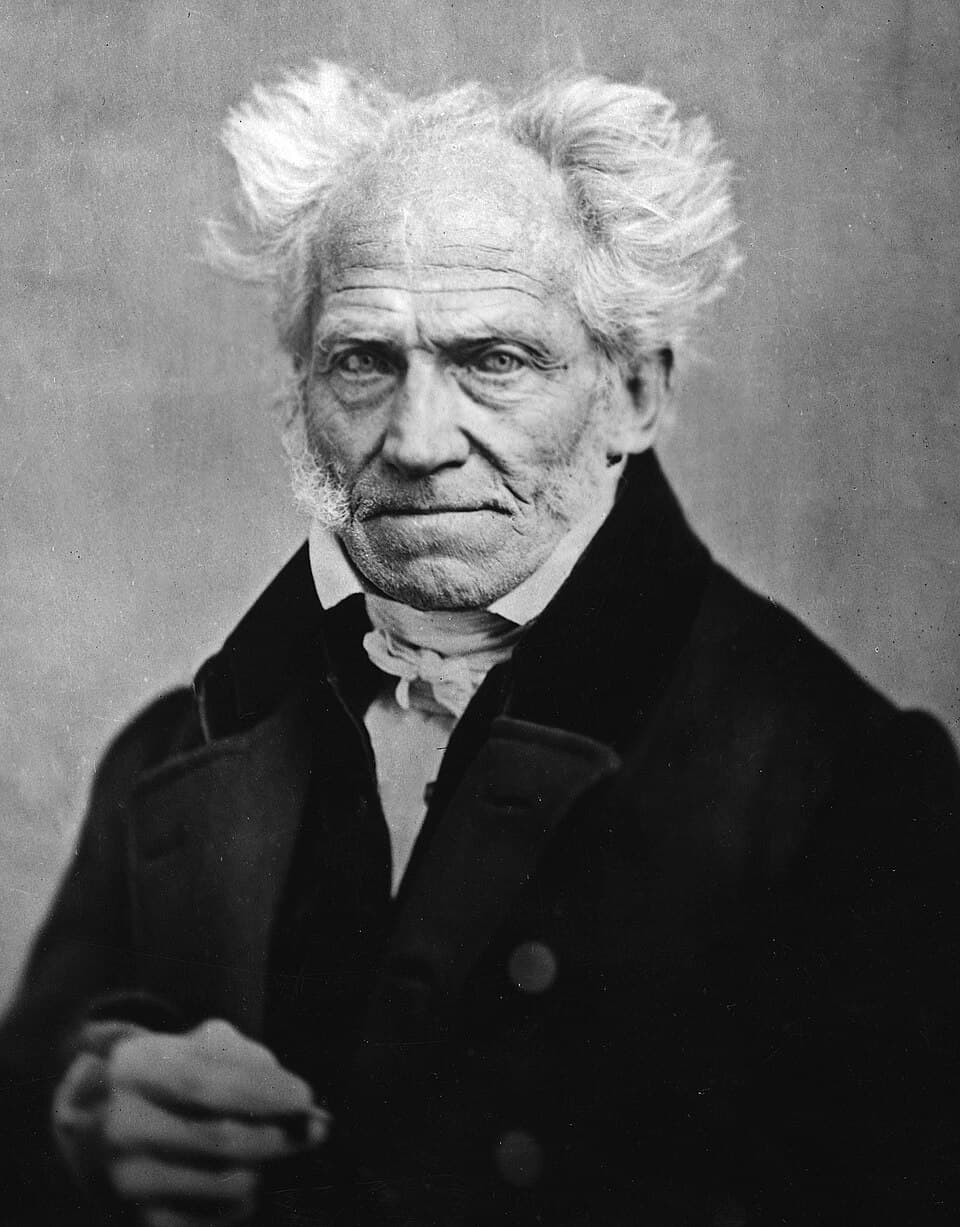
Arthur Schopenhauer
The Wisdom of Life

This passage suggests that the wise individual prioritizes independence and leisure above all else, as these allow them to cultivate their internal sources of happiness without relying on the external world.

...ived for twenty years in the deepest solitude in Holland, and, apart from report, was known to her only by a single essay: M. Descartes, she said, is the happiest of men, and his condition seems to me much to be envied.[1] Of course, as was the case with Descartes, external circumstances must be favorable enough to allow a man to be master of his life and happiness; or, as we read in Ecclesiastes[2]--Wisdom is good together with an inheritance, and profitable unto them that see the sun.
The man to whom nature and fate have granted the blessing of wisdom, will be most anxious and careful to keep open the fountains of happiness which he has in himself; and for this, independence and leisure are necessary. To obtain them, he will be willing to moderate his desires and harbor his resources, all the more because he is not, like others, restricted to the external world for his pleasures.
So he will not be misled by expectations of office, or money, or the favor and applause of his fellowmen, into surrendering himself in order to conform to low desires and vulgar tastes; nay, in such a case he will follow the advice that Horace gives in his epistle to Maecenas.[3] [Footnote 1: Vie de Descartes, par Baillet. Liv. vii., ch. 10.] [Footnote 2: vii. 12.] [Footnote 3: Lib. 1., ep. 7.] Nec somnum plebis laudo, satur altilium, nec Otia divitiis Arabum liberrima muto. It is...
3
Leisure's True Test
Arthur Schopenhauer
The Wisdom of Life

The author argues that leisure is only valuable to those with inner resources; for the empty-minded, it becomes a source of unbearable boredom.

...every kind of trick and machination in order to win what belongs to another. And a habit of this sort, learnt at the card-table, strikes root and pushes its way into practical life; and in the affairs of every day a man gradually comes to regard meum and tuum in much the same light as cards, and to consider that he may use to the utmost whatever advantages he possesses, so long as he does not come within the arm of the law. Examples of what I mean are of daily occurrence in mercantile life.
Since, then, leisure is the flower, or rather the fruit, of existence, as it puts a man into possession of himself, those are happy indeed who possess something real in themselves. But what do you get from most people's leisure?--only a good-for-nothing fellow, who is terribly bored and a burden to himself.
Let us, therefore, rejoice, dear brethren, for we are not children of the bondwoman, but of the free. [Footnote 1: Translator's Note.--Card-playing to this extent is now, no doubt, a thing of the past, at any rate amongst the nations of northern Europe. The present fashion is rather in favor of a dilettante interest in art or literature.] Further, as no land is so well off as that which requires few imports, or none at all, so the happiest man is one who has enough in his own inner wealth...
4
The Inner Wealth
Arthur Schopenhauer
The Wisdom of Life

A reflection on how the intellectually wealthy individual requires only undisturbed leisure to develop their faculties and fulfill their destiny of perfecting their work.

...alth is the happiest; so true it is that the subjective concerns us more than the objective; for whatever the latter may be, it can work only indirectly, secondly, and through the medium of the former--a truth finely expressed by Lucian:-- [Greek: Aeloutos ho taes psychaes ploutus monos estin alaethaes Talla dechei ataen pleiona ton kteanon--][1] [Footnote 1: Epigrammata, 12.] the wealth of the soul is the only true wealth, for with all other riches comes a bane even greater than they.
The man of inner wealth wants nothing from outside but the negative gift of undisturbed leisure, to develop and mature his intellectual faculties, that is, to enjoy his wealth; in short, he wants permission to be himself, his whole life long, every day and every hour. If he is destined to impress the character of his mind upon a whole race, he has only one measure of happiness or unhappiness--to succeed or fail in perfecting his powers and completing his work. All else is of small consequence.
Accordingly, the greatest minds of all ages have set the highest value upon undisturbed leisure, as worth exactly as much as the man himself. Happiness appears to consist in leisure, says Aristotle;[1] and Diogenes Laertius reports that Socrates praised leisure as the fairest of all possessions. So, in the Nichomachean Ethics, Aristotle concludes that a life devoted to philosophy is the happiest; or, as he says in the _Politics,[2] the free exercise of any power, whatever it may be, is ha...
2
The Talent's True Joy
Arthur Schopenhauer
The Wisdom of Life

The author identifies the exercise of innate talent as the highest form of happiness, yet laments that most people are denied the leisure required for such pursuits due to the necessity of labor.

...pon undisturbed leisure, as worth exactly as much as the man himself. Happiness appears to consist in leisure, says Aristotle;[1] and Diogenes Laertius reports that Socrates praised leisure as the fairest of all possessions. So, in the Nichomachean Ethics, Aristotle concludes that a life devoted to philosophy is the happiest; or, as he says in the Politics,[2] the free exercise of any power, whatever it may be, is happiness. This again, tallies with what Goethe says in _Wilhelm Meister:
The man who is born with a talent which he is meant to use, finds his greatest happiness in using it_. [Footnote 1: Eth. Nichom. x. 7.] [Footnote 2: iv. 11.] But to be in possession of undisturbed leisure, is far from being the common lot; nay, it is something alien to human nature, for the ordinary man's destiny is to spend life in procuring what is necessary for the subsistence of himself and his family;
he is a son of struggle and need, not a free intelligence. So people as a rule soon get tired of undisturbed leisure, and it becomes burdensome if there are no fictitious and forced aims to occupy it, play, pastime and hobbies of every kind. For this very reason it is full of possible danger, and difficilis in otio quies is a true saying,--it is difficult to keep quiet if you have nothing to do. On the other hand, a measure of intellect far surpassing the ordinary, is as unnatural as it is ab...
6
Leisure's Wasted Yield
Arthur Schopenhauer
The Wisdom of Life

A vision of leisure as the highest fruit of existence, though the author laments that for most people, free time results only in boredom due to a lack of intellectual depth.

...on one side and vulgarity on the other. It is said that the most sociable of all people are the negroes; and they are at the bottom of the scale in intellect. I remember reading once in a French paper[2] that the blacks in North America, whether free or enslaved, are fond of shutting themselves up in large numbers in the smallest space, because they cannot have too much of one another's snub-nosed company. [Footnote 1: Ecclesiasticus, xxii. 11.] [Footnote 2: Le Commerce, Oct. 19th, 1837.]
The brain may be regarded as a kind of parasite of the organism, a pensioner, as it were, who dwells with the body: and leisure, that is, the time one has for the free enjoyment of one's consciousness or individuality, is the fruit or produce of the rest of existence, which is in general only labor and effort. But what does most people's leisure yield?--boredom and dullness; except, of course, when it is occupied with sensual pleasure or folly. How little such leisure is worth may be seen in the way in which it is spent: and, as Ariosto observes, how miserable are the idle hours of ignorant men!--ozio lungo d'uomini ignoranti.
Ordinary people think merely how they shall spend their time; a man of any talent tries to use it. The reason why people of limited intellect are apt to be bored is that their intellect is absolutely nothing more than the means by which the motive power of the will is put into force: and whenever there is nothing particular to set the will in motion, it rests, and their intellect takes a holiday, because, equally with the will, it requires something external to bring it into play. The resul...
2