Duel as Divine Judgment
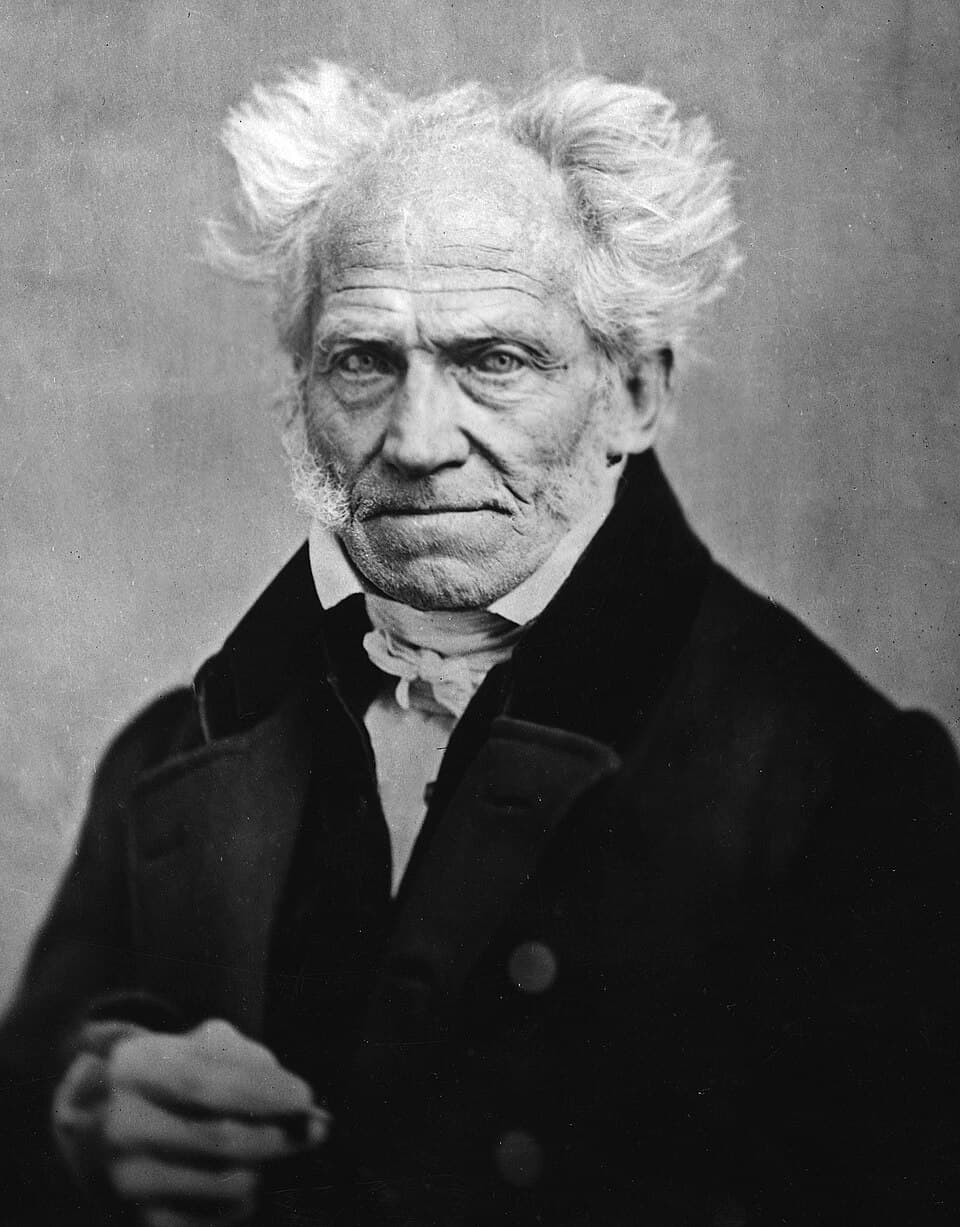
Arthur Schopenhauer
The Wisdom of Life

A historical thesis comparing ancient heroism to the modern duel, arguing that the latter is a superstitious Christian evolution of gladiatorial combat rather than true honor.

...t his own honor, but not any other man's. To them, a blow was but a blow--and any horse or donkey could give a harder one--a blow which under certain circumstances might make a man angry and demand immediate vengeance; but it had nothing to do with honor. No one kept account of blows or insulting words, or of the satisfaction which was demanded or omitted to be demanded. Yet in personal bravery and contempt of death, the ancients were certainly not inferior to the nations of Christian Europe.
The Greeks and Romans were thorough heroes, if you like; but they knew nothing about point d'honneur. If they had any idea of a duel, it was totally unconnected with the life of the nobles; it was merely the exhibition of mercenary gladiators, slaves devoted to slaughter, condemned criminals, who, alternately with wild beasts, were set to butcher one another to make a Roman holiday. When Christianity was introduced, gladiatorial shows were done away with, and their place taken, in Christian times, by the duel, which was a way of settling difficulties by the Judgment of God.
If the gladiatorial fight was a cruel sacrifice to the prevailing desire for great spectacles, dueling is a cruel sacrifice to existing prejudices--a sacrifice, not of criminals, slaves and prisoners, but of the noble and the free.[1] [Footnote 1: Translator's Note. These and other remarks on dueling will no doubt wear a belated look to English readers; but they are hardly yet antiquated for most parts of the Continent.] There are a great many traits in the character of the ancients which...
4
Dissembling Anger
Arthur Schopenhauer
The Wisdom of Life

A reflection on the irrationality of the code of honor, suggesting that a man of true self-worth should remain indifferent to insults rather than resorting to the brutality of dueling.

...most terrible accusation which is perfectly baseless: so that a man who is quite sure that he has done nothing to deserve a reproach may treat it with contempt, and will be safe in doing so. The theory of honor demands that he shall show a susceptibility which he does not possess, and take bloody vengeance for insults which he cannot feel. A man must himself have but a poor opinion of his own worth who hastens to prevent the utterance of an unfavorable opinion by giving his enemy a black eye.
True appreciation of his own value will make a man really indifferent to insult; but if he cannot help resenting it, a little shrewdness and culture will enable him to save appearances and dissemble his anger. If he could only get rid of this superstition about honor--the idea, I mean, that it disappears when you are insulted, and can be restored by returning the insult; if we could only stop people from thinking that wrong, brutality and insolence can be legalized by expressing readiness to give satisfaction, that is, to fight in defence of it, we should all soon come to the general opinion that insult and depreciation are like a battle in which the loser wins;
and that, as Vincenzo Monti says, abuse resembles a church-procession, because it always returns to the point from which it set out. If we could only get people to look upon insult in this light, we should no longer have to say something rude in order to prove that we are in the right. Now, unfortunately, if we want to take a serious view of any question, we have first of all to consider whether it will not give offence in some way or other to the dullard, who generally shows alarm and resentme...
2
Honor's Double-Edged Sword
Arthur Schopenhauer
The Wisdom of Life

The author argues that while the sense of honor can promote social welfare, it is detrimental to individual happiness and should be tempered to maintain peace of mind.

...ome, if the matter is one on which he prides himself. If only other people will applaud him, a man may console himself for downright misfortune or for the pittance he gets from the two sources of human happiness already discussed: and conversely, it is astonishing how infallibly a man will be annoyed, and in some cases deeply pained, by any wrong done to his feeling of self-importance, whatever be the nature, degree, or circumstances of the injury, or by any depreciation, slight, or disregard.
If the feeling of honor rests upon this peculiarity of human nature, it may have a very salutary effect upon the welfare of a great many people, as a substitute for morality; but upon their happiness, more especially upon that peace of mind and independence which are so essential to happiness, its effect will be disturbing and prejudicial rather than salutary. Therefore it is advisable, from our point of view, to set limits to this weakness, and duly to consider and rightly to estimate the relative value of advantages, and thus temper, as far as possible, this great susceptibility to other people's opinion, whether the opinion be one…
Otherwise, a man is the slave of what other people are pleased to think,--and how little it requires to disconcert or soothe the mind that is greedy of praise: Sic leve, sic parvum est, animum quod laudis avarum Subruit ac reficit.[1] [Footnote 1: Horace, Epist: II., 1, 180.] Therefore it will very much conduce to our happiness if we duly compare the value of what a man is in and for himself with what he is in the eyes of others. Under the former conies everything that fills up the spa...
Continue reading →
6
Honor at Mercy
Arthur Schopenhauer
The Wisdom of Life

The author critiques a form of honor that is fragile and dependent on the actions of others, placing one's reputation at the mercy of any potential antagonist.

...s proof of what I say, namely, that knightly honor depends, not upon what people think, but upon what they say, is furnished by the fact that insults can be withdrawn, or, if necessary, form the subject of an apology, which makes them as though they had never been uttered. Whether the opinion which underlays the expression has also been rectified, and why the expression should ever have been used, are questions which are perfectly unimportant: so long as the statement is withdrawn, all is well.
The truth is that conduct of this kind aims, not at earning respect, but at extorting it. (2.) In the second place, this sort of honor rests, not on what a man does, but on what he suffers, the obstacles he encounters; differing from the honor which prevails in all else, in consisting, not in what he says or does himself, but in what another man says or does. His honor is thus at the mercy of every man who can talk it away on the tip of his tongue; and if he attacks it, in a moment it is gone for ever,--unless the man who is attacked manages to wrest it back again by a process which I shall mention presently, a process which involves danger…
A man's whole conduct may be in accordance with the most righteous and noble principles, his spirit may be the purest that ever breathed, his intellect of the very highest order; and yet his honor may disappear the moment that anyone is pleased to insult him, anyone at all who has not offended against this code of honor himself, let him be the most worthless rascal or the most stupid beast, an idler, gambler, debtor, a man, in short, of no account at all. It is usually this sort of fellow who l...
Continue reading →
3
Recognize Opinion's Folly
Arthur Schopenhauer
The Wisdom of Life

A prescription to end the folly of vanity by recognizing that most public opinion is false or absurd and that honor has only an indirect value in one's life.

...the most part in peace of mind and contentment, would be served by nothing so much as by reducing this impulse of human nature within reasonable limits,--which would perhaps make it one fiftieth part of what it is now. By doing so, we should get rid of a thorn in the flesh which is always causing us pain. But it is a very difficult task, because the impulse in question is a natural and innate perversity of human nature. Tacitus says, The lust of fame is the last that a wise man shakes off[1]
The only way of putting an end to this universal folly is to see clearly that it is a folly; and this may be done by recognizing the fact that most of the opinions in men's heads are apt to be false, perverse, erroneous and absurd, and so in themselves unworthy of attention; further, that other people's opinions can have very little real and positive influence upon us in most of the circumstances and affairs of life. Again, this opinion is generally of such an unfavorable character that it would worry a man to death to hear everything that was said of him, or the tone in which he was spoken of. And finally, among other things, we should be…
If people were generally converted from this universal folly, the result would be such an addition to our piece of mind and cheerfulness as at present seems inconceivable; people would present a firmer and more confident front to the world, and generally behave with less embarrassment and restraint. It is observable that a retired mode of life has an exceedingly beneficial influence on our peace of mind, and this is mainly because we thus escape having to live constantly in the sight of others,...
Continue reading →
2