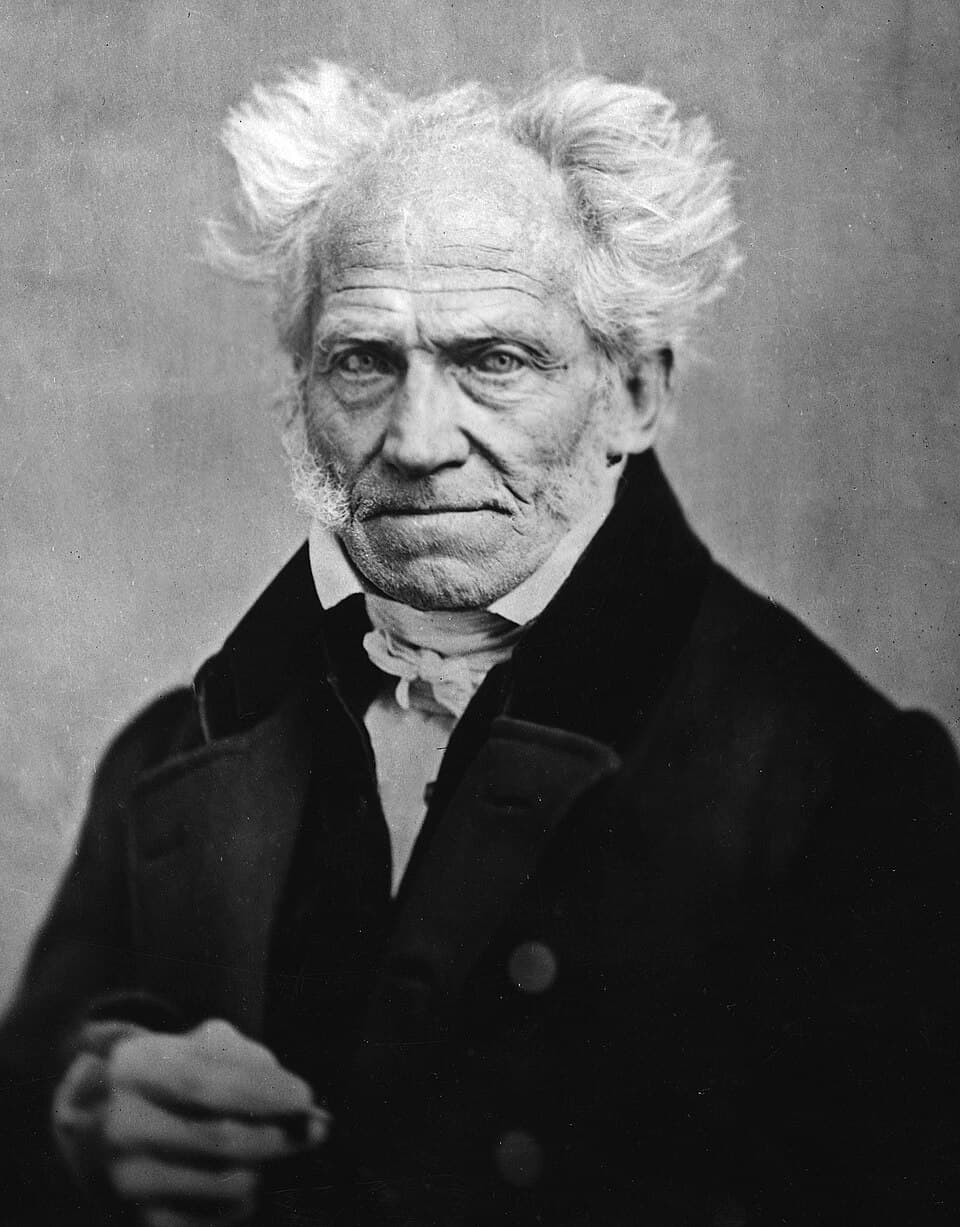
Inner Poverty
Arthur Schopenhauer
The Wisdom of Life

The author concludes that internal character is the primary factor in happiness, explaining why the wealthy are often as miserable as the poor.

...m inaccessible, and he tries in vain to replace them by the fleeting pleasures of sense in which he indulges, lasting but a brief hour and at tremendous cost. And if he is lucky, his struggles result in his having a really great pile of gold, which he leaves to his heir, either to make it still larger, or to squander it in extravagance. A life like this, though pursued with a sense of earnestness and an air of importance, is just as silly as many another which has a fool's cap for its symbol.
What a man has in himself is, then, the chief element in his happiness. Because this is, as a rule, so very little, most of those who are placed beyond the struggle with penury feel at bottom quite as unhappy as those who are still engaged in it.
Their minds are vacant, their imagination dull, their spirits poor, and so they are driven to the company of those like them--for similis simili gaudet--where they make common pursuit of pastime and entertainment, consisting for the most part in sensual pleasure, amusement of every kind, and finally, in excess and libertinism. A young man of rich family enters upon life with a large patrimony, and often runs through it in an incredibly short space of time, in vicious extravagance; and why? Si...
4
The Vanity Reflex
Arthur Schopenhauer
The Wisdom of Life

A reflection on the human weakness of overvaluing the opinions of others, noting how easily vanity is stoked by even the most transparently false praise.

...Haud facile emergunt quorum virtutibus obstat Res angusta domi-- is more applicable to a career of art and literature than to a political and social ambition. Wife and children I have not reckoned amongst a man's possessions: he is rather in their possession. It would be easier to include friends under that head; but a man's friends belong to him not a whit more than he belongs to them. CHAPTER IV. POSITION, OR A MAN'S PLACE IN THE ESTIMATION OF OTHERS. Section 1.--Reputation.
By a peculiar weakness of human nature, people generally think too much about the opinion which others form of them; although the slightest reflection will show that this opinion, whatever it may be, is not in itself essential to happiness. Therefore it is hard to understand why everybody feels so very pleased when he sees that other people have a good opinion of him, or say anything flattering to his vanity. If you stroke a cat, it will purr; and, as inevitably, if you praise a man, a sweet expression of delight will appear on his face; and even though the praise is a palpable lie, it will be welcome, if the matter is one on which he prides himself.
If only other people will applaud him, a man may console himself for downright misfortune or for the pittance he gets from the two sources of human happiness already discussed: and conversely, it is astonishing how infallibly a man will be annoyed, and in some cases deeply pained, by any wrong done to his feeling of self-importance, whatever be the nature, degree, or circumstances of the injury, or by any depreciation, slight, or disregard. If the feeling of honor rests upon this peculiarity o...
2
The Self-Colored Lens
Arthur Schopenhauer
The Wisdom of Life

The author argues that a person's own individuality is the primary factor in their enjoyment, as one's internal state colors every external experience and pleasure.

...e elect: whilst only fools will prefer rank to property. The second and third classes, moreover, are reciprocally cause and effect; so far, that is, as Petronius' maxim, habes habeberis, is true; and conversely, the favor of others, in all its forms, often puts us in the way of getting what we want. CHAPTER II. PERSONALITY, OR WHAT A MAN IS. We have already seen, in general, that what a man is contributes much more to his happiness than what he has, or how he is regarded by others.
What a man is, and so what he has in his own person, is always the chief thing to consider; for his individuality accompanies him always and everywhere, and gives its color to all his experiences. In every kind of enjoyment, for instance, the pleasure depends principally upon the man himself. Every one admits this in regard to physical, and how much truer it is of intellectual, pleasure. When we use that English expression, "to enjoy one's self," we are employing a very striking and appropriate phrase; for observe--one says, not "he enjoys Paris," but "he enjoys himself in Paris." To a man possessed of an ill-conditioned individuality, all…
Therefore, in the blessings as well as in the ills of life, less depends upon what befalls us than upon the way in which it is met, that is, upon the kind and degree of our general susceptibility. What a man is and has in himself,--in a word personality, with all it entails, is the only immediate and direct factor in his happiness and welfare. All else is mediate and indirect, and its influence can be neutralized and frustrated; but the influence of personality never. This is why the envy which...
Continue reading →
4
Pleasure in Power
Arthur Schopenhauer
The Wisdom of Life

The author asserts that the highest pleasures are derived from the exercise of one's noblest powers, particularly the sensibility that distinguishes humans from animals.

...milar athletic pursuits, which sometimes take the form of sport, and sometimes of a military life and real warfare. Thirdly, there are the pleasures of sensibility, such as observation, thought, feeling, or a taste for poetry or culture, music, learning, reading, meditation, invention, philosophy and the like. As regards the value, relative worth and duration of each of these kinds of pleasure, a great deal might be said, which, however, I leave the reader to supply. But every one will see that
The nobler the power which is brought into play, the greater will be the pleasure which it gives; for pleasure always involves the use of one's own powers, and happiness consists in a frequent repetition of pleasure. No one will deny that in this respect the pleasures of sensibility occupy a higher place than either of the other two fundamental kinds; which exist in an equal, nay, in a greater degree in brutes; it is this preponderating amount of sensibility which distinguishes man from other animals.
Now, our mental powers are forms of sensibility, and therefore a preponderating amount of it makes us capable of that kind of pleasure which has to do with mind, so-called intellectual pleasure; and the more sensibility predominates, the greater the pleasure will be.[1] [Footnote 1: Nature exhibits a continual progress, starting from the mechanical and chemical activity of the inorganic world, proceeding to the vegetable, with its dull enjoyment of self, from that to the animal world, where in...
6
Personality's Implacable Influence
Arthur Schopenhauer
The Wisdom of Life

A thesis asserting that personality is the only direct factor in happiness, as it is a constant element of consciousness that cannot be neutralized by external changes.

...glish expression, "to enjoy one's self," we are employing a very striking and appropriate phrase; for observe--one says, not "he enjoys Paris," but "he enjoys himself in Paris." To a man possessed of an ill-conditioned individuality, all pleasure is like delicate wine in a mouth made bitter with gall. Therefore, in the blessings as well as in the ills of life, less depends upon what befalls us than upon the way in which it is met, that is, upon the kind and degree of our general susceptibility.
What a man is and has in himself,--in a word personality, with all it entails, is the only immediate and direct factor in his happiness and welfare. All else is mediate and indirect, and its influence can be neutralized and frustrated; but the influence of personality never. This is why the envy which personal qualities excite is the most implacable of all,--as it is also the most carefully dissembled. Further, the constitution of our consciousness is the ever present and lasting element in all we do or suffer; our individuality is persistently at work, more or less, at every moment of our life: all other influences are temporal, incidental, fleeting, and subject to every kind of chance and change.
This is why Aristotle says: It is not wealth but character that lasts.[1] [Greek: --hae gar phusis bebion ou ta chraemata] [Footnote 1: Eth. Eud., vii. 2. 37:] And just for the same reason we can more easily bear a misfortune which comes to us entirely from without, than one which we have drawn upon ourselves; for fortune may always change, but not character. Therefore, subjective blessings,--a noble nature, a capable head, a joyful temperament, bright spirits, a well-constituted, perfec...
2