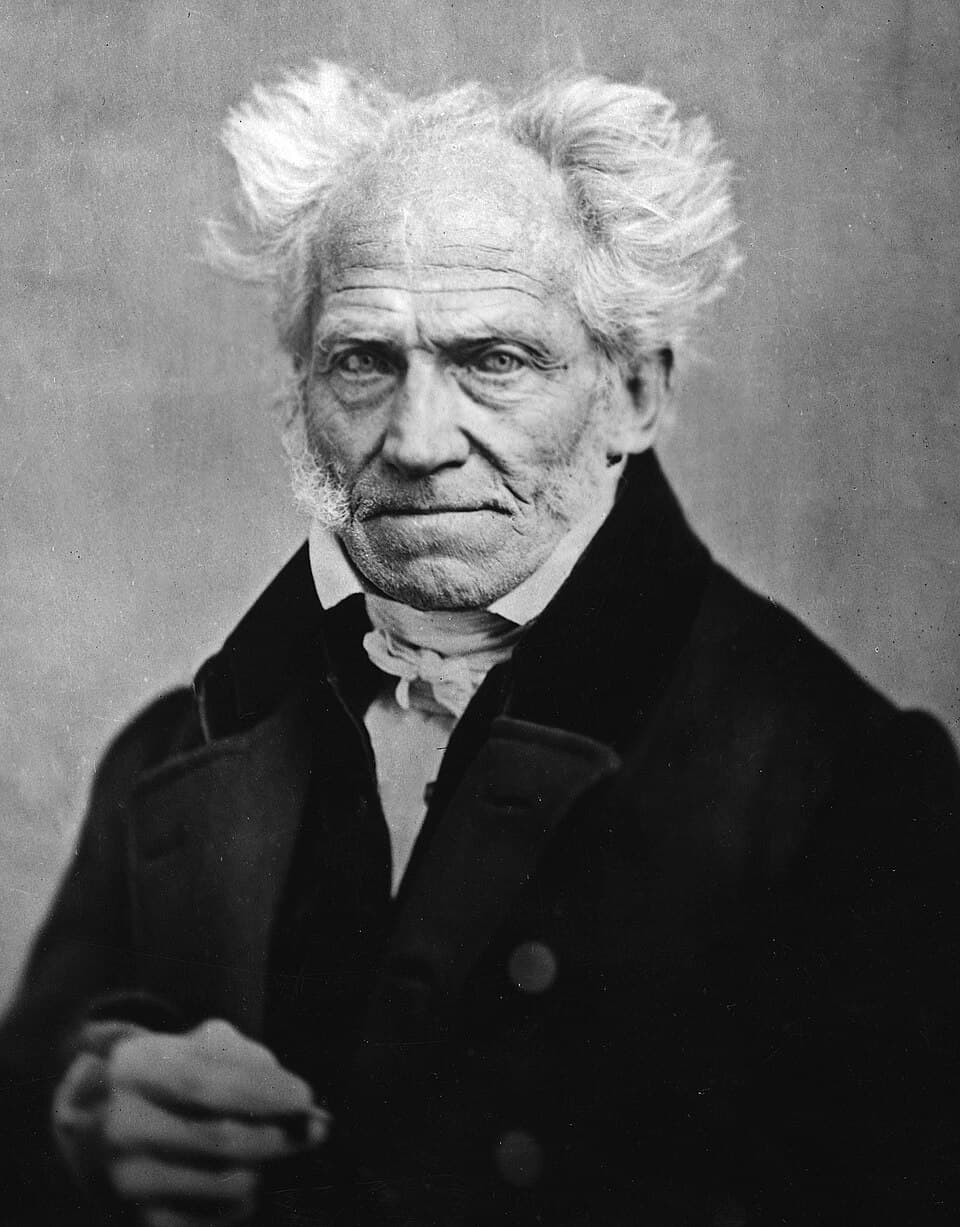
The author distinguishes between honor and fame, noting that fame is achieved through either great actions of the heart or great works of the mind.
Two Paths to Fame
Arthur Schopenhauer
The Wisdom of Life...e, there are many sorts of fame, some of which last but a day. Honor is concerned merely with such qualities as everyone may be expected to show under similar circumstances; fame only of those which cannot be required of any man. Honor is of qualities which everyone has a right to attribute to himself; fame only of those which should be left to others to attribute. Whilst our honor extends as far as people have knowledge of us; fame runs in advance, and makes us known wherever it finds its way.
Everyone can make a claim to honor; very few to fame, as being attainable only in virtue of extraordinary achievements. These achievements may be of two kinds, either actions or works; and so to fame there are two paths open. On the path of actions, a great heart is the chief recommendation; on that of works, a great head.
Each of the two paths has its own peculiar advantages and detriments; and the chief difference between them is that actions are fleeting, while works remain. The influence of an action, be it never so noble, can last but a short time; but a work of genius is a living influence, beneficial and ennobling throughout the ages. All that can remain of actions is a memory, and that becomes weak and disfigured by time--a matter of indifference to us, until at last it is extinguished altogether; unless,...
5
⚖Posthumous Fame's Silence

Arthur Schopenhauer
The Wisdom of LifeA reflection on how posthumous fame is a byproduct of a life well-lived, where the true reward was the intellectual freedom and passion the individual enjoyed while creating their work.
...stratum of which fame is the outward and visible sign. False fame must often put its possessor out of conceit with himself; for the time may come when, in spite of the illusions borne of self-love, he will feel giddy on the heights which he was never meant to climb, or look upon himself as spurious coin; and in the anguish of threatened discovery and well-merited degradation, he will read the sentence of posterity on the foreheads of the wise--like a man who owes his property to a forged will.
The truest fame, the fame that comes after death, is never heard of by its recipient; and yet he is called a happy man. His happiness lay both in the possession of those great qualities which won him fame, and in the opportunity that was granted him of developing them--the leisure he had to act as he pleased, to dedicate himself to his favorite pursuits. It is only work done from the heart that ever gains the laurel.
Greatness of soul, or wealth of intellect, is what makes a man happy--intellect, such as, when stamped on its productions, will receive the admiration of centuries to come,--thoughts which make him happy at the time, and will in their turn be a source of study and delight to the noblest minds of the most remote posterity. The value of posthumous fame lies in deserving it; and this is its own reward. Whether works destined to fame attain it in the lifetime of their author is a chance affair, of...
2
⚖Honor vs Fame

Arthur Schopenhauer
The Wisdom of LifeThe author distinguishes between honor and fame, defining honor as a negative quality that must simply be maintained, whereas fame is a positive achievement that must be actively won.
...at people will suppose that he has done so only for the sake of being brief. Civic honor draws its existence and name from the middle classes; but it applies equally to all, not excepting the highest. No man can disregard it, and it is a very serious thing, of which every one should be careful not to make light. The man who breaks confidence has for ever forfeited confidence, whatever he may do, and whoever he may be; and the bitter consequences of the loss of confidence can never be averted.
There is a sense in which honor may be said to have a negative character in opposition to the positive character of fame. For honor is not the opinion people have of particular qualities which a man may happen to possess exclusively: it is rather the opinion they have of the qualities which a man may be expected to exhibit, and to which he should not prove false. Honor, therefore, means that a man is not exceptional; fame, that he is. Fame is something which must be won; honor, only something which must not be lost. The absence of fame is obscurity, which is only a negative; but loss of honor is shame, which is a positive quality.
This negative character of honor must not be confused with anything passive; for honor is above all things active in its working. It is the only quality which proceeds directly from the man who exhibits it; it is concerned entirely with what he does and leaves undone, and has nothing to do with the actions of others or the obstacles they place in his way. It is something entirely in our own power--[Greek: ton ephaemon]. This distinction, as we shall see presently, marks off true honor from...
4
⚖Fame's Paradoxical Pursuit

Arthur Schopenhauer
The Wisdom of LifeThis prescription advises that those seeking to create genuine work must ignore the fickle opinions of the masses, as true fame naturally follows those who prioritize excellence over contemporary approval.
...f all in the case of philosophical works, because the result at which they aim is rather vague, and, at the same time, useless from a material point of view; they appeal chiefly to readers who are working on the same lines themselves. It is clear, then, from what I have said as to the difficulty of winning fame, that those who labor, not out of love for their subject, nor from pleasure in pursuing it, but under the stimulus of ambition, rarely or never leave mankind a legacy of immortal works.
The man who seeks to do what is good and genuine, must avoid what is bad, and be ready to defy the opinions of the mob, nay, even to despise it and its misleaders. Hence the truth of the remark, (especially insisted upon by Osorius de Gloria), that fame shuns those who seek it, and seeks those who shun it; for the one adapt themselves to the taste of their contemporaries, and the others work in defiance of it.
But, difficult though it be to acquire fame, it is an easy thing to keep when once acquired. Here, again, fame is in direct opposition to honor, with which everyone is presumably to be accredited. Honor has not to be won; it must only not be lost. But there lies the difficulty! For by a single unworthy action, it is gone irretrievably. But fame, in the proper sense of the word, can never disappear; for the action or work by which it was acquired can never be undone; and fame attaches to its au...
4
⚖Fame's Vanishing Value

Arthur Schopenhauer
The Wisdom of LifeThe author posits that fame is merely a relative value based on comparison, whereas the true source of happiness is the direct possession of a great heart or mind.
...n's work; not to speak of the kind of fame which Hegel enjoyed, and which Lichtenberg describes as trumpeted forth by a clique of admiring undergraduates--the resounding echo of empty heads;--such a fame as will make posterity smile when it lights upon a grotesque architecture of words, a fine nest with the birds long ago flown; it will knock at the door of this decayed structure of conventionalities and find it utterly empty!--not even a trace of thought there to invite the passer-by.
The truth is that fame means nothing but what a man is in comparison with others. It is essentially relative in character, and therefore only indirectly valuable; for it vanishes the moment other people become what the famous man is. Absolute value can be predicated only of what a man possesses under any and all circumstances,--here, what a man is directly and in himself. It is the possession of a great heart or a great head, and not the mere fame of it, which is worth having, and conducive to happiness.
Not fame, but that which deserves to be famous, is what a man should hold in esteem. This is, as it were, the true underlying substance, and fame is only an accident, affecting its subject chiefly as a kind of external symptom, which serves to confirm his own opinion of himself. Light is not visible unless it meets with something to reflect it; and talent is sure of itself only when its fame is noised abroad. But fame is not a certain symptom of merit; because you can have the one without the o...
4