Honor's Narrow Sphere
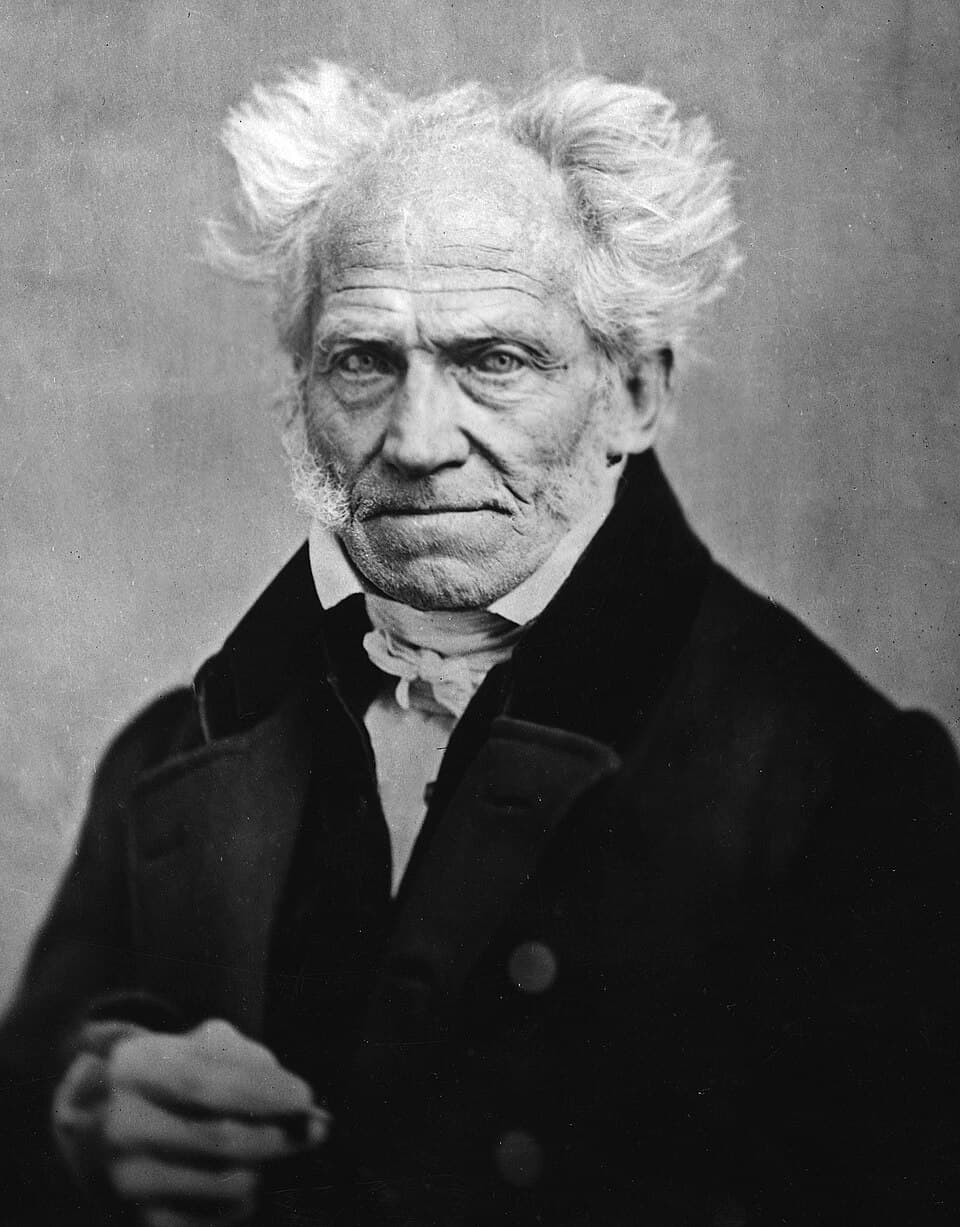
Arthur Schopenhauer
The Wisdom of Life

The author critiques the European code of honor as a localized, irrational social construct that was unknown to the great civilizations of antiquity and Asia.

...mes to the worst, it is easy to break even one's word of honor, and still remain honorable--again by adopting that universal remedy, the duel, and fighting with those who maintain that we pledged our word. Further, there is one debt, and one alone, that under no circumstances must be left unpaid--a gambling debt, which has accordingly been called a debt of honor. In all other kinds of debt you may cheat Jews and Christians as much as you like; and your knightly honor remains without a stain.
The unprejudiced reader will see at once that such a strange, savage and ridiculous code of honor as this has no foundation in human nature, nor any warrant in a healthy view of human affairs. The extremely narrow sphere of its operation serves only to intensify the feeling, which is exclusively confined to Europe since the Middle Age, and then only to the upper classes, officers and soldiers, and people who imitate them. Neither Greeks nor Romans knew anything of this code of honor or of its principles; nor the highly civilized nations of Asia, ancient or modern.
Amongst them no other kind of honor is recognized but that which I discussed first, in virtue of which a man is what he shows himself to be by his actions, not what any wagging tongue is pleased to say of him. They thought that what a man said or did might perhaps affect his own honor, but not any other man's. To them, a blow was but a blow--and any horse or donkey could give a harder one--a blow which under certain circumstances might make a man angry and demand immediate vengeance; but it had...
6
Avoid Imaginary Evils
Arthur Schopenhauer
The Wisdom of Life

A prescription against superstition, warning that we should not compound the world's genuine evils with imaginary misfortunes.

...t beats. Hence it is revolting to our sense of the fitness of things to hear, as we sometimes do, that one man bitten another; on the other hand, it is a natural and everyday occurrence for him to get blows or give them. It is intelligible enough that, as we become educated, we are glad to dispense with blows by a system of mutual restraint. But it is a cruel thing to compel a nation or a single class to regard a blow as an awful misfortune which must have death and murder for its consequences.
There are too many genuine evils in the world to allow of our increasing them by imaginary misfortunes, which brings real ones in their train: and yet this is the precise effect of the superstition, which thus proves itself at once stupid and malign.
It does not seem to me wise of governments and legislative bodies to promote any such folly by attempting to do away with flogging as a punishment in civil or military life. Their idea is that they are acting in the interests of humanity; but, in point of fact, they are doing just the opposite; for the abolition of flogging will serve only to strengthen this inhuman and abominable superstition, to which so many sacrifices have already been made. For all offences, except the worst, a beating is...
3
Motive Over Method
Arthur Schopenhauer
The Wisdom of Life

A moral argument against dueling, asserting that skill in combat provides no ethical justification for taking a life and is no more valid than murder by treachery.

...f which I have spoken, recognizes no other right than might, that is, the right of the stronger, and appeals to a Judgment of God as the basis of the whole code. For to kill a man in a fair fight, is to prove that you are superior to him in strength or skill; and to justify the deed, you must assume that the right of the stronger is really a right. But the truth is that, if my opponent is unable to defend himself, it gives me the possibility, but not by any means the right, of killing him.
The right, the moral justification, must depend entirely upon the motives which I have for taking his life. Even supposing that I have sufficient motive for taking a man's life, there is no reason why I should make his death depend upon whether I can shoot or fence better than he. In such a case, it is immaterial in what way I kill him, whether I attack him from the front or the rear. From a moral point of view, the right of the stronger is no more convincing than the right of the more skillful; and it is skill which is employed if you murder a a man treacherously.
Might and skill are in this case equally right; in a duel, for instance, both the one and the other come into play; for a feint is only another name for treachery. If I consider myself morally justified in taking a man's life, it is stupid of me to try first of all whether he can shoot or fence better than I; as, if he can, he will not only have wronged me, but have taken my life into the bargain. It is Rousseau's opinion that the proper way to avenge an insult is, not to fight a duel with you...
6
Honor's Two Faces
Arthur Schopenhauer
The Wisdom of Life

The author defines honor as the intersection of public opinion and self-respect, noting its role as a powerful, though not strictly moral, social influence.

...or distinguished service_; for every order ought to be for distinguished service. That stands to reason. Section 4.--Honor. Honor is a much larger question than rank, and more difficult to discuss. Let us begin by trying to define it. If I were to say Honor is external conscience, and conscience is inward honor, no doubt a good many people would assent; but there would be more show than reality about such a definition, and it would hardly go to the root of the matter. I prefer to say,
Honor is, on its objective side, other people's opinion of what we are worth; on its subjective side, it is the respect we pay to this opinion. From the latter point of view, to be a man of honor is to exercise what is often a very wholesome, but by no means a purely moral, influence. The feelings of honor and shame exist in every man who is not utterly depraved, and honor is everywhere recognized as something particularly valuable.
The reason of this is as follows. By and in himself a man can accomplish very little; he is like Robinson Crusoe on a desert island. It is only in society that a man's powers can be called into full activity. He very soon finds this out when his consciousness begins to develop, and there arises in him the desire to be looked upon as a useful member of society, as one, that is, who is capable of playing his part as a man--pro parte virili--thereby acquiring a right to the benefits of social li...
5
Courage's Subordinate Role
Arthur Schopenhauer
The Wisdom of Life

The author argues that personal courage is a minor virtue shared with animals, and that the concept of knightly honor often serves as a shield for rude and dishonest behavior.

...order, without any support from the bogey of knightly honor. It is true that women did not occupy that prominent place in ancient society which they hold now, when conversation has taken on a frivolous and trifling character, to the exclusion of that weighty discourse which distinguished the ancients. This change has certainly contributed a great deal to bring about the tendency, which is observable in good society now-a-days, to prefer personal courage to the possession of any other quality.
The fact is that personal courage is really a very subordinate virtue,--merely the distinguishing mark of a subaltern,--a virtue, indeed, in which we are surpassed by the lower animals; or else you would not hear people say, as brave as a lion. Far from being the pillar of society, knightly honor affords a sure asylum, in general for dishonesty and wickedness, and also for small incivilities, want of consideration and unmannerliness. Rude behavior is often passed over in silence because no one cares to risk his neck in correcting it.
After what I have said, it will not appear strange that the dueling system is carried to the highest pitch of sanguinary zeal precisely in that nation whose political and financial records show that they are not too honorable. What that nation is like in its private and domestic life, is a question which may be best put to those who are experienced in the matter. Their urbanity and social culture have long been conspicuous by their absence. There is no truth, then, in such pretexts. It can be...
6