The author describes high consciousness as nature's greatest achievement, providing a source of pleasure that requires only leisure to be fully enjoyed and refined.
Consciousness as Mirror
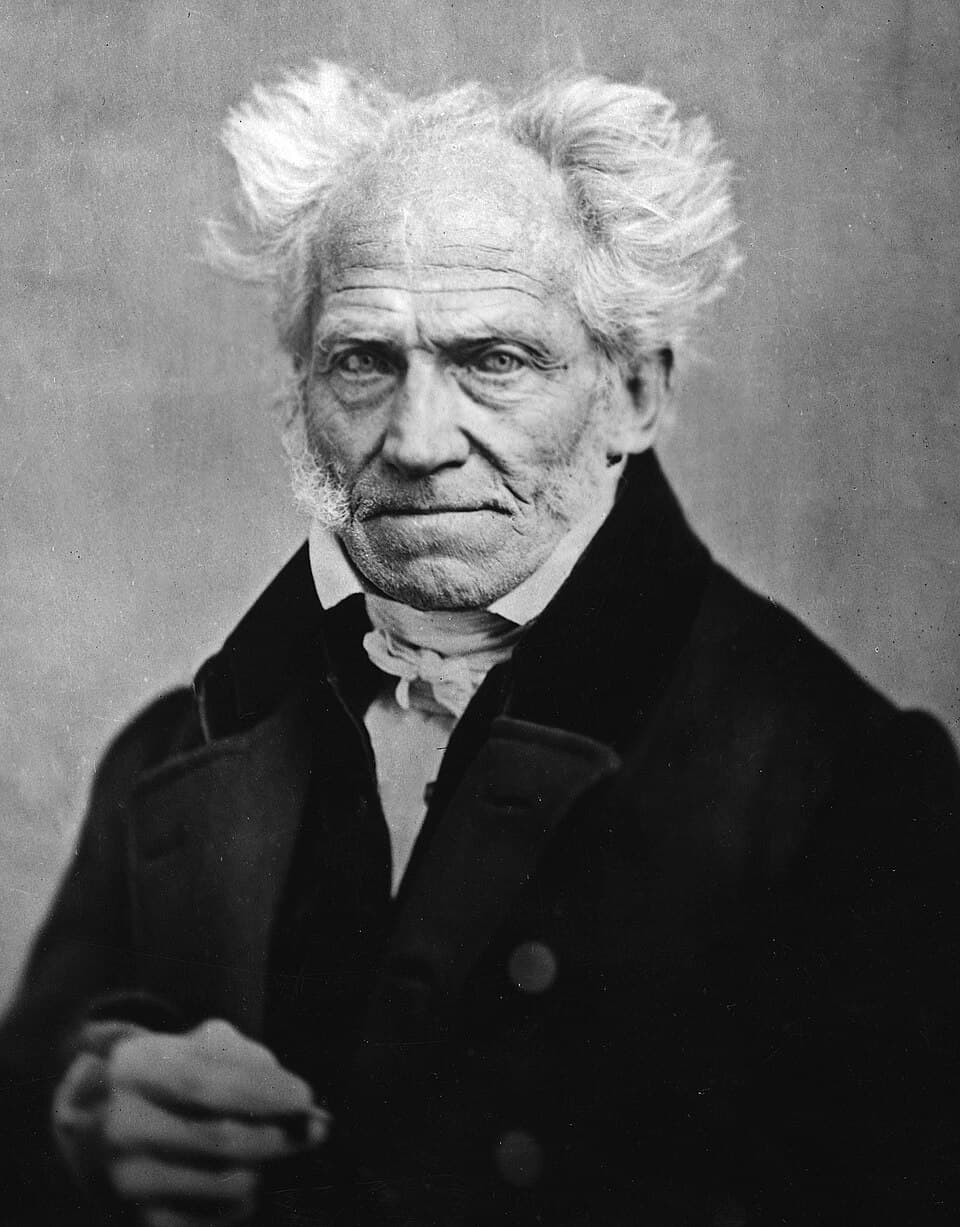
Arthur Schopenhauer
The Wisdom of Life...pment in man, whose intellect is Nature's crowning point, the goal of all her efforts, the most perfect and difficult of all her works. And even within the range of the human intellect, there are a great many observable differences of degree, and it is very seldom that intellect reaches its highest point, intelligence properly so-called, which in this narrow and strict sense of the word, is Nature's most consummate product, and so the rarest and most precious thing of which the world can boast.
The highest product of Nature is the clearest degree of consciousness, in which the world mirrors itself more plainly and completely than anywhere else. A man endowed with this form of intelligence is in possession of what is noblest and best on earth; and accordingly, he has a source of pleasure in comparison with which all others are small. From his surroundings he asks nothing but leisure for the free enjoyment of what he has got, time, as it were, to polish his diamond.
All other pleasures that are not of the intellect are of a lower kind; for they are, one and all, movements of will--desires, hopes, fears and ambitions, no matter to what directed: they are always satisfied at the cost of pain, and in the case of ambition, generally with more or less of illusion. With intellectual pleasure, on the other hand, truth becomes clearer and clearer. In the realm of intelligence pain has no power. Knowledge is all in all. Further, intellectual pleasures are accessibl...
2
⚖Personality's Implacable Influence

Arthur Schopenhauer
The Wisdom of LifeA thesis asserting that personality is the only direct factor in happiness, as it is a constant element of consciousness that cannot be neutralized by external changes.
...glish expression, "to enjoy one's self," we are employing a very striking and appropriate phrase; for observe--one says, not "he enjoys Paris," but "he enjoys himself in Paris." To a man possessed of an ill-conditioned individuality, all pleasure is like delicate wine in a mouth made bitter with gall. Therefore, in the blessings as well as in the ills of life, less depends upon what befalls us than upon the way in which it is met, that is, upon the kind and degree of our general susceptibility.
What a man is and has in himself,--in a word personality, with all it entails, is the only immediate and direct factor in his happiness and welfare. All else is mediate and indirect, and its influence can be neutralized and frustrated; but the influence of personality never. This is why the envy which personal qualities excite is the most implacable of all,--as it is also the most carefully dissembled. Further, the constitution of our consciousness is the ever present and lasting element in all we do or suffer; our individuality is persistently at work, more or less, at every moment of our life: all other influences are temporal, incidental, fleeting, and subject to every kind of chance and change.
This is why Aristotle says: It is not wealth but character that lasts.[1] [Greek: --hae gar phusis bebion ou ta chraemata] [Footnote 1: Eth. Eud., vii. 2. 37:] And just for the same reason we can more easily bear a misfortune which comes to us entirely from without, than one which we have drawn upon ourselves; for fortune may always change, but not character. Therefore, subjective blessings,--a noble nature, a capable head, a joyful temperament, bright spirits, a well-constituted, perfec...
2
⚖The Same Poor Player

Arthur Schopenhauer
The Wisdom of LifeThe author suggests that despite external differences in rank or wealth, all humans share the same inner reality of suffering and are limited by their own individual consciousness.
...r. When therefore the objective or external factor in an experience is actually the same, but the subjective or personal appreciation of it varies, the event is just as much a different one in the eyes of different persons as if the objective factors had not been alike; for to a blunt intelligence the fairest and best object in the world presents only a poor reality, and is therefore only poorly appreciated,--like a fine landscape in dull weather, or in the reflection of a bad camera obscura.
In plain language, every man is pent up within the limits of his own consciousness, and cannot directly get beyond those limits any more than he can get beyond his own skin; so external aid is not of much use to him. On the stage, one man is a prince, another a minister, a third a servant or a soldier or a general, and so on,--mere external differences: the inner reality, the kernel of all these appearances is the same--a poor player, with all the anxieties of his lot. In life it is just the same. Differences of rank and wealth give every man his part to play, but this by no means implies a difference of inward happiness and pleasure; here,…
Though these may, indeed, in every case proceed from dissimilar causes, they are in their essential nature much the same in all their forms, with degrees of intensity which vary, no doubt, but in no wise correspond to the part a man has to play, to the presence or absence of position and wealth. Since everything which exists or happens for a man exists only in his consciousness and happens for it alone, the most essential thing for a man is the constitution of this consciousness, which is in mo...
Continue reading →
2
⚖The Opinion Trap

Arthur Schopenhauer
The Wisdom of LifeThe author critiques the common tendency to prioritize the opinions of others over one's own consciousness, effectively mistaking a secondary reflection for reality.
...convenient instrument in the hands of those who have the control or direction of their fellowmen; and accordingly we find that in every scheme for training up humanity in the way it should go, the maintenance and strengthening of the feeling of honor occupies an important place. But it is quite a different matter in its effect on human happiness, of which it is here our object to treat; and we should rather be careful to dissuade people from setting too much store by what others think of them.
Daily experience shows us, however, that this is just the mistake people persist in making; most men set the utmost value precisely on what other people think, and are more concerned about it than about what goes on in their own consciousness, which is the thing most immediately and directly present to them. They reverse the natural order,--regarding the opinions of others as real existence and their own consciousness as something shadowy; making the derivative and secondary into the principal, and considering the picture they present to the world of more importance than their own selves.
By thus trying to get a direct and immediate result out of what has no really direct or immediate existence, they fall into the kind of folly which is called vanity--the appropriate term for that which has no solid or instrinsic value. Like a miser, such people forget the end in their eagerness to obtain the means. [Footnote 1: Scire tuum nihil est nisi te scire hoc sciat alter, (Persins i, 27)--knowledge is no use unless others know that you have it.] The truth is that the value we set u...
5
⚖Leisure's Wasted Yield

Arthur Schopenhauer
The Wisdom of LifeA vision of leisure as the highest fruit of existence, though the author laments that for most people, free time results only in boredom due to a lack of intellectual depth.
...on one side and vulgarity on the other. It is said that the most sociable of all people are the negroes; and they are at the bottom of the scale in intellect. I remember reading once in a French paper[2] that the blacks in North America, whether free or enslaved, are fond of shutting themselves up in large numbers in the smallest space, because they cannot have too much of one another's snub-nosed company. [Footnote 1: Ecclesiasticus, xxii. 11.] [Footnote 2: Le Commerce, Oct. 19th, 1837.]
The brain may be regarded as a kind of parasite of the organism, a pensioner, as it were, who dwells with the body: and leisure, that is, the time one has for the free enjoyment of one's consciousness or individuality, is the fruit or produce of the rest of existence, which is in general only labor and effort. But what does most people's leisure yield?--boredom and dullness; except, of course, when it is occupied with sensual pleasure or folly. How little such leisure is worth may be seen in the way in which it is spent: and, as Ariosto observes, how miserable are the idle hours of ignorant men!--ozio lungo d'uomini ignoranti.
Ordinary people think merely how they shall spend their time; a man of any talent tries to use it. The reason why people of limited intellect are apt to be bored is that their intellect is absolutely nothing more than the means by which the motive power of the will is put into force: and whenever there is nothing particular to set the will in motion, it rests, and their intellect takes a holiday, because, equally with the will, it requires something external to bring it into play. The resul...
2