This text posits that while external circumstances are subject to fate, a person's inner character remains constant, meaning one's experience of life is ultimately limited by the boundaries of their own individuality.
The Unchangeable Self
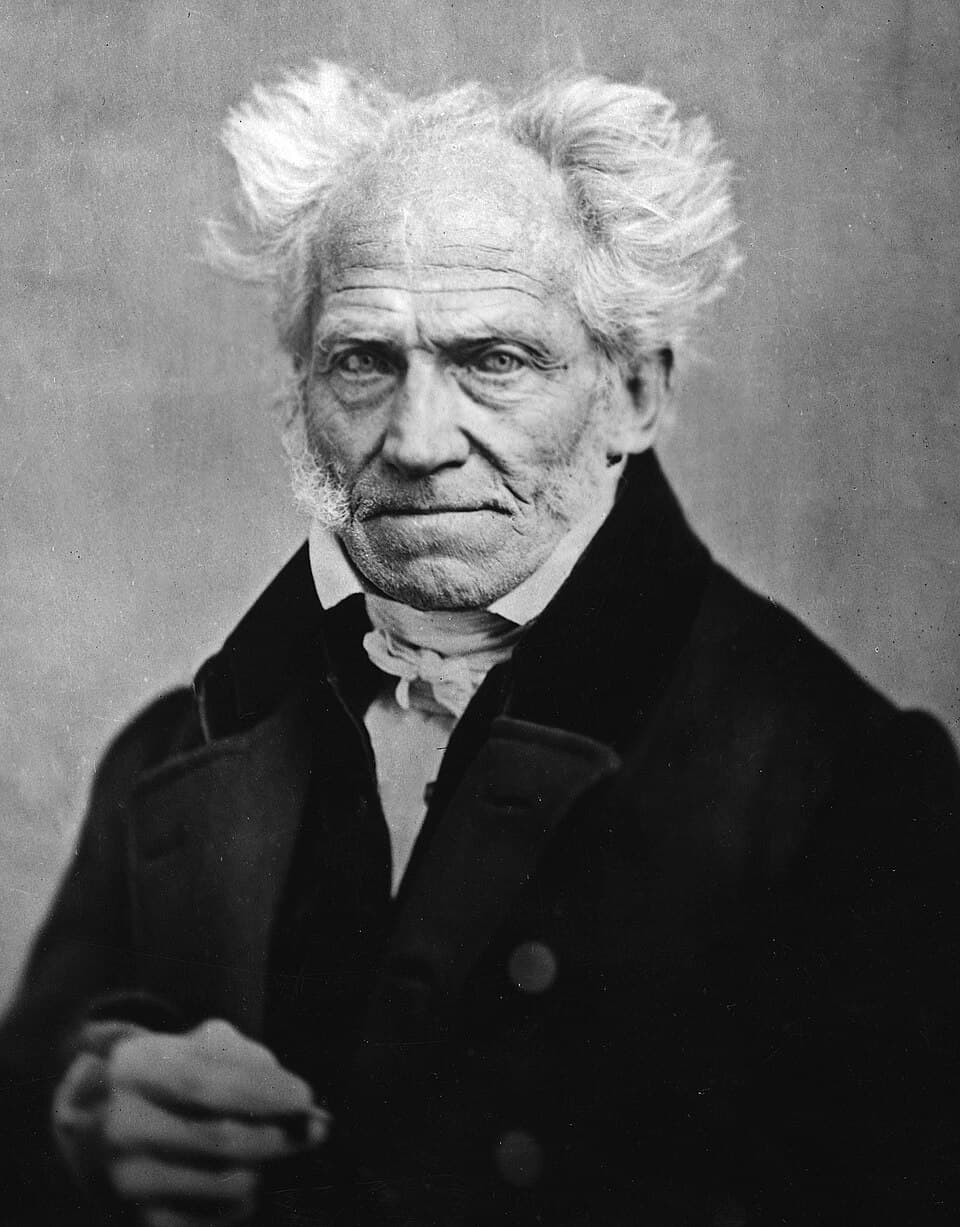
Arthur Schopenhauer
The Wisdom of Life...position and wealth. Since everything which exists or happens for a man exists only in his consciousness and happens for it alone, the most essential thing for a man is the constitution of this consciousness, which is in most cases far more important than the circumstances which go to form its contents. All the pride and pleasure of the world, mirrored in the dull consciousness of a fool, are poor indeed compared with the imagination of Cervantes writing his Don Quixote in a miserable prison.
The objective half of life and reality is in the hand of fate, and accordingly takes various forms in different cases: the subjective half is ourself, and in essentials is always remains the same. Hence the life of every man is stamped with the same character throughout, however much his external circumstances may alter; it is like a series of variations on a single theme. No one can get beyond his own individuality.
An animal, under whatever circumstances it is placed, remains within the narrow limits to which nature has irrevocably consigned it; so that our endeavors to make a pet happy must always keep within the compass of its nature, and be restricted to what it can feel. So it is with man; the measure of the happiness he can attain is determined beforehand by his individuality. More especially is this the case with the mental powers, which fix once for all his capacity for the higher kinds of pleasure...
6
⚖Solitude Reveals Self

Arthur Schopenhauer
The Wisdom of LifeA reflection on how solitude reveals a person's inner character, where the talented individual finds richness in thought while the fool suffers the burden of their own company.
...a high degree of intellect tends to make a man unsocial. True, if quality of intellect could be made up for by quantity, it might be worth while to live even in the great world; but unfortunately, a hundred fools together will not make one wise man. But the individual who stands at the other end of the scale is no sooner free from the pangs of need than he endeavors to get pastime and society at any cost, taking up with the first person he meets, and avoiding nothing so much as himself. For
In solitude, where every one is thrown upon his own resources, what a man has in himself comes to light; the fool in fine raiment groans under the burden of his miserable personality, a burden which he can never throw off, whilst the man of talent peoples the waste places with his animating thoughts. Seneca declares that folly is its own burden,--omnis stultitia laborat fastidio sui,--a very true saying, with which may be compared the words of Jesus, the son of Sirach, The life of a fool is worse than death.
And, as a rule, it will be found that a man is sociable just in the degree in which he is intellectually poor and generally vulgar. For one's choice in this world does not go much beyond solitude on one side and vulgarity on the other. It is said that the most sociable of all people are the negroes; and they are at the bottom of the scale in intellect. I remember reading once in a French paper[2] that the blacks in North America, whether free or enslaved, are fond of shutting themselves up in l...
2
⚖Innate Merit vs Privilege

Arthur Schopenhauer
The Wisdom of LifeThe author asserts that inherent personal qualities, such as intellectual and moral greatness, are fundamentally superior to the artificial distinctions of social rank and birth.
...is shown by their opinion of him; and their opinion is in its turn manifested by the honor in which he is held, and by his rank and reputation. The differences which come under the first head are those which Nature herself has set between man and man; and from this fact alone we may at once infer that they influence the happiness or unhappiness of mankind in a much more vital and radical way than those contained under the two following heads, which are merely the effect of human arrangements.
Compared with genuine personal advantages, such as a great mind or a great heart, all the privileges of rank or birth, even of royal birth, are but as kings on the stage, to kings in real life.
The same thing was said long ago by Metrodorus, the earliest disciple of Epicurus, who wrote as the title of one of his chapters, The happiness we receive from ourselves is greater than that which we obtain from our surroundings[1] And it is an obvious fact, which cannot be called in question, that the principal element in a man's well-being,--indeed, in the whole tenor of his existence,--is what he is made of, his inner constitution. For this is the immediate source of that inward satisfacti...
6
⚖Fame's Vanishing Value

Arthur Schopenhauer
The Wisdom of LifeThe author posits that fame is merely a relative value based on comparison, whereas the true source of happiness is the direct possession of a great heart or mind.
...n's work; not to speak of the kind of fame which Hegel enjoyed, and which Lichtenberg describes as trumpeted forth by a clique of admiring undergraduates--the resounding echo of empty heads;--such a fame as will make posterity smile when it lights upon a grotesque architecture of words, a fine nest with the birds long ago flown; it will knock at the door of this decayed structure of conventionalities and find it utterly empty!--not even a trace of thought there to invite the passer-by.
The truth is that fame means nothing but what a man is in comparison with others. It is essentially relative in character, and therefore only indirectly valuable; for it vanishes the moment other people become what the famous man is. Absolute value can be predicated only of what a man possesses under any and all circumstances,--here, what a man is directly and in himself. It is the possession of a great heart or a great head, and not the mere fame of it, which is worth having, and conducive to happiness.
Not fame, but that which deserves to be famous, is what a man should hold in esteem. This is, as it were, the true underlying substance, and fame is only an accident, affecting its subject chiefly as a kind of external symptom, which serves to confirm his own opinion of himself. Light is not visible unless it meets with something to reflect it; and talent is sure of itself only when its fame is noised abroad. But fame is not a certain symptom of merit; because you can have the one without the o...
4
⚖The Pessimist's Advantage

Arthur Schopenhauer
The Wisdom of LifeThe author suggests that people with a gloomy disposition suffer less from real misfortune because their constant pessimism prepares them for the world's disappointments.
...ice, should it be happy. On the other hand, the [Greek: eukolos] will neither worry nor fret over an unfavorable issue, but rejoice if it turns out well. If the one is successful in nine out of ten undertakings, he will not be pleased, but rather annoyed that one has miscarried; whilst the other, if only a single one succeeds, will manage to find consolation in the fact and remain cheerful. But here is another instance of the truth, that hardly any evil is entirely without its compensation; for
The misfortunes and sufferings which the [Greek: auskoloi], that is, people of gloomy and anxious character, have to overcome, are, on the whole, more imaginary and therefore less real than those which befall the gay and careless; for a man who paints everything black, who constantly fears the worst and takes measures accordingly, will not be disappointed so often in this world, as one who always looks upon the bright side of things.
And when a morbid affection of the nerves, or a derangement of the digestive organs, plays into the hands of an innate tendency to gloom, this tendency may reach such a height that permanent discomfort produces a weariness of life. So arises an inclination to suicide, which even the most trivial unpleasantness may actually bring about; nay, when the tendency attains its worst form, it may be occasioned by nothing in particular, but a man may resolve to put an end to his existence, simply becaus...
5