The author posits that an active intellectual life serves as a vital shield against the dangers, extravagances, and misery of boredom.
The Mind's Protection
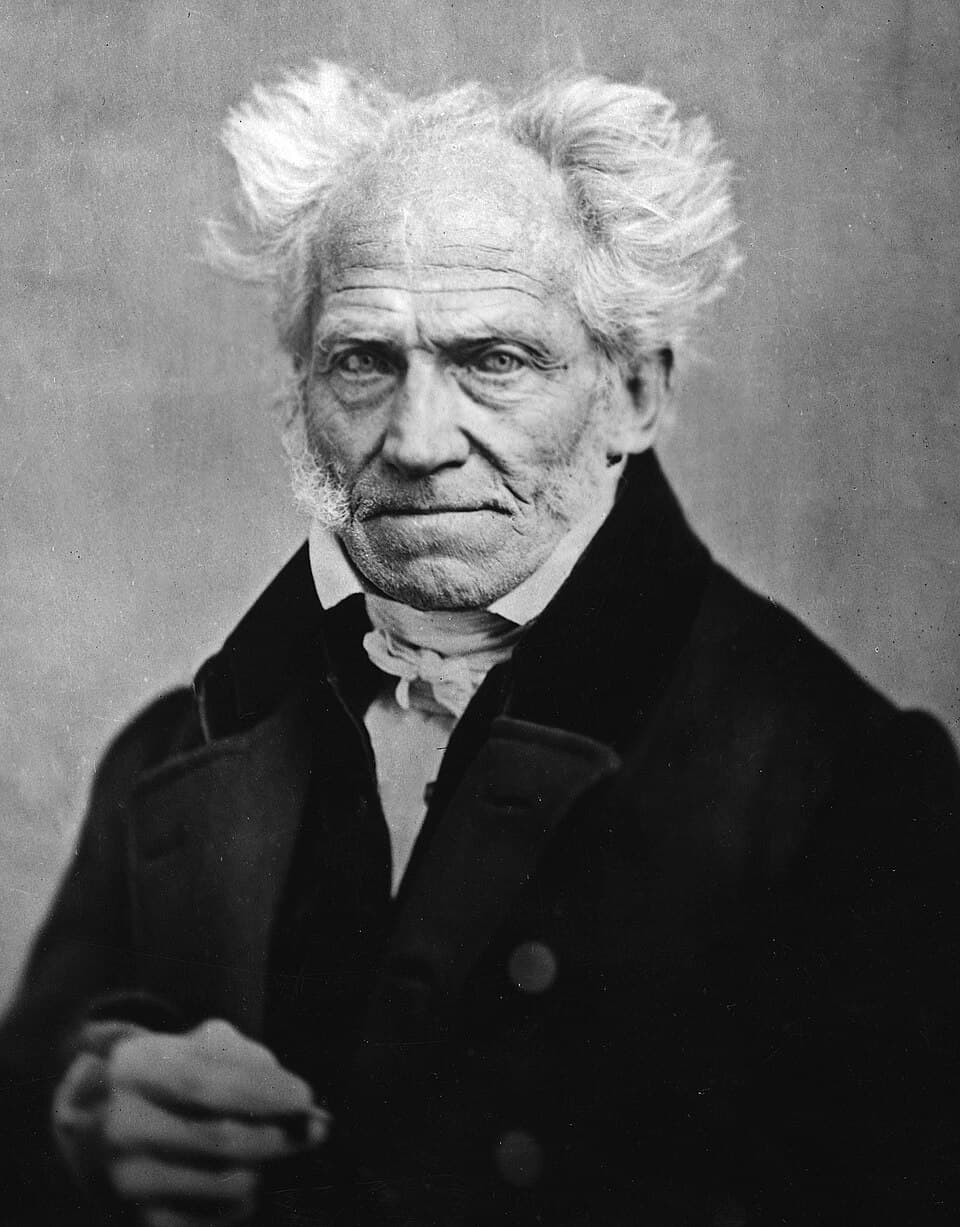
Arthur Schopenhauer
The Wisdom of Life...be a real superfluity of power, set free from the service of the will and devoted to that of the intellect; for, as Seneca says, otium sine litteris mors est et vivi hominis sepultura--illiterate leisure is a form of death, a living tomb. Varying with the amount of the superfluity, there will be countless developments in this second life, the life of the mind; it may be the mere collection and labelling of insects, birds, minerals, coins, or the highest achievements of poetry and philosophy.
The life of the mind is not only a protection against boredom; it also wards off the pernicious effects of boredom; it keeps us from bad company, from the many dangers, misfortunes, losses and extravagances which the man who places his happiness entirely in the objective world is sure to encounter, My philosophy, for instance, has never brought me in a six-pence;
but it has spared me many an expense. The ordinary man places his life's happiness in things external to him, in property, rank, wife and children, friends, society, and the like, so that when he loses them or finds them disappointing, the foundation of his happiness is destroyed. In other words, his centre of gravity is not in himself; it is constantly changing its place, with every wish and whim. If he is a man of means, one day it will be his house in the country, another buying horses, or...
6
⚖Intellect's Superfluous Gift

Arthur Schopenhauer
The Wisdom of LifeThe author suggests that most people oscillate between boredom and pain, and that only those with a 'superfluity of intellect' can escape this cycle through a rich and painless inner life.
...the preference over all his other occupations: by the constant growth of insight and knowledge, this intellectual life, like a slowly-forming work of art, will acquire a consistency, a permanent intensity, a unity which becomes ever more and more complete; compared with which, a life devoted to the attainment of personal comfort, a life that may broaden indeed, but can never be deepened, makes but a poor show: and yet, as I have said, people make this baser sort of existence an end in itself.
The ordinary life of every day, so far as it is not moved by passion, is tedious and insipid; and if it is so moved, it soon becomes painful. Those alone are happy whom nature has favored with some superfluity of intellect, something beyond what is just necessary to carry out the behests of their will; for it enables them to lead an intellectual life as well, a life unattended by pain and full of vivid interests.
Mere leisure, that is to say, intellect unoccupied in the service of the will, is not of itself sufficient: there must be a real superfluity of power, set free from the service of the will and devoted to that of the intellect; for, as Seneca says, otium sine litteris mors est et vivi hominis sepultura--illiterate leisure is a form of death, a living tomb. Varying with the amount of the superfluity, there will be countless developments in this second life, the life of the mind; it may be the m...
2
⚖The Philistine's Affliction

Arthur Schopenhauer
The Wisdom of LifeThe author contrasts the 'philistine' need for volatile real-world stimulation with the calm, limitless satisfaction found in the world of ideas.
...concealed even from himself. Nevertheless, it sometimes grows into a secret feeling of rancor. But for all that, it will never occur to him to make his own ideas of worth or value conform to the standard of such qualities; he will continue to give the preference to rank and riches, power and influence, which in his eyes seem to be the only genuine advantages in the world; and his wish will be to excel in them himself. All this is the consequence of his being a man without intellectual needs.
The great affliction of all philistines is that they have no interest in ideas, and that, to escape being bored, they are in constant need of realities. But realities are either unsatisfactory or dangerous; when they lose their interest, they become fatiguing. But the ideal world is illimitable and calm, something afar From the sphere of our sorrow.
NOTE.--In these remarks on the personal qualities which go to make happiness, I have been mainly concerned with the physical and intellectual nature of man. For an account of the direct and immediate influence of morality upon happiness, let me refer to my prize essay on The Foundation of Morals (Sec. 22.) CHAPTER III. PROPERTY, OR WHAT A MAN HAS. Epicurus divides the needs of mankind into three classes, and the division made by this great professor of happiness is a true and a fin...
6
⚖The Higher Life

Arthur Schopenhauer
The Wisdom of LifeThe author describes the rare fortune of possessing both leisure and intellect, which allows a person to escape the twin human sufferings of physical need and mental boredom.
...y kind. For this very reason it is full of possible danger, and difficilis in otio quies is a true saying,--it is difficult to keep quiet if you have nothing to do. On the other hand, a measure of intellect far surpassing the ordinary, is as unnatural as it is abnormal. But if it exists, and the man endowed with it is to be happy, he will want precisely that undisturbed leisure which the others find burdensome or pernicious; for without it he is a Pegasus in harness, and consequently unhappy.
If these two unnatural circumstances, external, and internal, undisturbed leisure and great intellect, happen to coincide in the same person, it is a great piece of fortune; and if the fate is so far favorable, a man can lead the higher life, the life protected from the two opposite sources of human suffering, pain and boredom, from the painful struggle for existence, and the incapacity for enduring leisure (which is free existence itself)--evils which may be escaped only by being mutually neutralized.
But there is something to be said in opposition to this view. Great intellectual gifts mean an activity pre-eminently nervous in its character, and consequently a very high degree of susceptibility to pain in every form. Further, such gifts imply an intense temperament, larger and more vivid ideas, which, as the inseparable accompaniment of great intellectual power, entail on its possessor a corresponding intensity of the emotions, making them incomparably more violent than those to which the...
2
⚖Leisure's True Test

Arthur Schopenhauer
The Wisdom of LifeThe author argues that leisure is only valuable to those with inner resources; for the empty-minded, it becomes a source of unbearable boredom.
...every kind of trick and machination in order to win what belongs to another. And a habit of this sort, learnt at the card-table, strikes root and pushes its way into practical life; and in the affairs of every day a man gradually comes to regard meum and tuum in much the same light as cards, and to consider that he may use to the utmost whatever advantages he possesses, so long as he does not come within the arm of the law. Examples of what I mean are of daily occurrence in mercantile life.
Since, then, leisure is the flower, or rather the fruit, of existence, as it puts a man into possession of himself, those are happy indeed who possess something real in themselves. But what do you get from most people's leisure?--only a good-for-nothing fellow, who is terribly bored and a burden to himself.
Let us, therefore, rejoice, dear brethren, for we are not children of the bondwoman, but of the free. [Footnote 1: Translator's Note.--Card-playing to this extent is now, no doubt, a thing of the past, at any rate amongst the nations of northern Europe. The present fashion is rather in favor of a dilettante interest in art or literature.] Further, as no land is so well off as that which requires few imports, or none at all, so the happiest man is one who has enough in his own inner wealth...
4