Inner vs Outer Value
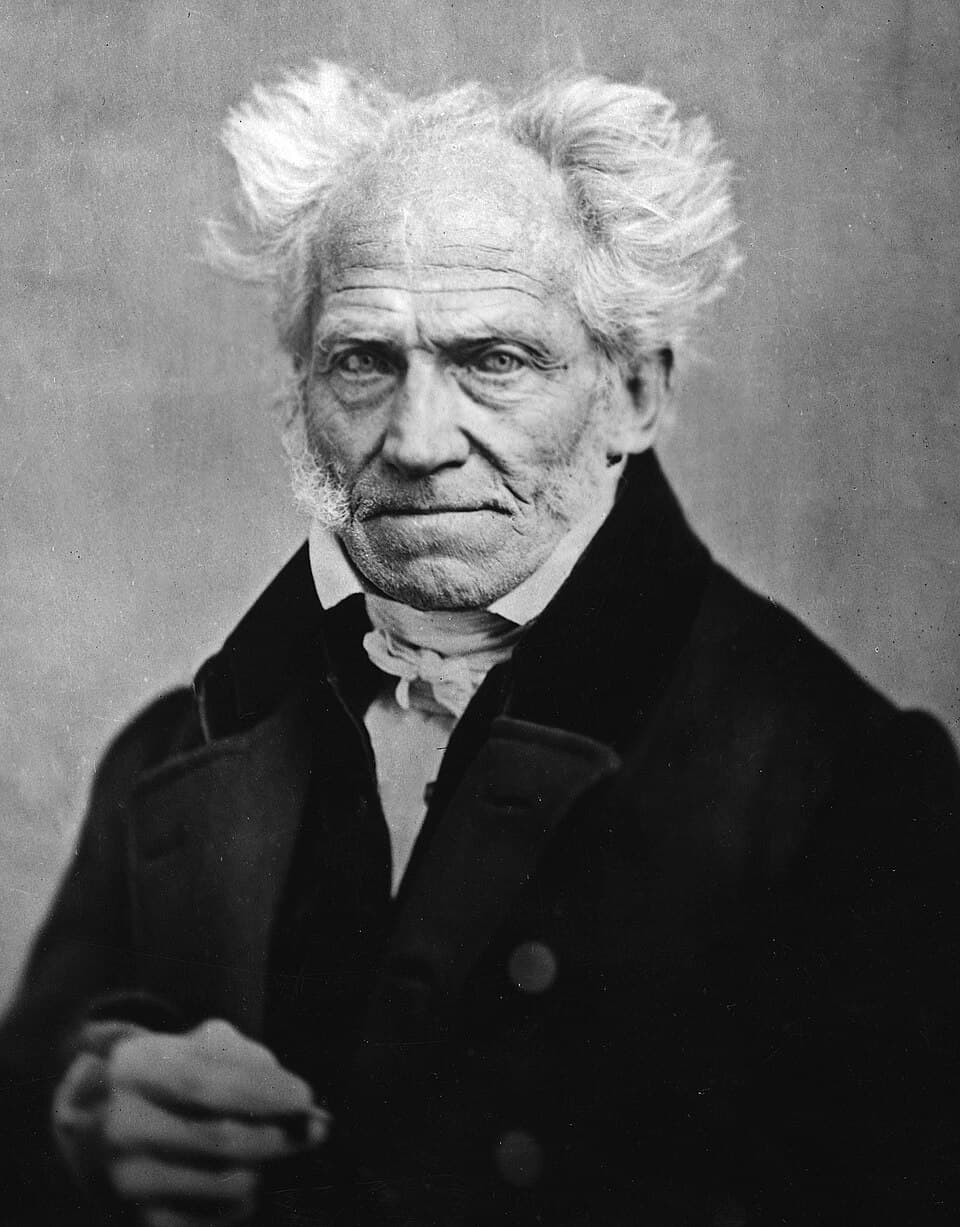
Arthur Schopenhauer
The Wisdom of Life

A confession and philosophical defense of the idea that true happiness is found in internal intellectual activity and leisure rather than in external pomp or titles.

...sures. So he will not be misled by expectations of office, or money, or the favor and applause of his fellowmen, into surrendering himself in order to conform to low desires and vulgar tastes; nay, in such a case he will follow the advice that Horace gives in his epistle to Maecenas.[3] [Footnote 1: Vie de Descartes, par Baillet. Liv. vii., ch. 10.] [Footnote 2: vii. 12.] [Footnote 3: Lib. 1., ep. 7.] Nec somnum plebis laudo, satur altilium, nec Otia divitiis Arabum liberrima muto.
It is a great piece of folly to sacrifice the inner for the outer man, to give the whole or the greater part of one's quiet, leisure and independence for splendor, rank, pomp, titles and honor. This is what Goethe did. My good luck drew me quite in the other direction. The truth which I am insisting upon here, the truth, namely, that the chief source of human happiness is internal, is confirmed by that most accurate observation of Aristotle in the Nichomachean Ethics that every pleasure presupposes some sort of activity, the application of some sort of power, without which it cannot exist.
The doctrine of Aristotle's, that a man's happiness consists in the free exercise of his highest faculties, is also enunciated by Stobaeus in his exposition of the Peripatetic philosophy[2]: happiness, he says, means vigorous and successful activity in all your undertakings; and he explains that by vigor [Greek: aretae] he means mastery in any thing, whatever it be. Now, the original purpose of those forces with which nature has endowed man is to enable him to struggle against the diffi...
2
Boredom's Extravagance
Arthur Schopenhauer
The Wisdom of Life

A reflection on how the absence of material need can lead to the suffering of boredom, often driving people to extravagance and eventual ruin as they seek relief from their own emptiness.

...ntributes to the general good, and redounds to the honor of humanity at large. Another, again, may use his wealth to further philanthropic schemes, and make himself well-deserving of his fellowmen. But a man who does none of these things, who does not even try to do them, who never attempts to learn the rudiments of any branch of knowledge so that he may at least do what he can towards promoting it--such a one, born as he is into riches, is a mere idler and thief of time, a contemptible fellow.
He will not even be happy, because, in his case, exemption from need delivers him up to the other extreme of human suffering, boredom, which is such martyrdom to him, that he would have been better off if poverty had given him something to do. And as he is bored he is apt to be extravagant, and so lose the advantage of which he showed himself unworthy. Countless numbers of people find themselves in want, simply because, when they had money, they spent it only to get momentary relief from the feeling of boredom which oppressed them.
It is quite another matter if one's object is success in political life, where favor, friends and connections are all-important, in order to mount by their aid step by step on the ladder of promotion, and perhaps gain the topmost rung. In this kind of life, it is much better to be cast upon the world without a penny; and if the aspirant is not of noble family, but is a man of some talent, it will redound to his advantage to be an absolute pauper. For what every one most aims at in ordinary con...
5
The Same Poor Player
Arthur Schopenhauer
The Wisdom of Life

The author suggests that despite external differences in rank or wealth, all humans share the same inner reality of suffering and are limited by their own individual consciousness.

...r. When therefore the objective or external factor in an experience is actually the same, but the subjective or personal appreciation of it varies, the event is just as much a different one in the eyes of different persons as if the objective factors had not been alike; for to a blunt intelligence the fairest and best object in the world presents only a poor reality, and is therefore only poorly appreciated,--like a fine landscape in dull weather, or in the reflection of a bad camera obscura.
In plain language, every man is pent up within the limits of his own consciousness, and cannot directly get beyond those limits any more than he can get beyond his own skin; so external aid is not of much use to him. On the stage, one man is a prince, another a minister, a third a servant or a soldier or a general, and so on,--mere external differences: the inner reality, the kernel of all these appearances is the same--a poor player, with all the anxieties of his lot. In life it is just the same. Differences of rank and wealth give every man his part to play, but this by no means implies a difference of inward happiness and pleasure; here,…
Though these may, indeed, in every case proceed from dissimilar causes, they are in their essential nature much the same in all their forms, with degrees of intensity which vary, no doubt, but in no wise correspond to the part a man has to play, to the presence or absence of position and wealth. Since everything which exists or happens for a man exists only in his consciousness and happens for it alone, the most essential thing for a man is the constitution of this consciousness, which is in mo...
Continue reading →
2
Money's Protean Power
Arthur Schopenhauer
The Wisdom of Life

The author explains that the love of money is natural because money acts as a universal medium capable of satisfying any desire, unlike specific goods which only satisfy single needs.

...to increase the amount which will satisfy them. [Footnote 1: xviii., 130-7.] When we consider how full of needs the human race is, how its whole existence is based upon them, it is not a matter for surprise that wealth is held in more sincere esteem, nay, in greater honor, than anything else in the world; nor ought we to wonder that gain is made the only good of life, and everything that does not lead to it pushed aside or thrown overboard--philosophy, for instance, by those who profess it.
People are often reproached for wishing for money above all things, and for loving it more than anything else; but it is natural and even inevitable for people to love that which, like an unwearied Proteus, is always ready to turn itself into whatever object their wandering wishes or manifold desires may for the moment fix upon. Everything else can satisfy only one wish, one need: food is good only if you are hungry; wine, if you are able to enjoy it; drugs, if you are sick; fur for the winter; love for youth, and so on.
These are all only relatively good, [Greek: agatha pros ti]. Money alone is absolutely good, because it is not only a concrete satisfaction of one need in particular; it is an abstract satisfaction of all. If a man has an independent fortune, he should regard it as a bulwark against the many evils and misfortunes which he may encounter; he should not look upon it as giving him leave to get what pleasure he can out of the world, or as rendering it incumbent upon him to spend it in this way. Peo...
6
Knightly Honor's Minotaur
Arthur Schopenhauer
The Wisdom of Life

Schopenhauer critiques the modern concept of knightly honor as a burdensome and 'solemn farce' that creates a culture of fear and demands unnecessary sacrifices from society.

...poisoned arrows have been found in Cupid's quiver, an estranging, hostile, nay, devilish element has entered into the relations of men and women, like a sinister thread of fear and mistrust in the warp and woof of their intercourse; indirectly shaking the foundations of human fellowship, and so more or less affecting the whole tenor of existence. But it would be beside my present purpose to pursue the subject further. An influence analogous to this, though working on other lines, is exerted by
The principle of knightly honor,--that solemn farce, unknown to the ancient world, which makes modern society stiff, gloomy and timid, forcing us to keep the strictest watch on every word that falls. Nor is this all. The principle is a universal Minotaur; and the goodly company of the sons of noble houses which it demands in yearly tribute, comes, not from one country alone, as of old, but from every land in Europe.
It is high time to make a regular attack upon this foolish system; and this is what I am trying to do now. Would that these two monsters of the modern world might disappear before the end of the century! Let us hope that medicine may be able to find some means of preventing the one, and that, by clearing our ideals, philosophy may put an end to the other: for it is only by clearing our ideas that the evil can be eradicated. Governments have tried to do so by legislation, and failed. Still, if...
2